Santa Maria Aquamarine vs Regular Aquamarine: Color and Value
Most buyers walk into this comparison believing that any deep, saturated blue aquamarine is Santa Maria, and that the name is the reason to pay more. It is not. Santa Maria describes a specific saturated blue look, and in stricter trade usage a Brazilian origin, while regular aquamarine is simply the rest of the species – and a beautifully cut regular stone with lively blue color is often the smarter purchase, because the Santa Maria premium only makes sense when the color is visibly superior and the provenance claim can actually be documented. The name is not the value. The stone is.
What Santa Maria Aquamarine Actually Means
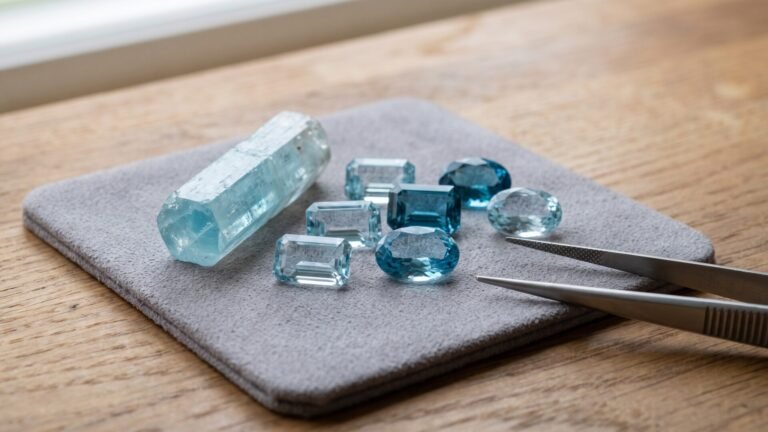
Aquamarine is the blue-to-greenish-blue variety of beryl, the mineral family that also gives us emerald and morganite. The color comes from iron in the crystal structure, not from trace elements that create something unusual. That matters because it tells you the color is a matter of degree, not a different species. A Santa Maria aquamarine and a regular aquamarine are the same mineral. The difference sits in saturation, tone, and where the rough came from.
If you want the broader foundation first – properties, value factors, how the species behaves – the full aquamarine guide covers it. What this article does is narrower: separating three things sellers routinely blur into one word.
Santa Maria origin. In traditional trade usage, Santa Maria refers to material from the Santa Maria de Itabira area in Minas Gerais, Brazil, a historic source associated with unusually saturated blue aquamarine. That source is largely worked out, which is why the name carries weight and why so much material now sold under it is not from there.
Santa Maria color. A descriptive term for the appearance – strong, saturated blue with little visible green. A stone from Mozambique or Nigeria can have this look.
Marketing language. "Santa Maria-like," "Santa Maria color," "Santa Maria type." These are seller descriptions, not certifications. They may be honest shorthand for appearance. They may also be a way to charge a locality premium for a stone with no locality attached.
Here is the blunt version. Origin alone does not guarantee value. A poorly cut, heavily included stone from a famous Brazilian locality is worth less than a clean, well-proportioned stone from anywhere else. The name does not rescue the cutting.
Santa Maria origin versus Santa Maria color
Sellers use "Santa Maria" as both a place and a look, and they do not always tell you which one they mean. That ambiguity is the whole game.
If a listing says "Santa Maria aquamarine" with no further explanation, you do not know what you are being sold. It could be a Brazilian-origin stone with a laboratory origin opinion. It could be a vividly blue stone from another country, described by appearance. It could be ordinary commercial aquamarine with a famous word attached.
Ask for precise wording, and treat these as four different claims:
- "Brazilian origin" – a geographic claim. Worthless without a report that supports it.
- "Santa Maria-type color" – an appearance claim. Honest if the color is genuinely strong; says nothing about where the stone formed.
- "Santa Maria color" – the same, usually. A description, not a certification.
- "Origin confirmed by laboratory report" – the only version of the claim that carries independent weight.
Do not let a seller slide between them mid-conversation. The moment "Santa Maria" stops meaning one specific thing, the premium stops being justified.
Santa Maria Aquamarine vs Regular Aquamarine: The Visual Difference
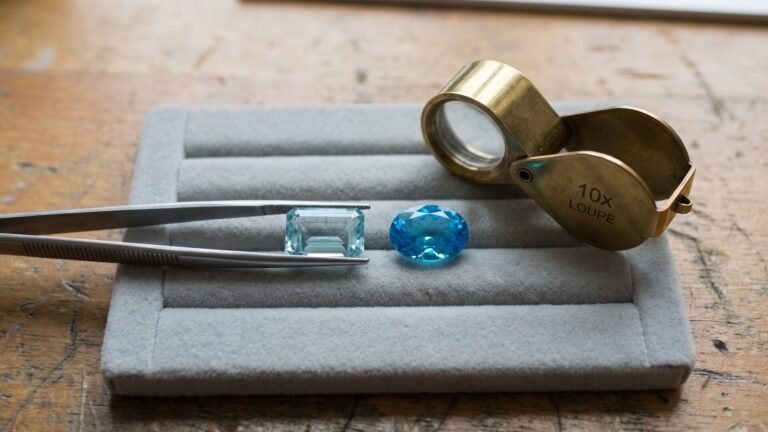
Put two stones side by side under the same lamp and the difference is usually obvious. The Santa Maria-type stone reads as a stronger, more saturated blue. The regular stone reads lighter, sometimes with a green cast. That is the whole visual story, and it is worth understanding what you are actually seeing.
| Factor | Santa Maria aquamarine | Regular aquamarine |
|---|---|---|
| Typical appearance | Strong, saturated blue, often with less visible green | Pale blue to medium blue, sometimes greenish-blue |
| Main appeal | Intensity and rarity of appearance | Wearability, size, clarity, and accessible price |
| Color premium | Possible when the color is vivid and well documented | Usually lower unless color and clarity are exceptional |
| Origin claim | May refer to Brazilian origin or Santa Maria-type color | Broad category with many possible origins |
| Best buyer | Collector or buyer prioritizing saturated color | Buyer seeking attractive aquamarine value and size |
| Main risk | Paying for an unsupported locality or color label | Assuming lighter color means poor quality |
The trap in the table is the row most buyers misread. A lighter stone is not a worse stone. It is a different stone, priced on a different scale, and for a pendant or a pair of earrings it may be the more flattering choice.
Hue, tone, and saturation
Three words do most of the work in aquamarine grading, and they are not interchangeable.
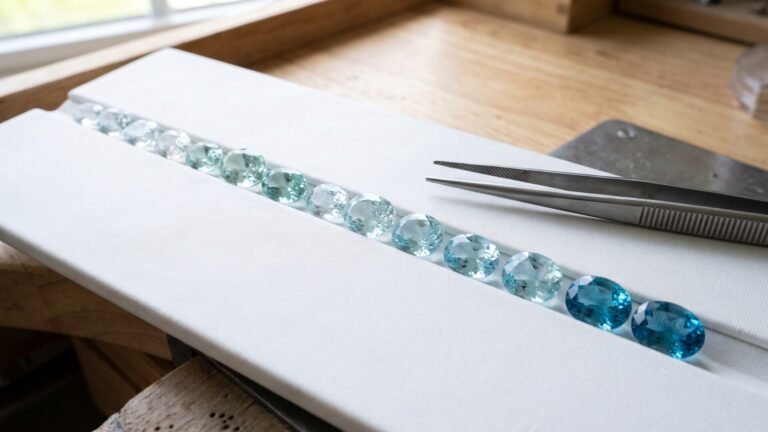
Hue is the basic color – blue, or blue with a green secondary. Tone is how light or dark the color appears. Saturation is how strong or vivid it is. A stone can be dark and dull, or light and vivid, and the second is usually the better gem.
This is where buyers go wrong. They equate "darker" with "better" and hunt for the deepest blue they can find. Excessive darkness kills brightness. A stone that looks almost navy in a photograph can sit flat and lifeless in the hand, because there is no light coming back out of it. The best aquamarine balances saturation with liveliness. It glows rather than broods.
For a fuller walk through the spectrum, the aquamarine color chart lays out where vivid blue ends and greenish-blue begins.
Why photographs lie
A stone photographed on a white background under a cool light with the white balance pushed blue will look more saturated than it is. So will a stone set in white gold against a dark backdrop. None of that is necessarily dishonest – it is just photography – but it means the image you fall in love with online is not the stone you will receive.
The practical test is a viewing test, and it works in a store or on a video call:
- Look at the stone face-up, the way it will sit in the jewelry.
- View it in daylight near a window.
- View it again under warm indoor light.
- Ask whether the blue stays lively in all three, or whether it only looks strong in one.
A stone that only performs under the seller’s lamp is a stone that will disappoint you at home.
How Color Controls Aquamarine Value
Color carries more weight than origin wording in almost every aquamarine sale. That is the value hierarchy, and it holds even when a seller wants you to believe otherwise. Clarity, cut, size, and treatment can all move the final number, but color is the first thing the trade prices and the last thing it discounts.
The most desirable material is medium to strong blue with good brightness. Very pale stones sit at the bottom of the color scale. Overly dark, grayish material sits beside them, because darkness without life is not a premium – it is a flaw dressed as intensity.
Green is the secondary color that complicates everything. A clean blue commands a premium. Blue-green material can be genuinely beautiful and natural-looking, and plenty of buyers prefer it, but it is usually priced differently. What a seller must not do is call ordinary blue-green aquamarine Santa Maria simply because it has a darker tone. Dark and green is not the same as dark and blue.
The flaws that discount a strong color
A headline color can hide problems that only show up when you look properly.
Color zoning is uneven saturation – bands or patches of stronger and weaker blue within one stone. Extinction is the dark, dead-looking areas where light fails to return to the eye. Windowing is a see-through patch, usually in the middle of the stone, where the cut is too shallow and you look straight through the gem rather than at its color.
Any of these can pull value down hard, even in a stone with a genuinely strong blue. A windowed Santa Maria is still a windowed stone.
The value factors buyers should rank in order
Rank them in this order and you will not go far wrong.
Color quality. Hue, tone, saturation, brightness, consistency. This is the first question and the biggest one.
Cut quality. Proportions, symmetry, polish, and the absence of windowing determine whether the color reaches your eye at all. A great rough in a bad cut is money burned.
Clarity. Aquamarine is often eye-clean, which is one of its pleasures. Distinguish minor inclusions, which are cosmetic, from fractures, which affect durability.
Carat weight. Size impresses, but a large pale stone can be worth less than a smaller, strongly colored one. Buy the color first, then the size you can afford.
Treatment and documentation. Heat treatment is used on some aquamarine to reduce greenish tones. It must be disclosed. A seller’s assurance is not documentation; a laboratory statement is.
Santa Maria Aquamarine Pricing: What Justifies the Premium?
Aquamarine prices swing widely with color, clarity, cut, carat weight, origin, and – frankly – the seller’s markup. Any single price list is fiction. What I can give you is a framework, and the framework is more useful than a number.
"Santa Maria" is not a universal price grade. There is no standard that says a Santa Maria aquamarine costs a fixed amount more than a regular one. A label cannot substitute for visible color quality and credible documentation. If the only thing separating two stones is the word, you are paying for the word.
Here is how the budget tiers tend to break down:
| Budget tier | What you are buying | What to prioritize |
|---|---|---|
| Lower | Regular aquamarine, light-to-medium blue, modest carat weight | A sound cut and clean clarity over size |
| Middle | More saturated blue, good clarity and proportions | Face-up color, even without documented Santa Maria origin |
| Higher | Strongly saturated, bright material, credible origin documentation, excellent cut, notable size | Independent report and confirmed return policy |
A premium is rational when a stone has exceptional saturation, brightness, genuine rarity of appearance, and independent documentation. It is probably unjustified when the material is pale, when the Brazilian-origin claim is unsupported, when the photography is doing the work, when there is visible windowing, or when the price rests almost entirely on the name.
A practical price-per-carat warning
Price per carat rises sharply for larger, more saturated stones, so it is a poor tool for comparing two gems of different sizes. It gets worse when you compare unlike things: a loose stone against a finished ring, or a laboratory-documented gem against an undocumented retail stone. Those comparisons create a false impression of value in both directions.
Compare like with like – similar carat weight, cut quality, color, clarity, treatment disclosure, and documentation. And remember that retail jewelry pricing includes design, labor, the setting, brand, and overhead. The loose-stone premium is not always visible once the piece is finished.
What Most Buyers Get Wrong About Santa Maria Labels
The single most common error is confusing a geographic origin report with an appearance description. They answer different questions.
A laboratory origin opinion addresses where the gem may have formed. A color description addresses what the gem looks like. Neither one automatically proves the stone is rare, untreated, or a good investment. A report can confirm origin and still describe a stone that is windowed and dull.
Watch for these claims in particular:
- "Natural Santa Maria" with no named laboratory report.
- "Untreated" based only on the retailer’s own description.
- "Museum quality" with no measurable explanation of what that means.
- "Investment grade" applied to ordinary commercial jewelry.
- "Rare Brazilian aquamarine" on a listing that gives no locality details at all.
Heat treatment deserves its own line. It is used to reduce greenish tones in some aquamarine, it is common, and it should be disclosed rather than treated as a minor detail. Treated aquamarine is not a bad purchase. Undisclosed treatment is a bad seller.
Ask for five things before you pay: the exact laboratory report number, a written treatment statement, an origin statement if one is claimed, the return policy, and photographs or video under neutral lighting.
Certification and report language
Independent gemological reporting matters most on a high-value Santa Maria claim. GIA and other reputable gemological laboratories issue reports that can identify the material as natural aquamarine, provide treatment information, and sometimes offer an origin opinion. Not every report includes all three. Read what yours actually says rather than what the listing implies it says.
One phrase trips up more buyers than any other: "no indications of treatment." That is not an absolute guarantee that no process has ever been used. It is a statement about what the laboratory observed. Learn the difference and you will ask better questions than most people in the room.
A report is especially valuable when someone is charging you for a Santa Maria claim. It does not replace examining cut quality and face-up color. Paper supports a good stone. It does not create one.
Which Stone Still Makes Sense in Three Years?
The first purchase is the easy part. The interesting question is what you still think of the stone after a few years of wearing it, and what happens to it after you.
Regular aquamarine usually gives you more size or more design flexibility for the same budget. That flexibility has real value – a larger stone, a more elaborate setting, better metal. Santa Maria-style material may stay more distinctive, but its resale depends on documentation, ongoing desirability, and whether the origin or color claim holds up. A premium paid for an undocumented label is the first thing to evaporate.
Durability is the same for both, because it is the same mineral. Beryl sits around 7.5 to 8 on the Mohs hardness scale – respectable, but not sapphire. It can chip or fracture at exposed corners and it is not indestructible. Treat it like the fine stone it is.
If you want the full picture on color stability and how light affects the stone over years, whether aquamarine fades in sunlight is the honest answer, and it is more reassuring than the rumors suggest.
For the heirloom side, do three things. Choose a well-cut stone in a stable setting. Keep the laboratory report, receipt, treatment disclosure, and any origin documentation with the jewelry. And prefer a clearly documented stone over one sold with vague promotional language, because a future owner – a daughter, a grandchild – will understand a documented stone and be confused by a slogan.
Here is the decision framework, firmly:
- Buy Santa Maria when the stronger color is obvious in person, the premium is affordable, and the documentation supports the claim.
- Buy regular aquamarine when the goal is a larger or more versatile stone, especially if the color is attractive and the Santa Maria premium is mostly branding.
- Avoid either when the stone is windowed, dull, heavily discounted without explanation, or sold with incomplete treatment information.
Choosing the Right Aquamarine for Jewelry
Match the stone to the setting and half your durability worries disappear.
Rings need protective settings, especially around pointed corners and exposed edges. Pendants and earrings let you go larger with far less risk of direct impact. Engagement rings need realistic expectations about daily wear, maintenance, and insurance – a beautiful stone in a vulnerable setting is a repair bill waiting to happen. If daily wear is the plan, whether you can wear aquamarine every day walks through hardness and setting protection properly.
A saturated Santa Maria-style stone works beautifully in a simple setting. The color supplies the impact, so heavy halos and competing gemstones mostly distract from what you paid for. Regular aquamarine is often the better design choice when you want a larger center stone, a lighter and more romantic look, or more of the budget left for metal and craftsmanship.
Specific pieces to look at, described by category rather than model:
- A natural Santa Maria-style center stone in a solitaire or low-profile ring – only when the seller clearly explains whether "Santa Maria" means color or origin.
- A certified Brazilian aquamarine loose stone from a reputable colored-stone dealer, for buyers who prioritize documentation.
- A regular blue aquamarine halo or three-stone ring, for buyers who want apparent size and design detail without a provenance premium.
- An aquamarine pendant or pair of earrings, for intense color with less impact exposure than a daily ring.
The buying checklist, in order:
- View the stone face-up under more than one lighting condition.
- Check for windowing, chips, surface-reaching fractures, and uneven color.
- Confirm natural status, treatment disclosure, and any origin claim in writing.
- Get an independent report for a substantial purchase.
- Confirm the return period before you pay.
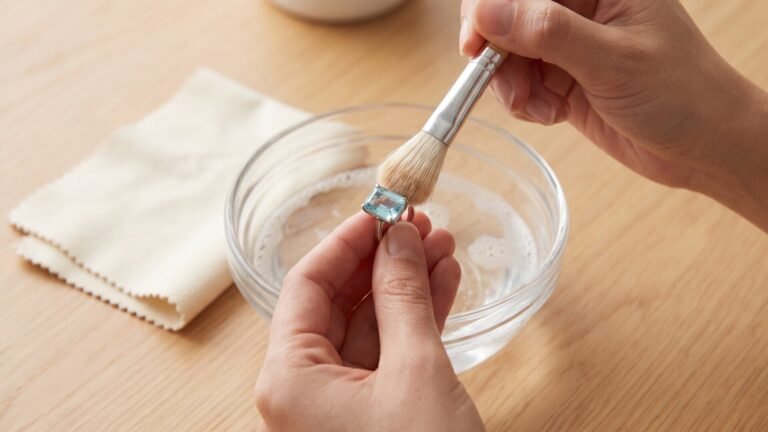
Once the piece is yours, caring for aquamarine stones covers cleaning and storage without the guesswork.
Final Verdict: Santa Maria or Regular Aquamarine?
The recommendation splits cleanly.
Best for color connoisseurs and collectors: documented, strongly saturated Santa Maria aquamarine with excellent brightness and a credible laboratory report. You are paying for a look that is genuinely hard to find, and you are paying for the paper that proves what you bought.
Best overall value for most buyers: a well-cut regular aquamarine with attractive blue color, strong clarity, and full treatment disclosure. This is the stone that satisfies the brief for the overwhelming majority of people reading this.
Best for a large statement piece: regular aquamarine, with the budget going to size, cut, setting quality, or a laboratory report rather than a locality label.
Best avoided: any stone priced as rare Santa Maria material without clear evidence of what the label means.
The contrarian point bears repeating. Santa Maria is not automatically the superior purchase. The face-up appearance and the documentation matter more than the prestige of the name, and a buyer who understands that will consistently get the better stone for the money. If the symbolism of the stone matters to you as much as the color – and for a gift or an heirloom it often does – the meaning and history of aquamarine is worth reading before you decide.
Frequently Asked Questions About Santa Maria Aquamarine Vs Regular Aquamarine
Is Santa Maria aquamarine more valuable than regular aquamarine?
It can be, particularly when it has vivid blue saturation, excellent brightness, strong clarity, good cutting, and credible origin or laboratory documentation. The label alone does not establish a premium. A pale stone with a famous name is still a pale stone.
How can I tell whether aquamarine is truly Santa Maria?
Visual color cannot prove geographic origin. A reputable independent laboratory report may provide an origin opinion, while seller wording such as “Santa Maria color” may refer only to appearance. Ask which claim is being made and what supports it.
Is Santa Maria aquamarine always dark blue?
No. Desirable material is usually strongly saturated blue, but excessive darkness can reduce brightness. The best stones balance saturation with liveliness rather than appearing nearly opaque or gray.
Does heat treatment reduce the value of aquamarine?
Treatment does not automatically make aquamarine undesirable, but it must be disclosed. Compare treated and untreated claims only when the laboratory or seller documentation clearly supports them.
Is a pale aquamarine a poor purchase?
Not at all. Pale aquamarine can be attractive and entirely suitable for jewelry, and it generally commands less of a color premium. Cut, clarity, size, and personal preference still matter a great deal.
Should I buy a Santa Maria aquamarine as an investment?
Colored gemstones are not automatically liquid investments. A documented, rare-looking stone may have collector appeal, but resale is uncertain and retail markups are difficult to recover. Buy it because you love the color, not because you expect a return.
Which is better for an engagement ring, Santa Maria or regular aquamarine?
Choose based on cut quality, setting protection, durability expectations, and budget. Either can work. A vivid stone in a secure setting with clear treatment disclosure matters more than the label on the tag.
Most readers should buy the regular aquamarine, and I mean that without reservation. A well-cut stone with a clean, lively blue and honest disclosure gives you everything aquamarine is loved for – the color, the clarity, the size on the hand – and it leaves money for a better setting or a bigger stone. The Santa Maria premium is real and occasionally worth paying, but only for the buyer who can see the difference in person, can afford it comfortably, and is handed documentation that survives scrutiny. Everyone else is buying a word.