How Much Does Natural Alexandrite Cost Per Carat?
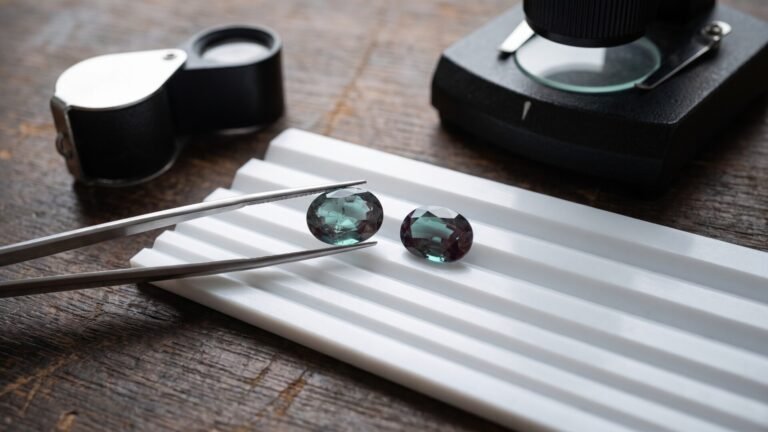
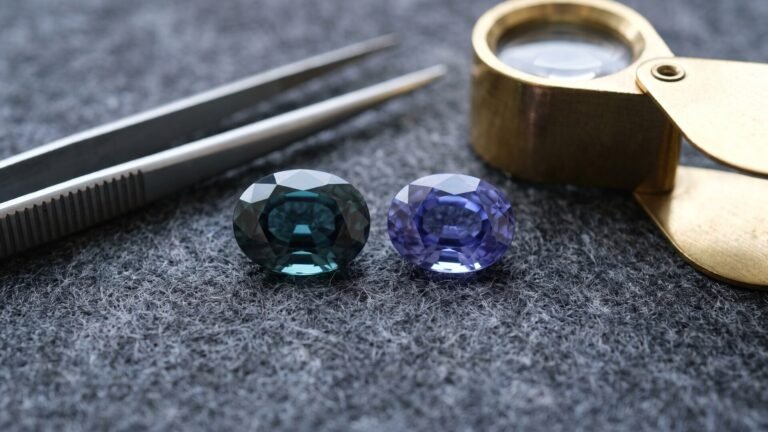
The stone sits on a white paper tray under a desk lamp, and the customer has been turning it for ten minutes. Green when she tilts it away from the bulb. Raspberry when she brings it back. She looks up and says the thing I have heard a hundred times: "So how much is this one worth?"
I tell her what I would tell anyone. Natural alexandrite does not have a price per carat. It has a range, and the range is enormous – a few thousand dollars per carat at the low end, tens of thousands for fine material, and more than that for the handful of stones that qualify as exceptional. What she is really asking is whether this particular stone is worth what the tag says. That is a different question, and it is the one this article answers.
The strength and quality of the color change matter more than carat weight. Almost every buyer I have watched walk into a bad deal was focused on size when they should have been focused on the shift.
Natural Alexandrite Price Per Carat at a Glance
Here is the honest landscape. These are approximate retail ranges for loose natural alexandrite, and they move with the market, the seller, and the paperwork that comes with the stone.
| Quality level | Typical characteristics | Approximate natural price per carat | Best interpretation |
|---|---|---|---|
| Commercial or weak color change | Small stones, grayish or brownish body color, limited shift, visible inclusions | About $1,000-$5,000 | Affordable entry point, but requires careful verification |
| Good natural alexandrite | Noticeable green-to-reddish or purplish change, acceptable clarity, documented natural origin | About $5,000-$15,000 | Stronger choice for meaningful jewelry |
| Fine quality | Attractive daylight color, vivid incandescent change, good transparency, better cutting | About $15,000-$40,000 | Premium collector and heirloom category |
| Exceptional material | Strong, attractive color change, larger size, high transparency, rare origin or provenance | $40,000 and above | Specialist and collector market |
Read those numbers as a map, not a quote. A stone sold in a mall jewelry store, a stone sold at auction, and a stone sold by a dealer who specializes in rare color-change material are three different prices for three different reasons. Auction results in particular can land well below retail asking prices, because auction buyers are not paying for a display case, a salesperson’s time, or a generous return policy.
The term that drives all of this is color change – the visible shift in the stone’s body color when the light source changes, not simply a change in brightness or saturation. A stone that looks slightly different under a bulb has not necessarily earned the word.
If you want the broader background on the gem before you start pricing it, alexandrite’s meaning, properties, and value is the place to begin.
What Actually Determines Alexandrite’s Price?
Four things, in roughly this order: the color change, the body color, the clarity, and then size, cut, and origin. Sellers will often present them in reverse order, because size is the easiest thing to put on a tag.
Color change is the first pricing filter
Assess the two colors separately. What does the stone look like in daylight or cool white light? What does it look like under incandescent or warm light? A dramatic, attractive green-to-red or green-to-purple shift is the top of the market. A weak shift between two similar tones – olive to brownish red, say – is the bottom of it, no matter how big the stone is.
Sellers sometimes describe color change as a percentage: "80% color change," "90% shift." Treat those figures as marketing shorthand. There is no standardized scale behind them, and two dealers can mean completely different things by the same number. They do not replace your eyes or an independent report.
Ask for photographs or video in daylight, incandescent light, and neutral light. Then remember that online photography can exaggerate saturation, sometimes honestly through lighting choices and sometimes not. If a listing shows only one lighting condition, that is a decision you cannot make.
The optics behind the effect are genuinely interesting, and understanding them helps you judge a stone rather than just admire it. why alexandrite changes color covers the science properly.
Body color, saturation, and tone
A vivid green or bluish-green daylight color paired with a strong reddish or purplish secondary color commands the premium. Gray, brown, and muddy material does not, and no amount of color change rescues it.
Two terms worth knowing before you shop. Tone is the lightness or darkness of the gem. Saturation is the strength or intensity of the color. A stone can be beautifully saturated and still too dark to perform well in a ring, because darkness hides inclusions and flattens the color.
There is a real tradeoff here. A very dark stone conceals flaws. A lighter stone shows them but often has more attractive color. Most buyers are better served by the lighter, livelier stone with a visible inclusion or two than by a dark stone that photographs well and looks dead on the hand.
"Changes color" is not enough. The starting color and the ending color both have to be worth looking at.
Clarity and transparency
Natural alexandrite usually contains inclusions – internal features, some of which are characteristic enough to help a laboratory identify the stone. A completely clean natural alexandrite is uncommon enough that it should prompt a question rather than a celebration. Confirm natural origin before you pay a premium for cleanliness.
Transparency is how readily light passes through the stone. It matters more than the inclusion count on its own. A few small inclusions that leave the stone bright and clear are fine. A cloudy, milky stone that blocks light should sell at a substantial discount, whatever the report says about clarity grade.
Eye-clean is a casual term meaning you cannot see inclusions without magnification. Laboratory clarity terminology is a formal grading language and does not map neatly onto what you see across a counter. A stone can be described favorably in a report and still look hazy in person.
A strong color change can outweigh moderate inclusions, especially in smaller stones. It cannot outweigh fractures that threaten the stone’s survival in a ring.
Carat weight, cut, and origin
Price per carat rises sharply with size, because large natural alexandrite with good color is disproportionately rare. This is not a gentle curve. It is closer to a cliff.
Cut matters more than most buyers expect. A poorly cut stone wastes color and brilliance even when the rough was valuable. Look for a stone that is bright across the face-up view, not one with a window – a see-through area in the middle that lets you look straight through the stone – or heavy extinction, the dark patches where light fails to return to your eye. Depth and symmetry affect all of this, but you do not need the technical vocabulary to judge it. You need to see the stone move.
Origin can add desirability. A claimed Russian, Sri Lankan, Brazilian, or East African origin should be supported by a reputable laboratory report, not by a seller’s story. More on that below.
Price by Size: Why Larger Alexandrite Costs Disproportionately More
You cannot multiply a small stone’s price by carat weight and get a fair estimate for a larger one. The market does not work that way.
| Approximate size | What buyers should expect | Pricing pressure |
|---|---|---|
| Under 0.25 carat | More accessible, often set in accent jewelry | Price per carat may still be high if color change is vivid |
| 0.25-0.50 carat | Common entry point for natural alexandrite jewelry | Quality differences become easier to see |
| 0.50-1.00 carat | Strong demand for attractive stones in this range | Fine material becomes meaningfully more expensive |
| 1.00-2.00 carats | Increasingly scarce in good quality | Price per carat can rise sharply |
| Above 2.00 carats | Rare, especially with strong color and transparency | Collector-level pricing may apply |
Consider two hypothetical one-carat stones. The first has a vivid, unmistakable green-to-red shift with good transparency. The second is a muddy olive-to-brownish stone with a shift you have to be told about. The second might sell for a fraction of the first, and it is the same weight. That is the whole argument against buying by the carat.
I have watched buyers choose the larger stone with the weaker shift because the number on the tag looked more impressive. They regretted it. A weak color change is not a small flaw in alexandrite. It is the flaw.
One more practical trap: in finished jewelry listings, total carat weight often includes the accent stones and sometimes the metal weight of the setting. The center stone may be a fraction of the number in the title. Always ask for the center stone’s exact weight and dimensions separately.
What Most Buyers Get Wrong About Natural Alexandrite Prices
The single most expensive mistake in this market is paying natural-stone prices for something that is not a natural stone.
Several different materials get sold under the alexandrite name, and they are not equivalent:
- Natural alexandrite – the genuine gem, a variety of chrysoberyl with a true color change.
- Lab-created alexandrite – the same essential chemical and physical characteristics as natural alexandrite, produced in a laboratory. Its market value is generally far lower.
- Color-change chrysoberyl – related material with a color shift that does not meet the standard for alexandrite.
- Color-change sapphire, garnet, spinel, and other gems – attractive stones in their own right, but they should not be priced as natural alexandrite.
Then there is the origin label. "Russian alexandrite" carries real historical weight, and some collectors will pay for it. But the phrase is not proof of Russian origin, superior quality, or investment value. It is a claim, and claims need documentation.
Red flags I would want you to notice:
- Unusually large stones at bargain prices
- No laboratory report on an expensive stone
- Vague treatment language such as "enhanced" with no explanation
- Stock photography instead of the actual stone
- Descriptions that carefully avoid the word "natural"
That last one is the quietest and the most common. If a listing never says natural, assume it is not until someone proves otherwise in writing.
Natural vs. Lab-Created Alexandrite: The Price Difference
This is the comparison that decides most purchases, and it is worth being blunt about it. The price gap between natural and lab-created alexandrite is enormous, and the gap exists because of scarcity, not because the lab stone is ugly. A good lab-created stone can be beautiful. It simply is not rare.
| Material | Natural origin | Typical market position | Documentation priority | Best for |
|---|---|---|---|---|
| Natural alexandrite | Formed geologically | Highest scarcity and price potential | Independent identification and treatment report | Heirloom and collector purchases |
| Lab-created alexandrite | Produced in a laboratory | Much lower cost than natural material | Report or clear seller disclosure | Color-change appearance on a controlled budget |
| Color-change sapphire | Natural or lab-created, depending on stone | Usually priced separately from alexandrite | Confirm species and origin claims | Buyers who prioritize durability |
| Color-change garnet or other simulant | Depends on material | Generally lower-priced | Confirm identity before comparing | Fashion jewelry and experimentation |
If what you want is the color-change effect in a piece you will wear and enjoy, a lab-created stone is a rational purchase. Buy it from a seller who says plainly what it is and prices it accordingly. A lab-created stone presented as natural is not a bargain. It is a fraud, and it is the reason the identification question comes before the price question.
If durability is your priority, color-change sapphire deserves a look. It is a hard, well-understood stone with a long record in daily-wear jewelry, and it is priced on its own terms rather than against alexandrite. alexandrite versus color-change sapphire walks through the comparison directly.
Before you compare a single price, settle identity. how to tell natural from lab-created alexandrite covers the clarity and inclusion evidence a laboratory uses.
How Treatments and Certification Affect Value
Treatment disclosure
Ask, in writing, whether the stone has been dyed, filled, irradiated, coated, fracture-filled, or otherwise treated. Undisclosed treatment can affect value, durability, repair options, and your ability to insure the piece later.
Be careful with vague words. "Enhanced," "improved," and "clarity enhanced" mean nothing without a specific explanation of the process. A seller who cannot or will not name the treatment is telling you something.
One distinction that trips up a lot of buyers: laboratory-created status is not a treatment. A lab-created gem is a different origin category, not a natural stone that has been altered. The two questions – is it natural, and has it been treated – are separate, and you need an answer to both.
Laboratory reports
For an expensive stone, get an independent report from a respected gemological laboratory. GIA is the name most buyers know, and there are other established laboratories with their own specialties; not every lab offers identical testing or origin services, so ask what the report actually covers.
A useful report should identify the gemstone species and variety, state whether the stone is natural or laboratory-created, disclose detectable treatments, and identify origin only when the laboratory can support that conclusion. Note the word detectable. No report catches everything, and a report is an opinion from a qualified lab, not a warranty.
A certificate is also not a guarantee of future resale value, and it does not replace your own examination of cut, transparency, and color appeal. A stone can be perfectly documented and still be a stone you do not want to look at.
How to Buy Natural Alexandrite Without Overpaying
A practical buying framework
Four questions, in this order. Do not skip ahead.
- Identity. Is it natural alexandrite, rather than lab-created material or another color-change gem?
- Appearance. Are both colors attractive, saturated, and visibly different from each other?
- Condition. Are the inclusions acceptable, and are there fractures or durability concerns?
- Evidence. Does the documentation support the origin, treatment status, and every claim the seller has made?
Settle identity and appearance before you negotiate a small difference in price per carat. A few hundred dollars saved on a stone with the wrong identity is not a saving.
Compare stones under multiple lighting conditions, and ask for video if you are buying remotely. When you request details, ask for the exact carat weight, the dimensions, the report number, the treatment disclosure, the return terms, and – this one gets missed constantly – whether the report refers to the loose stone or to the finished jewelry. A report on a ring is not the same document as a report on the stone inside it.
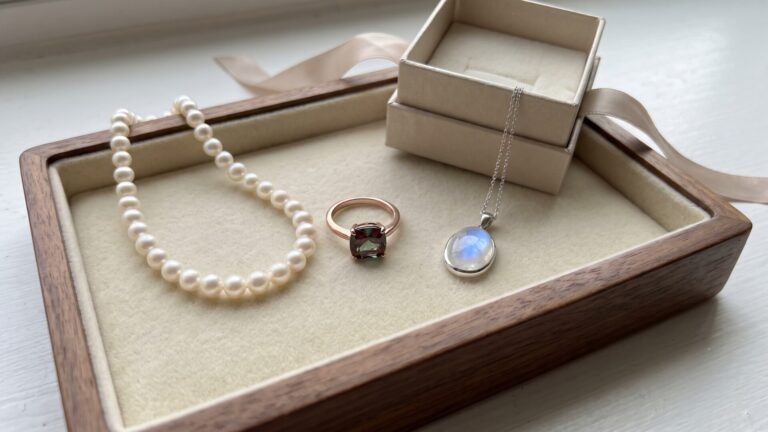
If the purchase is a June birthday gift rather than a collector piece, the calculus shifts toward meaning and wearability. pearl versus alexandrite versus moonstone for a June birthday is a useful reality check on whether alexandrite is the right choice for the person you are buying for.
Budget tiers
| Budget | Realistic target | What to prioritize | What to avoid |
|---|---|---|---|
| Under $2,000 | Small natural stone with modest color change, or a lab-created alternative | Clear disclosure and a reputable seller | Large stones advertised as fine natural alexandrite |
| $2,000-$10,000 | Small to medium natural stone with visible but variable change | Independent identification and attractive face-up appearance | Paying for an origin claim without documentation |
| $10,000-$30,000 | Better natural color change, transparency, and cutting | Laboratory report and side-by-side comparison | Buying solely by carat weight |
| Above $30,000 | Fine or exceptional natural material | Specialist advice, report, provenance, and insurance documentation | Treating retail asking price as guaranteed investment value |
Set your total budget to include the setting, the report, insurance, and a possible appraisal. Buyers who spend everything on the loose stone end up choosing a cheap setting for an expensive gem, which is the wrong way around. The setting is what keeps the stone alive for the next forty years.
A smaller stone with a strong color change is usually the better heirloom purchase than a larger stone with weak or muddy color. I would rather hand down a half-carat stone that still stops people at the table than a two-carat stone nobody turns toward the light.
The Hidden Cost of Choosing the Wrong Alexandrite
The visible cost is the price tag. The hidden costs show up later.
Financial risk. Paying natural-stone prices for lab-created material, treated material, or a different species entirely. This is the big one, and it is not rare.
Ownership risk. Fragile or heavily fractured stones create repair and setting problems, especially in rings worn every day. A fracture that survives a gentle setting can fail in a prong that gets knocked on a door frame.
Resale risk. Color-change gems have a narrow buyer pool. Retail prices and liquidation prices are not the same number, and the gap can be brutal. If you needed to sell a stone next month, you would not get the retail price. You might not get close.
Documentation risk. A stone without a report is harder to insure, harder to resell, harder to pass down, and harder for your heirs to authenticate. Imagine a grandchild trying to value a stone with no paperwork and a family story. The report is the difference between an asset and an heirloom nobody can price.
The best long-term purchase is not the rarest claim you can afford. It is a well-documented stone with attractive color change and a cut suited to the jewelry you actually intend to make.
Does Natural Alexandrite Make a Good Investment?
There is a difference between buying a rare, desirable gemstone as an heirloom and buying it as a liquid investment, and most of the marketing around alexandrite blurs the two.
What supports long-term desirability: genuine natural origin, strong color change, attractive body colors, larger size, good transparency, documented provenance, and certification from a respected laboratory. Those are the qualities that keep a stone interesting to collectors decades from now.
What works against you: limited liquidity, inconsistent retail pricing across sellers, heavy markups, condition issues, changing tastes, and the simple difficulty of finding a buyer who values the same characteristics you paid for. A stone is worth what one motivated buyer will pay on the day you sell, and that number is not the one on your receipt.
Ordinary commercial-quality alexandrite should never be marketed as a guaranteed investment. If a seller uses the word investment to justify a premium, ask for the resale history. The conversation usually ends there.
My verdict: exceptional, documented natural alexandrite has genuine collector appeal and will likely hold desirability among the people who care about such stones. Most buyers should purchase for beauty, rarity, and heirloom meaning, and treat any financial return as a possible bonus rather than a plan.
Final Verdict: What Is a Fair Natural Alexandrite Price Per Carat?
Natural alexandrite begins in the low thousands per carat for modest material and climbs to tens of thousands for fine stones. Exceptional examples sit outside ordinary retail comparison entirely, in a specialist market where provenance and documentation carry as much weight as the stone.
The best value profile is unglamorous and consistent: natural origin, a visibly strong and attractive color change, reasonable transparency, secure documentation, and a cut that performs face-up. Every one of those is checkable before you pay.
A smaller, vivid, well-certified stone beats a larger stone with weak color change or questionable identity. Every time. I have never seen that advice fail, and I have seen the reverse fail often.
Do not approve the price until four things line up: the report, the treatment disclosure, the lighting performance, and the return policy. If any one of them is missing or vague, you are not buying a stone. You are buying a story.
The stone on the white paper tray eventually went back into its parcel paper. The customer did not buy it that day, and I was glad. She had asked the right question, and the answer was not on the tag.
Frequently Asked Questions About Natural Alexandrite Price Per Carat
What is the average natural alexandrite price per carat?
There is no meaningful single average, because quality varies so dramatically across the market. Modest natural stones may cost several thousand dollars per carat, while fine and exceptional stones can reach tens of thousands per carat or more. An average across that spread tells you nothing useful about the stone in front of you.
Why is natural alexandrite so expensive?
Geological rarity, limited supply of attractive natural material, the scarcity of larger stones, and the difficulty of finding strong color change combined with good transparency and appealing colors. Any one of those is uncommon. All of them in one stone is genuinely rare.
Is Russian alexandrite worth more than alexandrite from other origins?
Russian origin can carry historical and collector interest, and some buyers will pay for it. Origin alone does not establish quality or justify a premium. A laboratory report should support any origin claim, and the stone’s actual color, clarity, cut, and size remain the deciding factors.
How can I tell whether alexandrite is natural?
Visual inspection alone is unreliable, and anyone who offers to identify it across a counter without instruments is guessing. A reputable gemological laboratory report is the safest way to confirm natural or laboratory-created status and to identify detectable treatments.
Is lab-created alexandrite a good alternative?
It can be a sensible lower-cost choice for buyers who want the color-change effect rather than geological rarity. The condition is clear disclosure and pricing as lab-created material. A lab stone sold at a natural-stone price is not an alternative. It is a loss.
Does alexandrite increase in value over time?
Exceptional natural stones may attract collector demand over the long term, but most stones are not guaranteed investments. Retail markup, limited liquidity, quality, documentation, and market timing all affect resale results, and the resale number is usually lower than the retail number.
Is alexandrite durable enough for an engagement ring?
Alexandrite is a hard, durable gem in general, and it can work well in an engagement ring with a protective setting and sensible wear habits. Have the inclusions, any fractures, the setting security, and the care requirements assessed before you commit to daily wear. A protective setting matters as much as the stone.
Should I buy the loose stone or the finished ring?
Buy the loose stone first when you can, with its own report, then choose the setting with the stone’s dimensions and any durability concerns in mind. A finished ring limits your options and makes it harder to tell whether the report describes the center stone or the piece as a whole.