Peridot vs Emerald: A Comprehensive Comparison of Color and Price
I have a confession to make. The first time I saw a fine emerald, I was twenty-three years old, standing in a dimly lit jewelry district in New York City. The stone was Colombian, nearly six carats, and the dealer quoted a price that made my stomach drop. I couldn’t afford it. I couldn’t even breathe near it. So I walked away, defeated, and spent the next year convincing myself that peridot was “close enough.”
That was a mistake. Not because peridot isn’t beautiful—it is, in its own way—but because I was comparing apples to oranges. Peridot and emerald are both green, yes. But that’s like saying a whisper and a shout are both sounds. They exist in entirely different worlds of color, price, and meaning.
Understanding the differences between peridot and emerald matters more than most buyers realize. Whether you’re shopping for a birthstone ring, an investment piece, or a gift that will be passed down for generations, choosing the wrong stone can mean overpaying for something that doesn’t suit your needs—or missing out on a gem that could have been perfect. The gemstone market has shifted dramatically in recent years, with emerald prices climbing steadily and peridot gaining new appreciation among collectors who value its unique, sunlit glow.
In this article, I’ll walk you through everything I’ve learned the hard way: the color nuances that separate these two greens, the pricing realities that can save you thousands, and the practical considerations that will help you make a choice you won’t regret. By the end, you’ll know exactly which stone belongs in your jewelry box—and why.
Understanding the Basics of Peridot and Emerald
Definition and Origin of Peridot
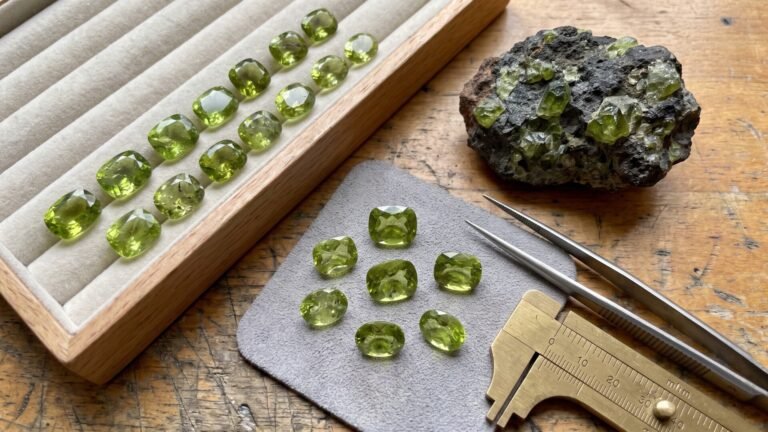
Let me tell you about the first time I held a peridot that changed my mind. I was at a gem show in Tucson, Arizona, and a dealer from Arizona’s San Carlos Apache Reservation handed me a ten-carat stone that glowed like bottled sunlight. “This,” he said, “is the gem that was born in fire.”
He wasn’t wrong. Peridot is one of the few gemstones that forms in the Earth’s mantle, deep beneath the crust, and is brought to the surface by volcanic activity. Some peridot has even been found in meteorites that fell from space. That cosmic origin gives the stone a kind of ancient, otherworldly quality that I find deeply moving.
Historically, peridot has been treasured for thousands of years. The ancient Egyptians called it the “gem of the sun” and mined it on the island of Zabargad in the Red Sea. They believed it protected its wearer from nightmares and evil spirits. The Romans called it “evening emerald” because its green remained vibrant in candlelight, unlike true emeralds that sometimes appeared darker.
Today, most commercial peridot comes from a few key sources. The San Carlos Apache Reservation in Arizona produces a significant portion of the world’s supply, though these stones tend to be lighter in color. For deeper, richer greens, collectors look to Pakistan’s Kashmir region, Myanmar, and China. The finest peridot—the kind that makes you catch your breath—often comes from the Pakistan-Afghanistan border, where stones can display an intense, saturated green that rivals some emeralds.
Mining practices vary widely. The San Carlos deposits are open-pit mines, relatively accessible and environmentally managed. The Pakistani sources, by contrast, are often small-scale operations in remote mountain regions, where miners work with hand tools and risk their lives for stones that may never see a jeweler’s bench.
Definition and Origin of Emerald
Emerald is the heavyweight champion of green gemstones. It has been for at least four thousand years. When Cleopatra claimed emerald mines as her own, she wasn’t just being greedy—she understood that emerald was power, wealth, and immortality made visible.
Emerald is a variety of beryl, the same mineral family that gives us aquamarine and morganite. What makes it green is the presence of chromium and vanadium, trace elements that create that signature lush, velvety color. Unlike peridot, which forms in the mantle, emerald crystallizes in hydrothermal veins and pegmatites, often in areas of intense geological activity.
The most famous sources are Colombia, Zambia, and Brazil. Colombian emeralds have been prized since the Spanish conquest for their pure, intense green with a slight bluish undertone. The Muzo and Chivor mines produce stones that command astronomical prices at auction. Zambian emeralds, which became prominent in the 1980s, tend to be darker and more bluish-green, with fewer inclusions than their Colombian counterparts. Brazilian emeralds are often lighter and more yellowish, though fine stones do exist.
Here’s something that surprised me when I first started studying emeralds: almost all of them are treated. The vast majority are treated with oils or resins to fill surface-reaching fractures and improve clarity. This is standard practice, accepted in the trade, but it means you need to be careful. An oiled emerald requires gentle care, and the treatment can wear off over time.
The historical significance of emerald is staggering. The Mogul emperors of India carved them into talismans and inscribed them with prayers. The Spanish shipped them by the ton from the New World. Today, emerald remains one of the “big three” colored gemstones, alongside ruby and sapphire, and its cultural cachet is unmatched.
Color Comparison
Color Characteristics of Peridot
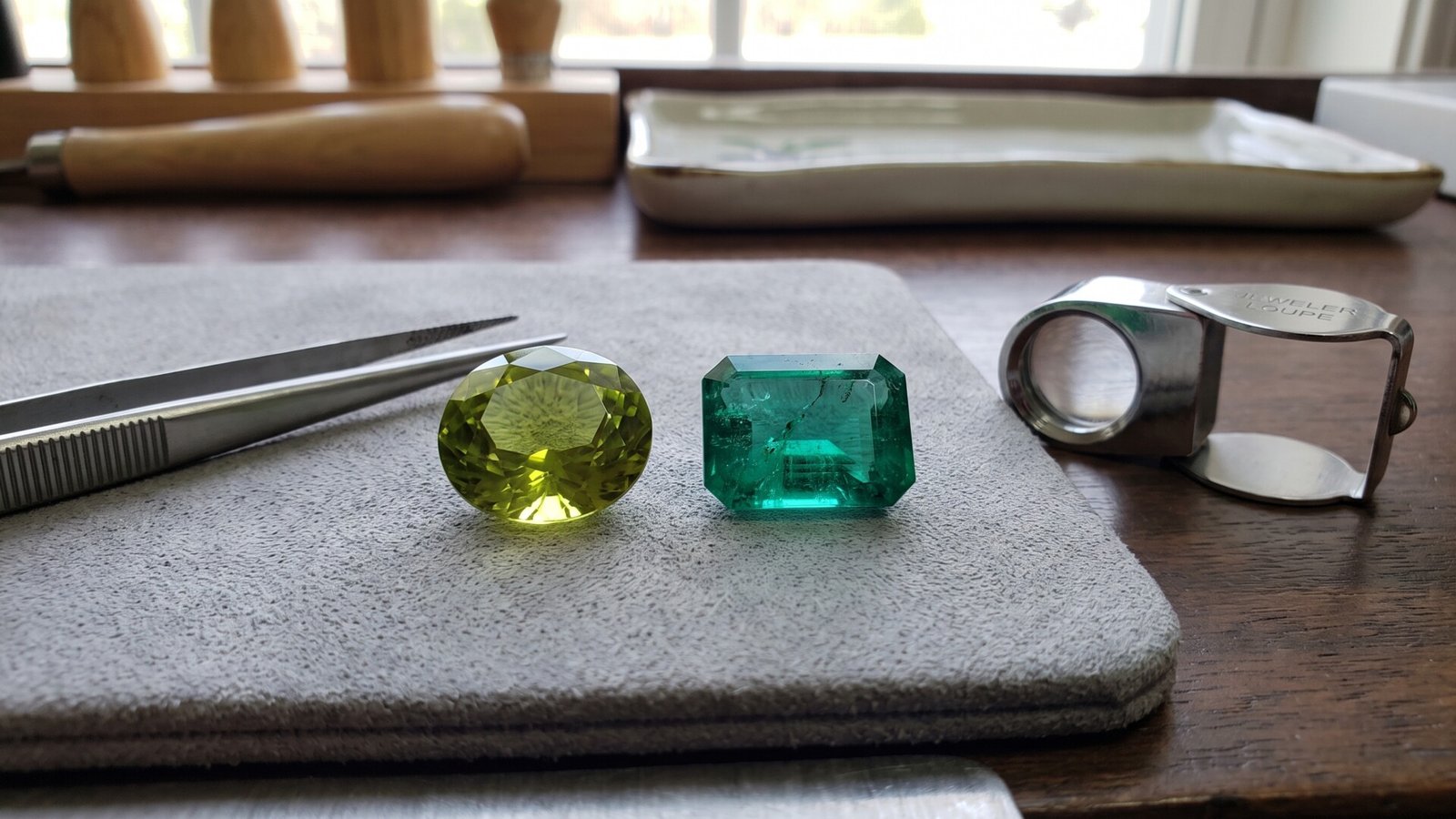
I remember the exact moment I learned to see peridot’s color properly. I was in a gemological lab, and the instructor held up a peridot next to an emerald. “Look at the undertones,” she said. “The peridot has a yellow-green base. The emerald has a blue-green base.”
That yellow-green is the hallmark of peridot. It ranges from a pale, almost lime-like green to a deep olive that borders on brownish. The best color, in my opinion and in the market’s, is a medium-dark, intense green with no brown or yellow overtones—what gemologists call “pure green.” But here’s the truth: pure green peridot is rare. Most stones have a distinct yellowish cast that gives them warmth and brightness.
The color comes from iron. Peridot is one of the few gemstones that owes its color entirely to a single element. The amount of iron determines both the intensity and the hue. More iron means darker green, but it also pushes the color toward olive. Less iron gives you that bright, electric lime that some people love and others find too light.
What I find fascinating about peridot is how it behaves in different lighting. In daylight, it can look almost fluorescent, as if it’s lit from within. In incandescent light, that yellow-green becomes warmer, more golden. This is why the Romans called it “evening emerald”—it doesn’t go dark and muddy like some emeralds do in low light.
Color Characteristics of Emerald
Emerald’s color is a different beast entirely. The finest emeralds display a pure, vivid green with a slight bluish undertone—what the trade calls “grass green” or “forest green.” It’s the color of new leaves in spring, of deep ocean water, of life itself.
The green comes from chromium and vanadium. Chromium gives that intense, saturated green that makes emerald so desirable. Vanadium adds a subtle bluish cast that distinguishes fine Colombian stones from their Zambian counterparts. Too much chromium, and the stone can look almost black. Too little, and it fades into a washed-out green that collectors dismiss.
Here’s where it gets complicated: emerald’s color is rarely uniform. Most stones have what gemologists call “color zoning,” where the green is concentrated in patches or bands. This is normal, even expected, but it affects value. A stone with even, saturated color across its entire surface commands a premium.
Inclusions are another defining characteristic of emerald. Unlike peridot, which is typically eye-clean, emeralds almost always contain visible inclusions. The trade calls them “jardin”—French for “garden”—because they resemble moss or leaves trapped inside the stone. A completely flawless emerald is so rare that it’s almost certainly synthetic or treated.
Color Grading and Value
Color grading for both stones follows similar principles but with different benchmarks. For peridot, the Gemological Institute of America grades color based on hue, tone, and saturation. The ideal is a medium-dark green with strong saturation and no brown or yellow modifiers. Stones that achieve this are rare and valuable.
For emerald, the grading is more nuanced. GIA uses a five-point scale for color: Light, Medium Light, Medium, Medium Dark, and Dark. The most desirable emeralds fall in the Medium to Medium Dark range, with vivid saturation. Stones that are too light lack value; stones that are too dark lose brilliance.
The impact of color on value cannot be overstated. A top-color peridot might cost $50 to $100 per carat. A top-color emerald of similar size can cost $5,000 to $10,000 per carat or more. That’s not a typo. The difference in price reflects the difference in rarity, demand, and cultural perception.
Pricing Comparison
Pricing Factors for Peridot
I learned about peridot pricing the hard way. Years ago, I bought a beautiful fifteen-carat peridot from a dealer at a gem show. I paid $80 per carat, thinking I’d gotten a steal. When I showed it to a GIA-trained appraiser, she shook her head. “It’s nice,” she said, “but the color is too yellowish. You overpaid by about forty percent.”
That lesson stuck. Peridot pricing is driven by three factors: color saturation, size, and clarity. Color is king. A medium-dark, pure green peridot with no brown or yellow overtones can command $100 to $150 per carat for stones over five carats. Lighter stones, especially those with obvious yellow, sell for $20 to $50 per carat.
Size matters enormously with peridot. Unlike emerald, which becomes exponentially more expensive as carat weight increases, peridot’s price per carat actually decreases for very large stones. This is because large peridots are relatively common. A ten-carat peridot might cost $50 to $80 per carat, while a one-carat stone of similar quality might be $100 to $120 per carat. The sweet spot for value is usually between five and ten carats.
Clarity is less of a concern with peridot. Most stones are eye-clean, meaning you won’t see inclusions without magnification. Inclusions that are visible to the naked eye reduce value significantly.
Current market trends show peridot holding steady. It’s not a speculative investment like emerald or ruby, but it’s a reliable, affordable option for buyers who want a green gemstone without the premium price tag.
Pricing Factors for Emerald
Emerald pricing is a different universe. I’ll never forget the first time I handled a five-carat Colombian emerald at a Sotheby’s preview. The asking price was $120,000. That’s $24,000 per carat. And it wasn’t even the best stone in the room.
Emerald pricing is driven by color first, clarity second, and origin third. A fine Colombian emerald with vivid, slightly bluish-green color can command $10,000 to $30,000 per carat for stones over three carats. Zambian emeralds of similar quality might be $5,000 to $15,000 per carat. Brazilian stones are typically less expensive, often $2,000 to $8,000 per carat.
Clarity is where emerald gets tricky. Because inclusions are expected, the market has developed a nuanced system for valuing them. A stone with minor inclusions that don’t affect transparency is still valuable. A stone with heavy inclusions that cloud the color is significantly less so. The best value often lies in stones with moderate inclusions that still show good color.
Treatment is a major pricing factor. Untreated emeralds are extremely rare and command a premium of fifty to one hundred percent over treated stones. However, I always caution buyers: unless you’re spending tens of thousands of dollars, you’re almost certainly buying a treated stone. That’s fine, as long as you know what you’re getting.
Comparative Price Analysis
Here’s a comparison table that I wish I’d had when I started buying gemstones:
| Quality Level | Peridot (per carat) | Emerald (per carat) |
|---|---|---|
| Low (light color, visible inclusions) | $10 – $30 | $200 – $1,000 |
| Medium (moderate color, minor inclusions) | $30 – $60 | $1,000 – $5,000 |
| High (vivid color, eye-clean) | $60 – $120 | $5,000 – $15,000 |
| Premium (top color, flawless, large) | $120 – $200 | $15,000 – $30,000+ |
The investment potential is clear: emerald has historically appreciated in value, especially fine Colombian stones. Peridot is more stable but less likely to see dramatic price increases. For most buyers, the choice comes down to budget and intention. If you’re buying for beauty and daily wear, peridot offers incredible value. If you’re building a collection or seeking an heirloom, emerald is the safer long-term bet.
Durability and Care
Durability of Peridot
Peridot has a Mohs hardness of 6.5 to 7. That’s softer than quartz but harder than opal. In practical terms, it’s suitable for earrings, pendants, and rings that aren’t worn daily. For engagement rings or bracelets that take regular abuse, I’d think twice.
The bigger concern is peridot’s toughness. It’s brittle, meaning it can chip or fracture if struck sharply. I’ve seen peridot rings that looked pristine after years of wear and others that developed chips after a single bump against a countertop. It depends on how the stone is set and how careful the wearer is.
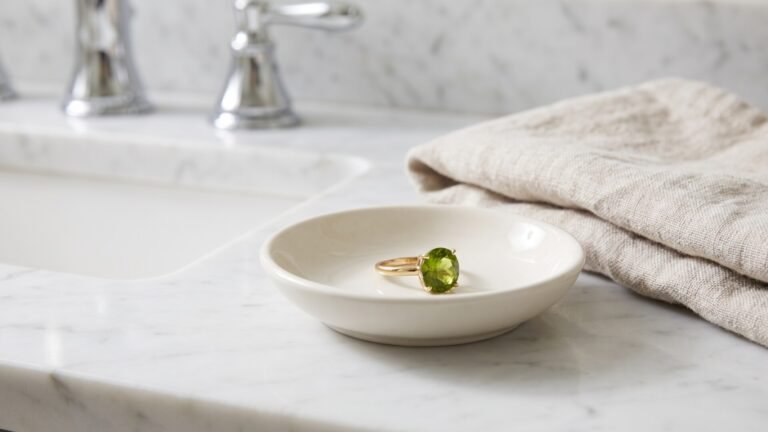
Cleaning peridot is simple: warm water, mild soap, a soft brush. Avoid ultrasonic cleaners and steamers, which can damage the stone. And never use harsh chemicals or abrasives.
Durability of Emerald
Emerald has a Mohs hardness of 7.5 to 8, harder than peridot but still vulnerable. The real issue is its inclusions. Those internal fractures make emerald more susceptible to breaking than its hardness suggests. A sharp blow can cause a stone to split along an inclusion.
The treatment factor adds another layer of complexity. Oiled emeralds should never be cleaned with ultrasonic or steam cleaners, which can remove the oil and leave the stone looking cloudy. Gentle cleaning with warm water and a soft cloth is best. Resin-treated emeralds are more stable but still require care.
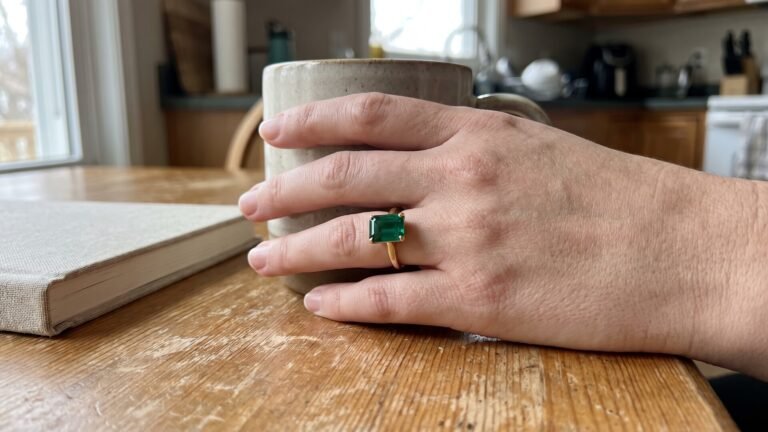
I always tell my readers: if you’re buying an emerald ring for daily wear, choose a protective setting like a bezel or a halo that shields the stone from impact. And remove it before doing dishes, gardening, or anything that involves hard surfaces.
Symbolism and Cultural Significance
Symbolism of Peridot
Peridot has always felt like a stone of optimism to me. Its bright, sunny green seems to carry light rather than absorb it. The ancient Egyptians believed it protected against nightmares and evil spirits, and they set it in gold to harness the sun’s power. Medieval Europeans wore peridot to ward off depression and melancholy.
As a birthstone for August, peridot represents strength, healing, and renewal. It’s also the traditional gift for sixteenth wedding anniversaries. In modern crystal healing, peridot is associated with the heart chakra and is said to promote emotional balance and forgiveness.
Symbolism of Emerald
Emerald’s symbolism is more complex and, I think, more profound. It has been associated with fertility, rebirth, and eternal love for millennia. The Romans dedicated emerald to Venus, the goddess of love and beauty. The Mughals saw it as a stone of wisdom and used it in ceremonial objects.
As the birthstone for May, emerald represents hope, renewal, and growth. It’s also the traditional gift for twentieth and thirty-fifth wedding anniversaries. In crystal healing, emerald is said to open the heart chakra and promote unconditional love.
What strikes me about emerald’s symbolism is its dual nature. It’s a stone of both love and power, of both vulnerability and strength. That tension is part of what makes it so compelling.
Buying Considerations
What to Look for When Buying Peridot
When I buy peridot, I look for three things: color saturation, cut quality, and size. Color is everything. I want a medium-dark green with minimal yellow or brown. I avoid stones that look washed out or too olive.
Cut quality matters because peridot’s brilliance depends on how light enters and exits the stone. A well-cut peridot will have a lively, sparkly appearance. A poorly cut one will look dull and lifeless.
The most common mistake I see buyers make is prioritizing size over quality. A ten-carat peridot with poor color is worth less than a five-carat stone with excellent color. Don’t be seduced by carat weight alone.
What to Look for When Buying Emerald
Emerald buying is more complex. I start with color: vivid, medium-dark green with a slight bluish undertone. Then I look at clarity: I want inclusions that don’t detract from the overall beauty. A stone that’s too included will look cloudy and lifeless.
Treatment disclosure is non-negotiable. Always ask if the stone has been oiled or resin-treated. Reputable sellers will tell you. If they won’t, walk away.
The biggest mistake I see is buying emerald without certification. A GIA or AGS report is essential for verifying origin, treatment, and quality. Without it, you’re trusting the seller’s word, and that’s a gamble I’ve seen go wrong too many times.
Conclusion
I still remember that day in the New York jewelry district, staring at an emerald I couldn’t afford. I thought I’d settled for peridot. But over the years, I’ve learned that “settling” is the wrong word. Peridot and emerald are different stones for different purposes.
If you want a bright, affordable green gemstone that you can wear without fear, peridot is an excellent choice. It’s beautiful, durable enough for most jewelry, and offers incredible value for its size.
If you want a stone with history, prestige, and investment potential, emerald is the clear winner. It’s more expensive, more fragile, and more demanding, but it carries a weight that peridot simply cannot match.
The choice isn’t about which is “better.” It’s about which stone fits your life, your budget, and your heart. Both have their place. Both deserve appreciation.
Frequently Asked Questions About Peridot Vs Emerald
What is the main difference in color between peridot and emerald?
Peridot has a yellow-green to olive-green color, while emerald ranges from rich green to bluish-green. The key difference is that peridot’s green has a warm, yellowish undertone, while emerald’s green often has a cool, bluish undertone.
How does the price of peridot compare to emerald?
Peridot is significantly more affordable, typically ranging from $10 to $200 per carat depending on quality. Emerald ranges from $200 to $30,000+ per carat. Fine emeralds can cost 100 times more than comparable peridots.
Is peridot a good investment compared to emerald?
Peridot is a stable but modest investment, with slow appreciation. Emerald, especially fine Colombian stones, has historically appreciated more significantly. However, emerald carries higher risk due to treatment concerns and market fluctuations.
What care is required for peridot versus emerald jewelry?
Both require gentle care. Clean with warm water and mild soap, avoiding ultrasonic and steam cleaners. Peridot is more resistant to cleaning but more prone to chipping. Emerald requires extra caution due to oil treatments and internal fractures.
Can peridot be found in larger sizes compared to emerald?
Yes. Large peridots (over 10 carats) are relatively common and affordable. Large emeralds (over 5 carats) are rare and exponentially more expensive. Peridot’s price per carat often decreases with size, while emerald’s increases dramatically.
How do I choose between peridot and emerald for my jewelry?
Consider your budget, lifestyle, and purpose. Choose peridot for affordable beauty, daily wear, and larger statement pieces. Choose emerald for investment, heirloom quality, and the prestige of owning one of the world’s most treasured gemstones.