The 40th Anniversary Gift Guide: Why Rubies are the Only Choice
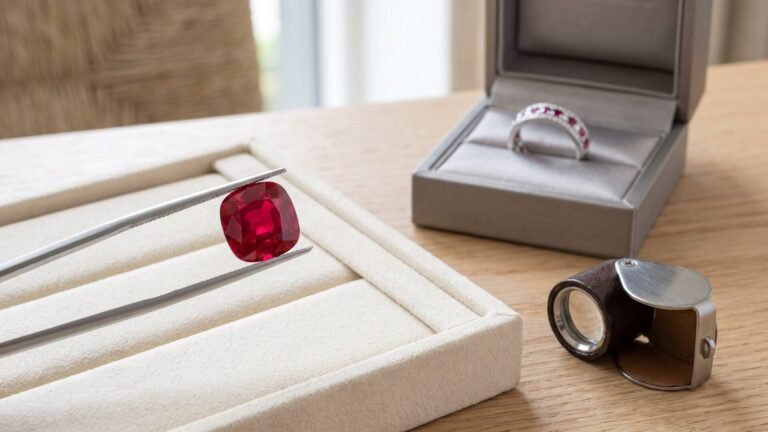
Forty years of marriage is a milestone that deserves more than a card or a dinner. By tradition, the 40th wedding anniversary is the ruby anniversary, and ruby jewelry is the classic way to mark it. Ruby is also a practical choice: it is among the hardest and most durable colored gemstones, which suits a gift meant to last.
The 40th anniversary is known as the “ruby anniversary” because ruby’s red has long been associated with passion, courage and lasting commitment. This guide explains the tradition, how to judge a ruby’s quality, what rubies cost, how to avoid common buying mistakes, and which kinds of ruby jewelry make good gifts, with examples from well-known online jewelers such as Blue Nile, James Allen and Brilliant Earth. You can also read our focused 40th anniversary ruby buying guide, or browse birthstone jewelry gift ideas by relationship if you are buying for your spouse, your parents or another loved one.
Quick answer: for a 40th anniversary, a ruby pendant or earrings are the most durable, low-risk choices; a ruby ring suits someone who wants a daily-wear symbol and does not do heavy manual work. Ask for a laboratory report and treatment disclosure on anything significant, and consider a lab-grown ruby if budget is a concern.
Why Rubies Are the Symbol of the 40th Anniversary
Symbolism and meaning
Ruby’s red is the color of the heart and of blood, which is why it has been associated with love, vitality and courage in many traditions. In ancient India, ruby was reportedly called ratnaraj, the “king of gems,” and warriors were said to wear it for protection. You can read more in our guide to the symbolism of ruby in ancient India and our overview of ruby meaning and symbolism. These are cultural beliefs and traditions, not proven effects.
For a 40th anniversary the symbolism feels fitting: the steady warmth of a long marriage rather than the excitement of a first anniversary. Ruby’s red stands, by tradition, for passion and courage, and the stone’s durability makes a fitting parallel for a marriage that has lasted.
Historical background
Rubies have adorned royalty for centuries, and fine rubies appear in the regalia of many courts. Some old accounts, which are best treated as legend, say that Burmese warriors wore rubies in the belief that they offered invincibility. In medieval Europe, rubies were traditionally linked with health, wealth and wisdom. These are historical beliefs and should not be taken as claims about what the stone does.
Emotional value
A ruby is a gift that can be worn, repaired, reset and handed down. A well-chosen stone can be passed to a child or grandchild with the story of the anniversary it marked.
Rarity and value
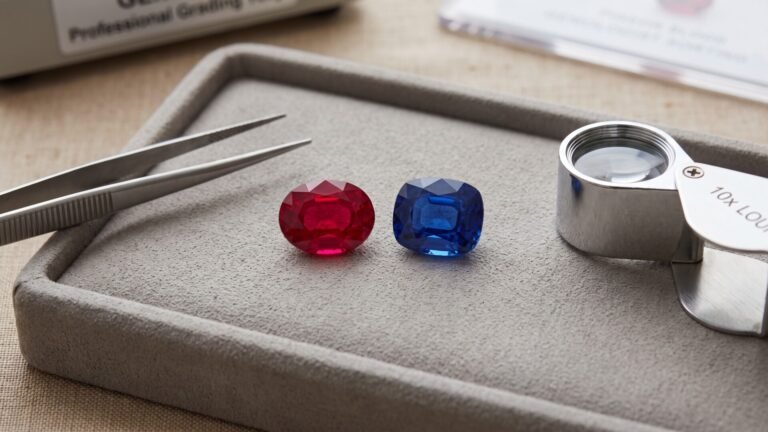
Fine ruby is considerably rarer than fine diamond in larger sizes, and top-quality rubies of significant size are among the most valuable colored gemstones. But value depends heavily on color, clarity, treatment and origin, and prices vary a great deal. This guide does not suggest that a ruby is an investment; treat it as a keepsake first. If you want a deeper comparison of high-end stones, see pigeon’s blood rubies vs. royal blue sapphires.
For more on ruby, the July birthstone, visit our July Birthstone Guide and our full ruby guide.
Ruby Facts at a Glance
| Property | Details |
|---|---|
| Mineral | Corundum (aluminum oxide); red corundum is ruby, other colors are sapphire |
| Mohs hardness | 9, among the hardest gemstones (scratch resistance) |
| Toughness | Good, but not unbreakable; heavily included or fracture-filled stones are more fragile than clean ones |
| Cleavage | None, but corundum can show parting along certain planes |
| Common treatments | Heat treatment is very common; some rubies are fracture-filled with glass-like material, which affects durability and value |
| Color cause | Chromium; more chromium means a stronger red, and low-iron, marble-hosted rubies often glow red under ultraviolet light (GIA) |
| Natural, lab-grown, simulant | Lab-grown ruby is real ruby made in a laboratory; simulants such as glass or red spinel-colored imitations only imitate |
| Care | Warm soapy water and a soft brush; avoid harsh chemicals; ask a jeweler before ultrasonic cleaning if the stone is fracture-filled |
Hardness is scratch resistance; toughness is resistance to chipping and breaking. Ruby scores well on both, but a stone with many fractures, or one filled with glass, can still be damaged. Our hardness scale guide explains the difference in more detail.
Understanding Ruby Quality (The 4 Cs)
The 4 Cs used for diamonds apply to ruby too, but the priorities are different. Treatment and origin matter alongside them.
Color (the most important factor)
Color is generally the biggest driver of a ruby’s value. The most prized rubies show a vivid, slightly bluish red often described by the trade term “pigeon’s blood”, a term associated with Burma (Myanmar). It is a marketing and trade description, not a formal grade at every lab, so look at the stone rather than the label.
- Pigeon’s blood red: Deep, saturated red with a hint of blue. Very rare and expensive.
- Vivid red: Intense, pure red without strong brown or orange tones. An excellent choice for an anniversary gift.
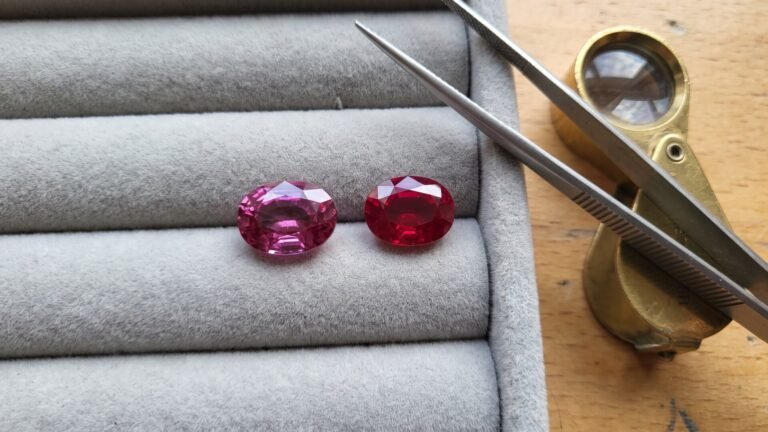
- Pinkish red: Usually more affordable, especially attractive in rose gold. Very pink stones may be sold as pink sapphire instead of ruby.
- Dark red or brownish red: Less desirable; the stone can look almost black in low light.
Clarity
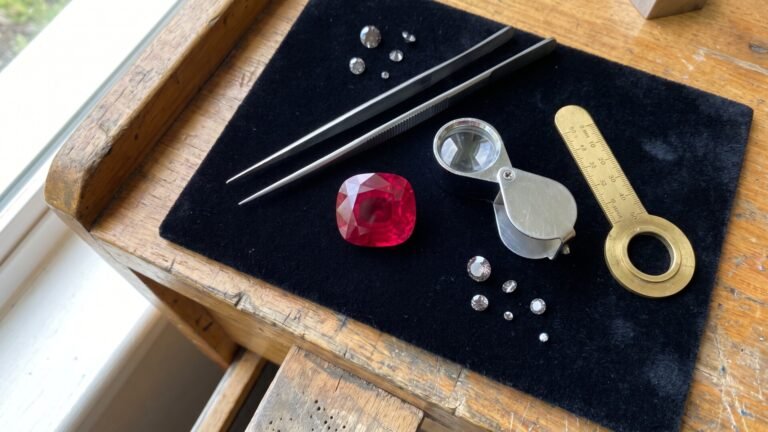
Unlike diamonds, rubies almost always have inclusions, and completely flawless stones are very rare. The key question is whether inclusions affect beauty or durability. Silk (fine needle-like inclusions) can even soften the color and is common in natural stones.
- Eye-clean: No inclusions visible without magnification. Rare and valuable.
- Minor inclusions: Visible under magnification but not to the naked eye. Acceptable for fine jewelry.
- Heavily included: Visible without magnification. Lower value, and can be more fragile.
Cut
Ruby rough is expensive, so cutters often prioritize retaining weight and color over ideal proportions. A well-cut ruby still shows even color and good brilliance.
- Oval and cushion cuts are most common and make efficient use of rough.
- Round brilliants are less common because they can waste more rough, and they often cost more per carat.
- Emerald (step) cuts show clarity and can make inclusions more visible.
Carat weight
Prices per carat tend to rise steeply as stones get larger and higher in quality, so a stone just over a weight threshold (such as 1 carat) can cost noticeably more than one just under it. Compare listings of stones with similar color and treatment, and ask for a lab report. The price section below gives indicative ranges.
Certification and treatment
For any significant ruby purchase, ask for a laboratory report from a recognized gemological laboratory such as GIA, or a specialist colored-stone lab such as GRS or AGL. A report typically states whether the ruby is natural or synthetic and what treatment it has had, and some reports also comment on origin. Most rubies on the market are heat-treated, which is accepted when disclosed; the Gem Society advises assuming a ruby is heated unless the seller states it is unheated. Fracture or lead-glass filling is a bigger concern and should lower the price substantially.
For a deeper dive into top-end stones, read our guide to high-end ruby jewelry.
Where Rubies Come From and Why It Matters
Origin affects both look and price. According to the Gem Society, Myanmar (Burma), where Mogok is the legendary source, typically fetches the highest prices. Mozambique, where deposits at Montepuez were discovered in 2009, now supplies stones that range from Burmese-like to Thai-like in color. Thailand and Cambodia were once known for clean stones, but production there is now negligible and their rubies tend toward a garnet-like red. Sri Lanka, Madagascar and Vietnam also produce ruby in different color ranges.
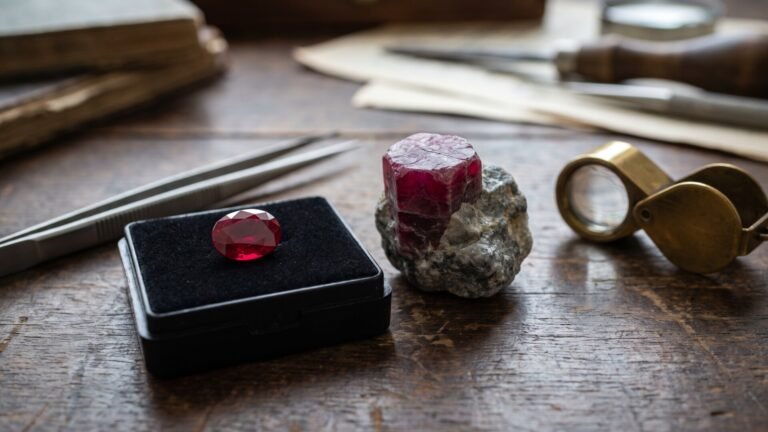
GIA notes that the most renowned rubies, from Myanmar, the Himalayas and northern Vietnam, typically form in marble. Marble contains little iron, which is why these stones often have an intense red and can glow red under ultraviolet light, including sunlight. As with any gemstone, treat an origin claim as something to confirm with a laboratory report and not as a seller’s promise.
Ruby Price Ranges (USD per Carat)
Ruby prices span an enormous range. The figures below come from two dealer education pages, neither of which states a methodology or date, so treat them as rough orientation and not as quotes. They are per carat, in US dollars.
| Stone size (all qualities) | Approximate price per carat (USD) |
|---|---|
| 0.5 to 1 carat | About $500 to $5,000 |
| 1 to 2 carats | About $2,000 to $10,000 and up |
| 2 to 5 carats | About $5,000 to $50,000 and up |
| 5 carats and up | About $20,000 to $100,000 and up |
Treatment and origin move a stone within those bands. A second dealer guide lists heat-treated rubies at roughly $240 to $2,400 per carat for fair quality, $1,200 to $9,000 for good quality and $3,600 to $12,000 for very good quality. It lists unheated Burmese rubies far higher: roughly $2,400 to $24,000 per carat for good quality and $8,000 to $42,000 for very good quality, with the very best stones reaching into the hundreds of thousands. Per-carat prices do not rise in a straight line with size, so you cannot extrapolate between bands.
Two practical takeaways for an anniversary gift: a heat-treated stone of good color is the sensible sweet spot for most budgets, and lab-grown ruby costs considerably less than a natural stone of similar appearance, which is why it can be a good way to get a larger, cleaner stone. We could not verify a per-carat figure for lab-grown ruby, so ask the seller for the actual price and compare.
Natural, Lab-Grown and Look-Alike Rubies
- Natural ruby: Mined, usually heat-treated. Most expensive per carat for fine quality.
- Lab-grown ruby: Real corundum with the same chemistry and hardness as natural ruby, grown in a laboratory. Often priced much lower and a good option for a larger stone on a smaller budget. It should be sold as lab-grown.
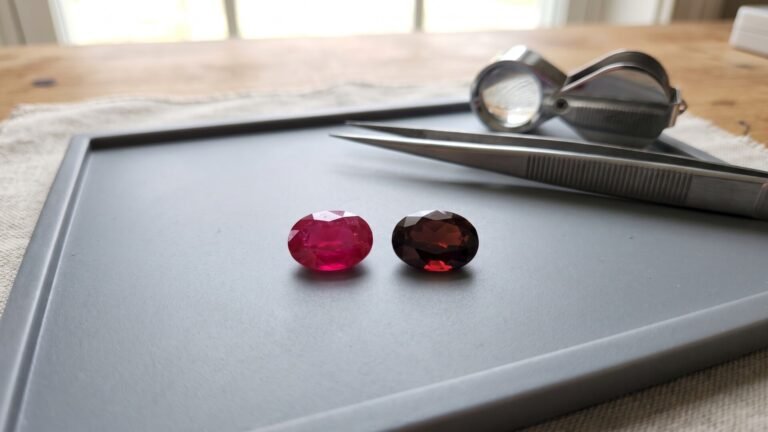
- Red spinel and red garnet: Different minerals that can resemble ruby. Spinel is hard and bright; garnet is more affordable but softer. See how to tell garnet from ruby.
- Rubellite (red tourmaline): Pink to red tourmaline. See pink tourmaline vs. ruby.
For help deciding between natural and lab-grown, read Natural vs. Lab-Grown Birthstones.
How to Choose the Perfect Ruby Gift
Step 1: Decide on the jewelry type
- Rings: The most traditional and emotionally charged choice for a spouse, but rings take the most knocks. Choose a protective setting.
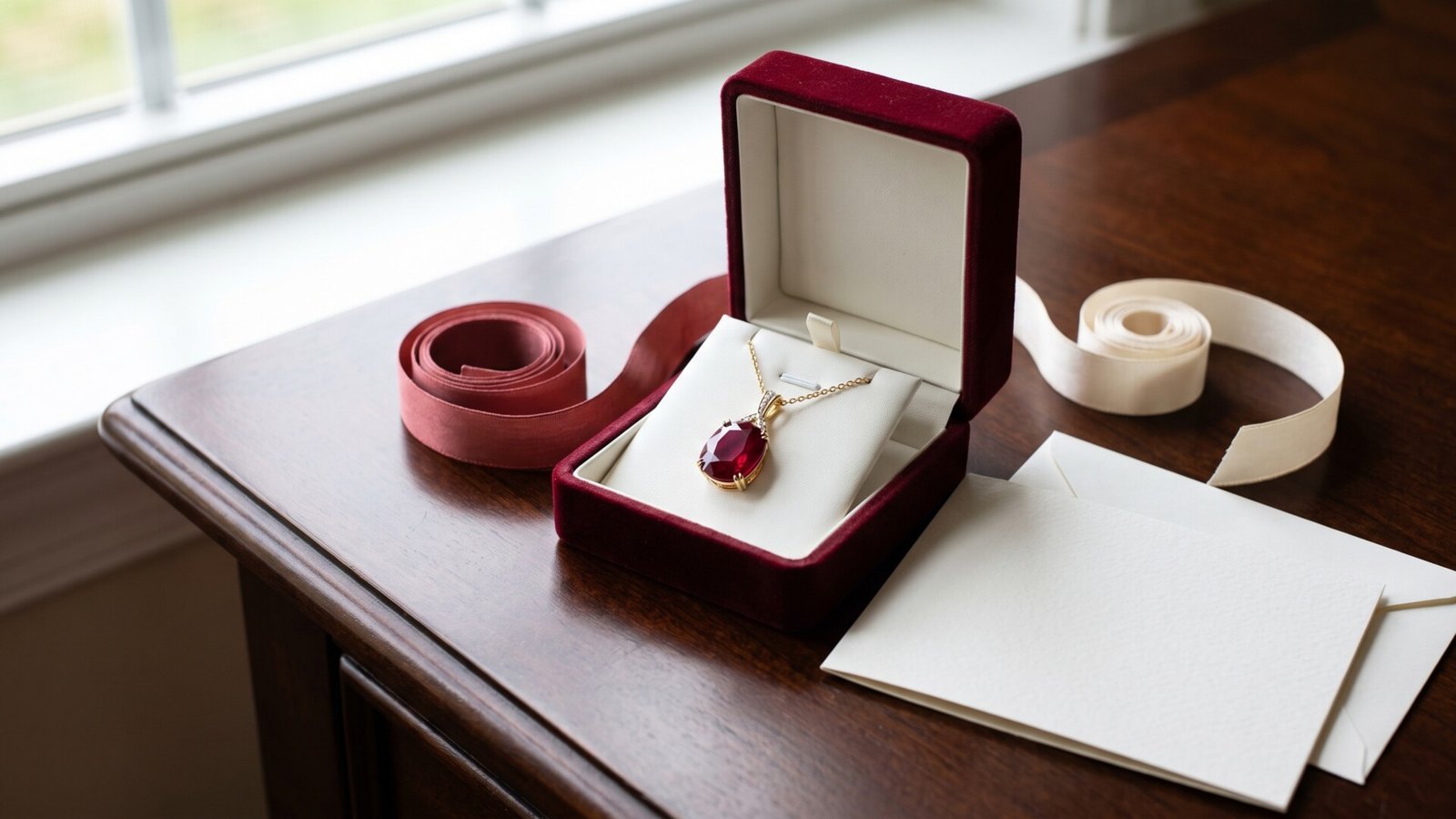
- Pendants and necklaces: Great for regular wear and gentler on the stone than rings. See how to choose a birthstone necklace.
- Earrings: A good choice for someone who does not wear rings. Studs or drops.
- Bracelets: Subtle and elegant, though bracelets take knocks too.
Step 2: Set a budget
Ruby prices span a very wide range depending on color, size, treatment and origin, as the price ranges above show. As a rough guide, small and lab-grown stones are at the lower end, and large natural stones with strong color and a lab report sit at the top. Confirm current prices on retailer pages before deciding.
- Starter: Smaller stones, often with visible inclusions or lab-grown. Beautiful and meaningful.
- Mid-range: Larger stones with good color and fewer visible inclusions.
- Fine quality: Large stones with vivid color, a lab report and clear treatment disclosure.
Step 3: Choose a reputable seller
We have not tested these retailers’ products. They are well-known online jewelers worth checking, but read each retailer’s current return policy and stone details before buying.
- Blue Nile – Online jeweler with a wide range of gemstone jewelry; check listings for the stone’s details and reports.
- James Allen – Known for its 360-degree stone viewer and customizable designs.
- Brilliant Earth – Promotes recycled precious metals and responsibly sourced stones; read its current sourcing statement and our ethical gemstone shopping guide for questions to ask.
Step 4: Consider style
- Classic: Solitaire ring or simple pendant. The stone speaks for itself.
- Modern: Bezel settings, geometric shapes and mixed metals.
- Vintage: Halo settings, filigree, milgrain. Ruby was enormously popular in Art Deco and Victorian jewelry.
- Diamond accents: Add sparkle and contrast with the red of the ruby.
Top Ruby Jewelry Gift Ideas for a 40th Anniversary
These five pieces are examples of the kinds of ruby jewelry available at different budgets. Designs, prices and stone quality change, so confirm details on the retailer’s page. We do not quote product prices here because we could not verify them; the ruby price ranges above show what drives cost.
1. Ruby Solitaire Ring – Blue Nile
Main cost driver: The ruby’s size, color and treatment, plus the metal
Style: Classic four- or six-prong setting
Best for: A spouse; a milestone statement
The solitaire ring is the quintessential anniversary gift: one ruby in a simple gold or platinum setting. Check whether the stone has a laboratory report and what treatment it has had, and choose a setting that protects the stone, such as a bezel or low-set prongs.
Why it suits a 40th: The simplicity of a single stone mirrors a long marriage.
[Shop Ruby Solitaire at Blue Nile]
2. Ruby Pendant Necklace – James Allen
Main cost driver: The ruby’s size and color, plus the chain and metal
Style: Bezel or prong-set ruby on a chain
Best for: Everyday wear
A ruby pendant sits close to the heart, which fits the symbolism, and it is gentler on the stone than a ring. Look at chain length (16 to 20 inches is a common range) and metal.
Why it is a top pick: It can be worn daily with little risk of knocks.
[Shop Ruby Pendant at James Allen]
3. Ruby Beaded Bracelet – Brilliant Earth
Main cost driver: Bead quality and treatment (dyed or heavily treated beads cost far less)
Style: Smooth or faceted ruby beads on a cord or elastic
Best for: Understated symbolism
A ruby bead bracelet is understated and stackable. Beads on elastic cord are not the most durable construction, so remove the bracelet for gardening, exercise and sleep, and ask whether the beads are natural, treated or dyed. Be careful: low-priced “ruby” beads are often dyed, heavily treated or imitation stones, so check the listing.
Why it works: It suits someone who loves jewelry but prefers a quiet look.
[Shop Ruby Bracelet at Brilliant Earth]
4. Ruby Multi-Stone Ring – Blue Nile
Main cost driver: The center ruby, plus the weight and quality of the accent stones
Style: Center ruby with diamond or gemstone accents
Best for: Elegance with a statement
A larger ruby flanked by two smaller diamonds or accent stones such as white sapphires. The side stones add sparkle, and the three-stone design is often read as past, present and future.
Why it suits a 40th: The three stones give a natural way to mark forty years together and look ahead.
[Shop Ruby Multi-Stone Ring at Blue Nile]
5. Ruby and Diamond Accent Necklace – James Allen
Main cost driver: The ruby’s size and quality, plus the diamond weight and metal
Style: Larger ruby with a diamond halo or pave chain
Best for: A high-end, heirloom-style gift
This is the anchor piece. A substantial ruby is surrounded by a diamond halo, or sits on a pave chain, with strong contrast between the red and white stones. The halo also adds a measure of protection around the center stone.
Why it is heirloom-worthy: A well-made piece in a durable stone can be passed down.
[Shop Ruby & Diamond Necklace at James Allen]
Comparison Table: Ruby Jewelry Options
| Jewelry Type | Benefit | Best For | Main Cost Driver | Brand Examples |
|---|---|---|---|---|
| Solitaire Ring | Timeless statement | Anniversary milestone, spouse | Ruby size, color and treatment | Blue Nile |
| Pendant Necklace | Low-risk daily wear | Romantic gift, everyday love | Ruby size and color | James Allen |
| Beaded Bracelet | Subtle symbolism | Occasional wear, stackable | Bead quality; dyed beads cost far less | Brilliant Earth |
| Multi-Stone Ring | Luxury and elegance | Statement piece, past-present-future | Center ruby plus accent stones | Blue Nile |
| Ruby + Diamond Necklace | Heirloom style | Luxury gift, legacy piece | Ruby size plus diamond weight | James Allen |
How Ruby Compares with Other Red Stones
- Garnet – January’s birthstone. Deep red and usually more affordable, but softer (about 6.5 to 7.5 on Mohs, depending on type) and less intense in color than top ruby. Traditionally linked with friendship and constancy. See Garnet vs. Ruby.
- Red spinel – Beautiful, hard (about 8) and often mistaken for ruby, historically too. Often a good-value alternative.
- Rubellite (red tourmaline) – Softer (about 7 to 7.5 on Mohs) and less rare; see pink tourmaline vs. ruby.
Ruby is the traditional anniversary gem and one of the most durable of the red stones. That does not make the alternatives wrong, particularly if you are on a budget.
Durability and longevity
Ruby is 9 on the Mohs scale, among the hardest gemstones, so it resists scratching from daily wear, and it has no cleavage, which makes it suitable for everyday jewelry. It is not indestructible: a hard knock can chip it, and fracture-filled stones are more vulnerable. Garnet (about 6.5 to 7.5) and tourmaline (about 7 to 7.5) scratch more easily.
Value
Fine natural rubies are valued by collectors, but no gemstone is a guaranteed investment, and resale prices are often lower than retail. Buy a ruby to enjoy, with a lab report if the price is significant.
For more on durability, see our Gemstone Hardness Scale guide.
Caring for Ruby Jewelry
Daily care
- Remove ruby rings before heavy manual work, sports and gardening.
- Put on lotions, perfumes and hairspray before your ruby jewelry.
- Wipe with a soft cloth after wearing to remove oils.
Cleaning
- Safe method: Warm soapy water and a soft brush. The Gem Society notes that rubies reasonably free of inclusions and fractures can often be cleaned mechanically, but heavily included or fractured stones should be cleaned by hand.
- Avoid: Ultrasonic cleaners if the ruby has visible fractures, cavities or fracture filling; steam cleaners can also be risky for filled or included stones.
- Never use: Bleach, ammonia or abrasive cleaners, and avoid acids, which can damage filled stones.
Storage
Store ruby separately from diamonds, which can scratch it, and from softer stones such as opal and pearl, which it can scratch. Use individual soft pouches or a compartmentalized box.
Professional inspection
Have ruby rings checked by a jeweler once a year to inspect prongs and settings. A loose stone can be lost.
Personalizing Your Ruby Gift
Engraving
Many jewelers can engrave the inside of a ring or the back of a pendant. Ideas include “40 years” with the date, a short message, or the wedding date and names.
Custom design
Retailers such as Blue Nile, James Allen and Brilliant Earth offer customization options for some designs; availability and rules vary, so check the current terms. You can usually choose:
- The stone (size, shape, natural or lab-grown, and report)
- The setting style (solitaire, halo, three-stone, vintage)
- The metal (yellow gold, white gold, rose gold or platinum)
- Accent stones, including the children’s or grandchildren’s birthstones
Combining ruby with other stones
- Ruby and diamonds: Classic and elegant.
- Ruby and birthstones: Adds personal meaning; see birthstones by month.
- Ruby and sapphire: The 40th anniversary is ruby, and the traditional list gives sapphire for the 45th, so some couples combine them. Our sapphire guide covers that stone.
Creative Ruby Gift Ideas Beyond Jewelry
Home and keepsakes
- A keepsake box to hold wedding rings or anniversary letters.
- A framed photograph from the wedding day, with a red mat or accents.
- Be cautious with “ruby” decor items; many are red glass or dyed material rather than genuine ruby.
Experiences paired with jewelry
- Book a romantic getaway and present the ruby jewelry there.
- Plan a “ruby red” anniversary dinner with red flowers and a reveal.
- Arrange an anniversary portrait session with the couple wearing the new piece.
Matching sets
Combine a pendant with ruby stud earrings so that they can be worn together for special occasions or separately day to day.
Frequently Asked Questions About 40th Anniversary Ruby Gifts
Why is ruby the 40th anniversary stone?
By tradition, ruby is the gem of the 40th anniversary because its deep red is associated with passion, courage and lasting love. Anniversary gift lists vary slightly by country and publisher, but ruby is the commonly cited stone for the 40th.
How can I tell if my ruby is real?
A gemologist or a laboratory report is the only reliable way. Natural rubies usually show some inclusions, while perfectly clean stones may be lab-grown or glass. Red fluorescence under UV light can be a clue but is not proof. Buy from a seller with clear return policies and ask for treatment disclosure.
What is the best jewelry for a 40th anniversary gift?
A ruby ring is the most traditional, a pendant is the lowest-risk for daily wear, and earrings suit someone who does not wear rings.
Should I buy a certified ruby?
For any significant purchase, yes. A report from a recognized lab such as GIA, AGL or GRS states whether the stone is natural or lab-grown and what treatment it has had, which helps you compare prices fairly.
Is lab-grown ruby real?
Yes, lab-grown ruby is real corundum with the same chemistry and hardness as natural ruby. It is not a simulant. It should be sold as lab-grown and is usually less expensive than a natural stone of similar appearance.
Are rubies a good investment?
Treat a ruby as a keepsake first. Fine natural rubies are valued, but nobody can promise a gemstone will increase in value, and resale prices are often below retail.
How much does a ruby cost?
It varies enormously. One dealer guide lists roughly $500 to $5,000 per carat for stones of 0.5 to 1 carat, $2,000 to $10,000 or more for 1 to 2 carats, and $5,000 to $50,000 or more for 2 to 5 carats. Treatment, origin, color and clarity move a stone within those bands, and lab-grown ruby costs much less.
Is a heat-treated ruby worth less than an untreated one?
Yes. Untreated rubies are worth significantly more, but simple heat treatment is widely accepted and does not drastically reduce value when it is disclosed. Fracture or lead-glass filling reduces value substantially.
Where do the best rubies come from?
Myanmar (Burma), especially the Mogok area, is traditionally the most prized source and typically commands the highest prices. Mozambique has become an important source since deposits were discovered at Montepuez in 2009. Always confirm origin claims with a laboratory report.
Is ruby durable enough for an everyday ring?
Ruby is 9 on the Mohs scale and has no cleavage, so it is among the best colored stones for everyday wear. A hard knock can still chip it, and fracture-filled stones are more vulnerable, so choose a protective setting and remove the ring for heavy work.
Final Thoughts: Making the 40th Anniversary Memorable
Forty years is a milestone that deserves a gift as lasting as the marriage it celebrates. Ruby, the traditional gem of the 40th anniversary, is a good match: its red is linked in tradition with love and courage, and its hardness makes it a durable choice for jewelry.
Choose the jewelry type that fits how the wearer lives, ask for treatment disclosure and a laboratory report on significant purchases, and consider a lab-grown stone if budget matters. A thoughtful engraving or a handwritten note will do more than any price tag to make it feel personal.
Ready to find the perfect ruby? Browse the collections below.
[Shop Ruby at Blue Nile]
[Shop Ruby at James Allen]
[Shop Ruby at Brilliant Earth]
More anniversary gift guides: The Ruby Anniversary: Year Significance and Gift Guide and The 40th Anniversary Ruby Guide: Buying the Perfect Red Stone.
Related reading: Ruby: Meaning, Properties, Uses & Value, Gemstones: Your Ultimate Guide to Nature’s Sparkle and Birthstone Jewelry Gift Ideas by Relationship.