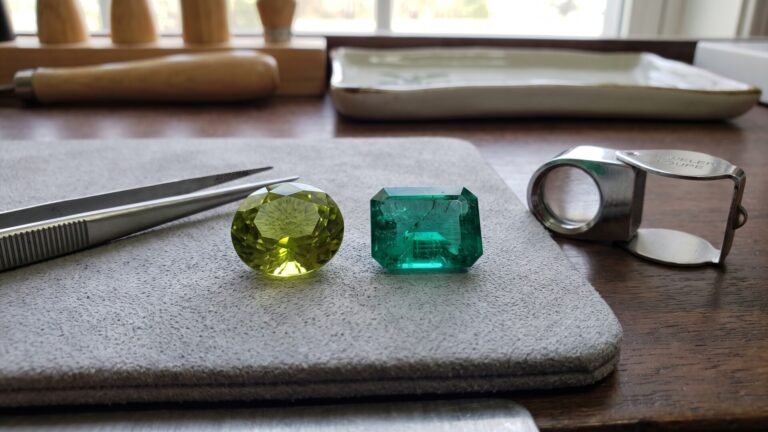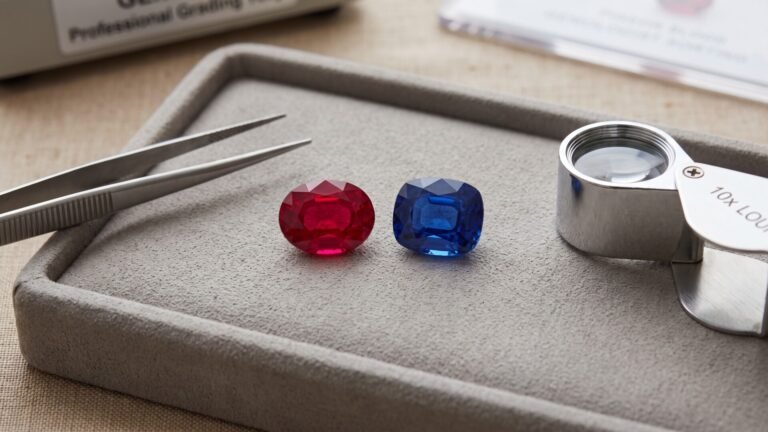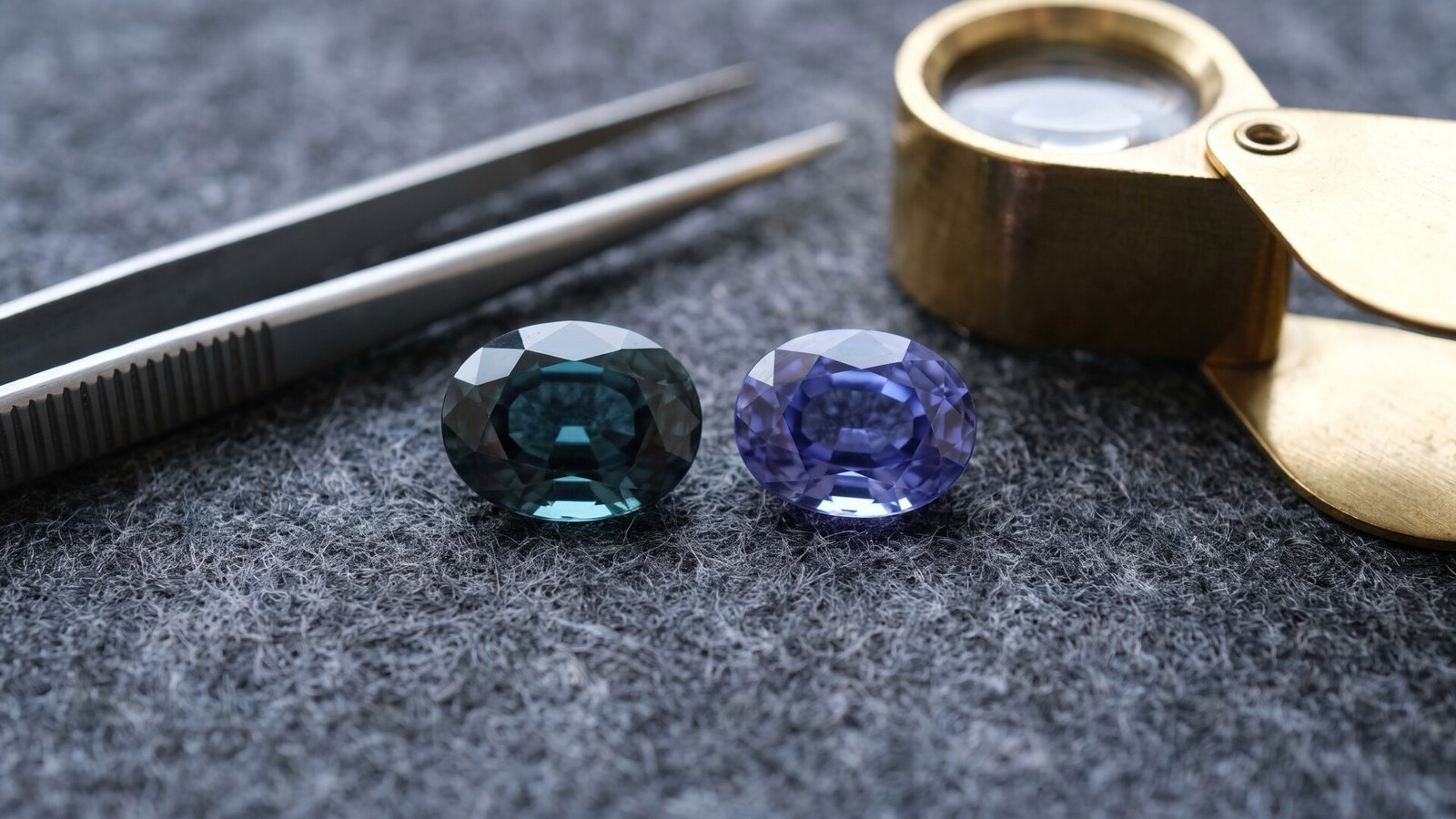
Alexandrite vs Sapphire color change comparison
Few gemstones attract as much curiosity as the ones that change color. Alexandrite is the best-known example, shifting from green in daylight to purplish red under incandescent light. Color-change sapphire does something similar, usually from blue to purple. They look related, but they are different minerals with different rarity, durability and price, and some “alexandrite” sold online is really a lab-grown color-change corundum. This guide explains how color change works, compares the two stones side by side, and shows what to check before you buy.
If you want the full profile of either stone first, see our complete alexandrite guide and sapphire guide. This article is part of our gemstones hub.
Alexandrite vs Sapphire at a Glance
| Feature | Alexandrite | Color-change sapphire |
|---|---|---|
| Mineral | Chrysoberyl (a rare variety) | Corundum |
| Typical color change | Green in daylight or fluorescent light to brownish or purplish red under incandescent light (GIA) | Often blue in daylight or fluorescent light to purple under incandescent light (GIA) |
| Mohs hardness | 8.5 (GIA) | 9 |
| Birthstone | June (with pearl and moonstone) | September |
| Typical treatment | Usually not treated for color, but always ask | Heat treatment is common and should be disclosed |
| Rarity | Scarce, especially fine stones over one carat | More available, though strong color change is uncommon |
Understanding Color Change in Gemstones
What Color Change Really Means
Color change means a stone shows distinctly different colors under different light sources. It is different from a slight shift in shade or from pleochroism, where a crystal shows different colors from different viewing angles; GIA notes that alexandrite’s color change does not come from pleochroism. In color-change stones, the way the crystal absorbs light leaves two transmission windows, so daylight, which is rich in blue and green wavelengths, brings out one color, and incandescent light, which is rich in red, brings out another.
The strength of the change varies widely. In the finest alexandrites the shift is clear and attractive, sometimes summed up as “emerald by day, ruby by night.” Many stones, however, show a weaker or muddier change, such as bluish green to brownish red. Color-change sapphires tend to show a softer shift, such as blue to purple.
How to Test the Change Yourself
Light source matters more than most buyers expect. Daylight, fluorescent office light, LED and incandescent bulbs differ in their spectra, so a stone can look dramatic under one and flat under another. Look at the stone near a window, under a warm incandescent bulb and under LED or fluorescent light, and ask the seller for photos or video in each. Be wary of listings that show only one lighting condition.
Alexandrite: The Color-Changing Classic
History and Sources
According to GIA, alexandrite was discovered in the Ural Mountains of Russia in 1830 and named for the future Czar Alexander II. The Russian deposits were the original source, and fine stones from them are prized by collectors. Today alexandrite is also found in Sri Lanka, East Africa and Brazil; GIA notes that fine material is very rare and valuable. A popular story links the green and red of the stone with Imperial Russian military colors, but treat that as a part of the legend. See our alexandrite meaning article for the folklore.
Quality and Value Factors
Color change is the most important factor: the cleaner and stronger the shift between the two colors, the more valuable the stone. Natural alexandrite almost always contains inclusions, so clarity matters mainly when it affects appearance. Cut is important because the cutter must orient the rough to show the best change from the top, often at the expense of weight; our guide to gemstone cuts explains what different cuts do. Size is the biggest price driver: most natural alexandrites are small, and fine stones over one carat are scarce.
As a rough guide to the market, one jeweler’s pricing article describes commercial-quality natural alexandrite as often starting in the low thousands of dollars per carat, fine stones with strong color change in the tens of thousands per carat, and exceptional stones over a carat sometimes higher. Prices are negotiated, not standardized, so treat these figures as a general range and rely on a laboratory report and comparison shopping.
Color-Change Sapphire: The Accessible Alternative
What It Is
Sapphire is the name for gem-quality corundum in every color except red, which is ruby. Corundum is aluminum oxide, colorless in its purest form, and trace elements give it color; GIA notes iron and titanium cause blue, and chromium causes red or pink. Some sapphires show a color change, most often from blue in daylight or fluorescent light to purple under incandescent light. GIA lists Madagascar, Tanzania, Sri Lanka, Myanmar and Australia among the sources of blue and fancy sapphires. See our sapphire color spectrum and sapphire meaning articles for more.
Quality and Value Factors
For color-change sapphire, the same logic applies: the clearer the shift and the more attractive each color, the better. Sapphires often contain fine needle-like inclusions called silk, which can soften the look and, in some stones, create a star effect when cut as a cabochon. Heat treatment is common in sapphire to improve color and clarity, so ask for disclosure and a laboratory report. Larger stones are easier to find than large alexandrites, which makes sapphire a practical way to get a bigger color-change gem. We do not give a price per carat for color-change sapphire here, because prices depend heavily on the strength of the change and sellers’ pricing is inconsistent.
Alexandrite vs Sapphire: Head-to-Head
Color Change Effect
Fine alexandrite is known for the most distinct change between two contrasting colors, green and red, while color-change sapphire usually shifts within the blue-to-purple range. That does not mean every alexandrite beats every sapphire: a weak alexandrite can look muddy, and a strong color-change sapphire can be more striking than a poor alexandrite.
| Aspect | Alexandrite | Color-change sapphire |
|---|---|---|
| Typical change | Green to red or purplish red | Blue to purple |
| Contrast of the change | Can be strong in fine stones | Often softer |
| Visibility | Obvious in good stones | May need careful viewing in different lights |
| Quality varies? | Yes, many stones show only a weak or muddy change | Yes, some barely shift |
Durability and Everyday Wear
Sapphire is harder, at 9 on the Mohs scale, than alexandrite, at 8.5. Both are suitable for jewelry, but hardness is scratch resistance, not toughness. Chrysoberyl, the mineral of alexandrite, has cleavage in one direction, so a hard knock on the wrong angle can chip or split it, and a protective setting such as a bezel is a sensible choice for a ring. Sapphire has no cleavage and is generally the more forgiving stone for daily wear. See our gemstone hardness scale explained and tanzanite vs. sapphire durability review for more on how to read durability.
Rarity and Availability
| Aspect | Alexandrite | Color-change sapphire |
|---|---|---|
| Natural rarity | Very rare in fine quality, especially over one carat | Rare, but easier to find than fine alexandrite |
| Lab-grown options | Available | Available |
| Treatments | Not typically treated for color | Heat treatment is common |
| Supply | Constrained | Moderate |
Meaning and Symbolism
Alexandrite is traditionally associated with balance, transformation and good fortune, and in Russian folklore with luck and protection. Sapphire has been linked for centuries with wisdom, virtue and divine favor, and the Jewelers of America list sapphire for the 5th and 45th wedding anniversaries. These are cultural associations and beliefs, not properties of the stones. For birthdays, alexandrite is a June birthstone (see our June birthstone guide and what to buy for a June birthday), and sapphire is the September stone (see the September birthstone guide).
Natural, Lab-Created and Look-Alike Stones
This is the biggest source of buyer mistakes. A lab-grown alexandrite has the same chemistry and structure as natural alexandrite, so it is a real chrysoberyl; it simply was not mined. An imitation is a different material made to look similar, such as color-change glass or another gem. A common trap is a synthetic color-change stone sold under a vague label like “alexandrite-type” or “color-change gem” without saying what it is. If the listing avoids the word “natural” or names no mineral, ask what the stone is and request a lab report. Our guide to natural vs. lab-created alexandrite explains the clues, and how to spot real vs. synthetic sapphire and sapphire authenticity tests cover the sapphire side. For the broader debate, see natural vs. lab-grown birthstones.
Lab-grown stones are typically a fraction of the price of natural ones, which makes them a good way to enjoy a strong color change on a budget. Just make sure the price matches what is being sold.
Buying Considerations
What to Look For
For alexandrite, look for a distinct, pleasing shift between two clean colors, and avoid stones that look brown or muddy in either light. For color-change sapphire, focus on how clear the shift is and how attractive each color looks. For either, request a report from a recognized laboratory such as GIA, AGL, SSEF or Gübelin, which should identify the species, say whether the stone is natural, and list any treatment.
Common Mistakes
- Judging the stone under one light only. Always compare daylight and incandescent light.
- Confusing a weak shift with true color change. Do not pay a premium for a stone that barely changes.
- Overlooking treatment disclosure. Heat treatment in sapphire is common but should be stated.
- Buying on size alone. A smaller stone with a clear change usually beats a larger weak one.
Price Expectations
Natural alexandrite is priced far above color-change sapphire and rises sharply with size. As noted above, commercial natural alexandrite often starts in the low thousands of dollars per carat and fine stones can reach the tens of thousands per carat. Lab-grown alexandrite costs a fraction of that. For a snapshot of how stones compare on price, see our ranking of birthstones by price per carat.
Is Either an Investment?
Treat both as jewelry, not as an investment. Colored-gemstone prices are negotiated privately, the market is thin, and resale usually brings less than retail. Rarity supports the value of fine natural stones, but there is no guarantee of appreciation, and lab-grown stones are not priced to hold value. Buy a stone because you love it and verify it with a laboratory report. This is general information and not financial advice.
Jewelry Settings and Care
Because alexandrite has cleavage, bezel and halo settings offer the best protection for a ring, and earrings and pendants are lower-risk choices. Sapphire handles rings well. For both, wash with warm soapy water and a soft brush, and avoid ultrasonic cleaners if the stone has inclusions or has been fracture-filled or otherwise treated. Store pieces separately to prevent scratches. Our birthstone pendants for new moms guide shows alexandrite in low-impact pendant designs, and the birthstone jewelry guide covers more styles.
Which Should You Choose?
Choose alexandrite if you want the classic green-to-red change and are prepared for a higher price, smaller sizes and the extra care that cleavage calls for. Choose color-change sapphire if you want a more durable everyday stone, a larger size for your budget and a gentler color shift. If budget is the main constraint, a clearly labeled lab-grown stone gives you the effect for less. Whichever you pick, view it under several lights, ask about treatment, and get the identification in writing.
Related reading: the June birthstones, our sapphire guide, and birthstones by month. Meanings in this article reflect cultural traditions and beliefs and are not medical, financial or professional advice.
Frequently Asked Questions About Alexandrite Vs Sapphire Color Change
What factors influence the price of alexandrite and sapphire?
For both stones, the strength and attractiveness of the color change, clarity, cut, carat weight, treatment and whether the stone is natural or lab-grown matter most. Origin can matter for fine natural stones, but it should be backed by a laboratory report.
Are lab-created alexandrite and sapphire a good investment?
Lab-grown stones are best treated as affordable jewelry rather than investments. Natural fine stones can hold value because of rarity, but there is no guarantee of appreciation for any gemstone, so buy for enjoyment and verify the stone with a lab report.
How do you care for alexandrite and sapphire jewelry?
Clean with warm soapy water and a soft brush. Avoid ultrasonic cleaners if the stone has inclusions or has been filled or otherwise treated. Store the pieces separately from harder stones to prevent scratches.
How can I spot a genuine alexandrite?
A genuine alexandrite (natural or lab-grown chrysoberyl) shows a color change, but so do imitations and color-change corundum, so the color alone is not proof. Ask for a report from a recognized laboratory that names the species and says whether the stone is natural or synthetic.
Can color change be enhanced in these gemstones?
Heat treatment is common in sapphire and mainly improves color and clarity. Alexandrite is not typically treated for color. Any treatment that affects the look or durability of a stone should be disclosed, so always ask.
What are the best settings for alexandrite and sapphire?
Sapphire suits most settings. Because alexandrite has cleavage, protective settings such as a bezel or halo are wise for rings, and earrings and pendants are lower-risk choices.
Which is harder, alexandrite or sapphire?
Sapphire is 9 on the Mohs scale and alexandrite is 8.5. Sapphire also lacks cleavage, which generally makes it the more forgiving stone for daily wear.
[Shop Alexandrite Jewelry at James Allen]
[Shop Color-Change Sapphire Jewelry at Blue Nile]
[Explore Gemstone Certification Services at GIA]