Can You Shower With Gemstone Jewelry? A Stone-by-Stone Guide
Most people assume that if a stone is hard, it is safe in water. That is the single most expensive misunderstanding in jewelry care. Hardness measures one thing only – resistance to being scratched – and tells you nothing about whether a stone will survive hot water, shampoo, soap residue, or the adhesive holding it in its setting.
So here is the practical answer. A brief splash of plain, lukewarm water will not dissolve a durable gemstone, and for many stones GIA’s own cleaning advice is warm soapy water. But showering with gemstone jewelry as a habit is poor care, and the risk is rarely the water alone. It is the soap, the shampoo, the heat, the hard-water minerals, the loose prong, the porous stone, and the treatment nobody disclosed to you.
The simple rule: take it off before you shower, unless a qualified jeweler has confirmed that the specific stone, its treatment, its setting, and its construction can handle regular exposure. Not the stone in general. That exact piece.
The Short Answer: Should You Remove Gemstone Jewelry Before Showering?
Yes, in almost every case. The honest exception is a plain solid-gold or platinum band with no stones – and even then, soap scum dulls a polish faster than most people expect.
The reason so many buyers get this wrong is that they confuse hardness with shower safety. Hardness is a material’s resistance to scratching, measured on the Mohs scale. It says nothing about resistance to chemicals, heat, cleavage, porosity, or the breakdown of a treatment. A stone can scratch a steel file and still fail in the wrong conditions.
Repeated exposure is the real problem. One splash is an accident. A shower every morning for five years is a test the piece was never designed to pass. Residue accumulates in the gap beneath a stone. Porous or treated material slowly changes. Water finds the weaknesses in a setting long before you notice anything is wrong.
A useful decision rule has two questions, not one. First, is the stone itself water-sensitive? Pearls, opals, turquoise, emeralds, moonstone, porous stones, heavily treated stones and anything you cannot identify: yes, keep them dry. Second, is the construction water-sensitive? Plating, glue, stretch cord, doublets and prong settings: yes, even around a diamond or sapphire. If either answer is yes, the piece comes off.
Quick shower-safety table
| Jewelry material or stone | Routine showering | Main concern | Safer decision |
|---|---|---|---|
| Diamond, sapphire, ruby, moissanite | Not recommended | Soap buildup, loose settings, fracture filling | Remove routinely |
| Emerald | Avoid | Fractures, oils, thermal and chemical stress | Remove every time |
| Opal, pearl, turquoise | Avoid | Porosity, dehydration, treatments, soft surface | Keep dry |
| Amethyst, citrine, quartz | Tolerant stone, not a habit | Thermal shock, residue, setting wear | Remove |
| Aquamarine, garnet, topaz, alexandrite | Avoid routine exposure | Cleavage, fractures, setting risks | Remove |
| Plain solid-metal jewelry | Depends on metal and finish | Tarnish, plating wear, soap film | Follow maker’s care instructions |
What Actually Happens to Gemstone Jewelry in a Shower?
Water is the least of it. The real hazard is the mixture: warm water, steam, shampoo, conditioner, body wash, body oils, and whatever minerals your local supply leaves behind.
That mixture leaves a film. It dulls brilliance first, because light has to pass through a clean surface to sparkle. Then it collects under the stone, where you cannot see it, and hardens into a layer that traps moisture against the underside of the setting. In hard-water areas, dissolved calcium and magnesium dry into a chalky scale on top. Over time that film can irritate skin and, more importantly, hide the early signs of a prong that has started to lift.
Heat matters too, most of all for stones with inclusions, fractures, cleavage, or treatments. Not every warm shower cracks a gemstone – it does not. The risk is cumulative and material-dependent. A stone with a surface-reaching fracture and a resin filling is in a different position from a clean, untreated one, and a sudden temperature change is harder on both than a steady one.
Construction is where most showers actually do damage. Prongs catch on towels and bend. Adhesive-set stones weaken. Plated metal wears through at the high points. Small stones loosen without falling out, so you keep wearing the ring and never notice the stone is one knock from gone.
If you want the broader picture of how different gem materials behave, the ultimate guide to gemstones is the place to start before you apply any of this stone by stone.
Hardness is not a shower-safety score
The Mohs scale ranks minerals by what will scratch what. Diamond sits at the top, talc at the bottom. That is the whole claim. It is not a durability rating, and it is certainly not a water rating.
A hard stone with heavy inclusions can be more fragile in practice than a softer, cleaner one. Topaz (Mohs 8) is far harder than opal (about 5.5-6.5), but topaz has perfect cleavage – a directional weakness that means a sharp knock can split it – while a well-cared-for opal kept away from heat and abrupt drying may give decades of quiet service. The number does not tell you which piece to baby. The material’s structure does.
For the full explanation of what the scale does and does not measure, the gemstone hardness scale explained is worth ten minutes before you buy anything you plan to wear hard.
Stone-by-Stone Shower Guide
The stones below fall into three groups: avoid, remove as a precaution, and less vulnerable but still not ideal for routine showering. Treat these as defaults, not verdicts. The exact treatment, the setting, and the maker’s own instructions can move a stone between groups.
Gemstones that should stay out of the shower
Pearl. Nacre is soft (about 2.5-4.5 on the Mohs scale), layered, and easily dulled by soap, shampoo, perfume, and repeated moisture. Water also weakens the silk thread most pearl strands are strung on. Freshwater, Akoya, Tahitian, and South Sea pearls all need broadly the same caution. For the specific question of a bracelet, whether you can wear a pearl birthstone bracelet in the shower answers it directly, and the pearl guide covers value and care together.
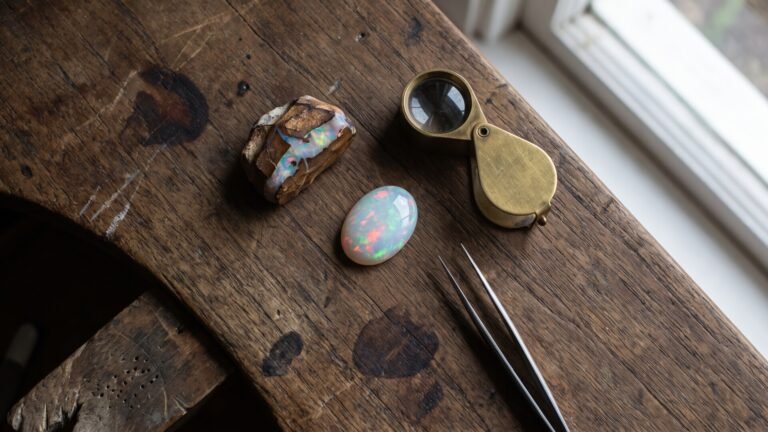
Opal. Opal holds water within its structure, which is part of what makes it beautiful and part of what makes it fragile. Heat or rapid drying can lead to crazing – a network of fine cracks across the surface. Solid opal is one material; doublets and triplets are layered and glued, and moisture plus adhesive is a bad combination. Cleaning an opal ring with crazing risk walks through the safe method, the opal guide explains the varieties, and pearl vs opal compares the two most water-sensitive birthstones side by side.
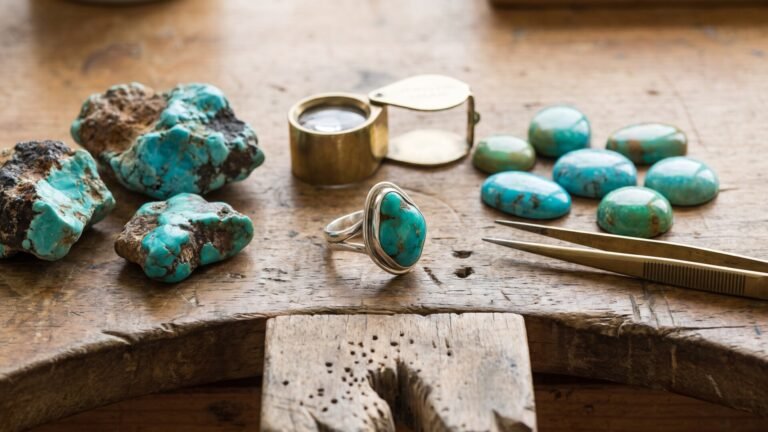
Turquoise. Porous turquoise absorbs oils, soap, and chemicals, and the color can shift as a result. Much of what is sold has been stabilized or otherwise treated, which makes disclosure essential. The turquoise guide covers what those treatments mean for value and care.
Emerald. Many emeralds contain surface-reaching fractures and are treated with oil or resin to improve clarity. Repeated heat, chemicals, and residue complicate its care and can affect the filling over time. The emerald guide explains why emeralds are graded differently from other stones.
Moonstone. At about 6-6.5 on the Mohs scale with two directions of cleavage, moonstone is a poor match for routine showering. The stone is lovely and the feldspar family is not forgiving. The moonstone guide has the details.
Porous or variable stones and “crystal jewelry.” Jasper, bloodstone, malachite and similar materials, plus beads sold simply as “crystal,” vary widely in porosity, polish and treatment. “Crystal” is a marketing word, not a care standard, and it can mean quartz, glass or a dyed composite. When the exact material is unknown, assume the piece is shower-unsafe until someone qualified tells you otherwise.
Gemstones that tolerate incidental water but should usually be removed
Amethyst and quartz varieties. Quartz is non-porous and chemically stable, and GIA describes warm soapy water as a safe way to clean amethyst, so the stone itself tolerates water well. The concerns are thermal shock from hot water, soap film, and the setting. Can amethyst get wet breaks this down by type of water and construction, the amethyst guide covers the stone, and how to clean amethyst without damaging the polish is the method to follow.
Citrine. Much of the commercial citrine on the market is heat-treated amethyst. That treatment is stable, so citrine cares like amethyst: water is fine for the stone, but heat swings and residue are not. The citrine guide explains the treatment picture.
Aquamarine. Aquamarine (Mohs 7.5-8) handles incidental contact better than a porous gem, but inclusions, setting security, heat, and surface residue still argue for removal. The aquamarine guide covers value, and caring for aquamarine stones is the gentler, more specific resource.
Garnet. Garnet is a mineral group, not one uniform material, so durability varies by variety, from tough rhodolite to softer demantoid. Do not treat every garnet the same way. The garnet guide compares the varieties, and caring for garnet jewelry expands on cleaning.
Topaz. Hardness does not eliminate cleavage risk. A knock against a shower wall, a faucet, or a towel rail can matter more than the water ever will. The topaz guide explains the stone’s structure.
Tourmaline. Tourmaline (Mohs 7-7.5) is reasonably durable, but some pink and red material is fracture-filled, and inclusions make it sensitive to sudden heat. The tourmaline guide covers treatments by variety.
Peridot and tanzanite. Both are popular in everyday jewelry and both deserve removal before showering. Peridot (6.5-7) is relatively soft and sensitive to acids and rapid temperature change; tanzanite (6-7) has perfect cleavage. Whether peridot is safe to shower or sleep in is a useful next read, and the tanzanite guide covers its particular care needs.
Durable-looking gemstones that still should not become shower jewelry
Diamond. The diamond itself is extremely scratch-resistant. The ring is the problem. Soap buildup under the stone hides loosened prongs, and impact or a bent setting can still cost you the stone. Fracture-filled diamonds need additional caution. The diamond guide covers the 4 Cs and treatment disclosure.
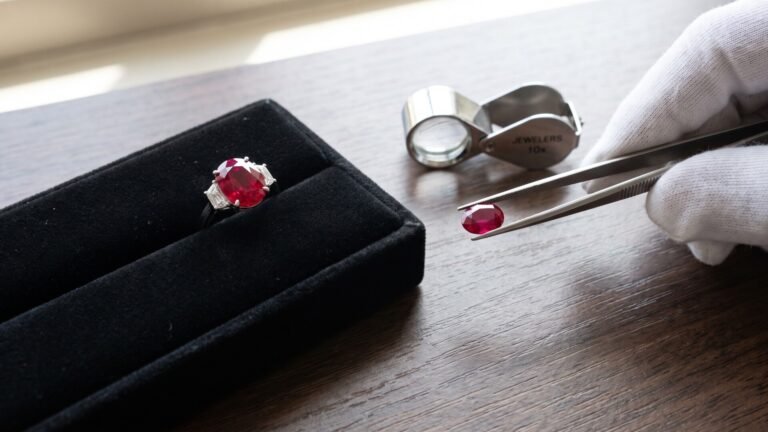
Ruby. Durable enough for frequent wear, not immune to inclusions, fractures, residue, or setting failure. Heat-treated stones are common and stable; lead-glass-filled rubies are far more fragile and should be kept away from heat and chemicals. The ruby guide and how to tell if a ruby is heat treated or natural are the two pages to read before buying.
Sapphire. Sapphire generally handles daily wear well, which makes it one of the best choices for a ring someone will actually wear. Shower residue, loosened settings, and treated stones still make removal the better long-term choice. See the sapphire guide and how to spot real versus synthetic sapphire.
Alexandrite. At Mohs 8.5 with good toughness, alexandrite is one of the more forgiving birthstones in water, natural or lab-created. Its color change is built into the crystal and is not affected by washing. The setting is still the weak point. The alexandrite guide covers natural versus lab-created stones.
Zircon and moissanite. Brilliance and hardness do not make a piece maintenance-free. Natural zircon is brittle at its facet edges, and residue dulls any high-sparkle stone quickly. The zircon guide explains why it is not cubic zirconia. This is a care recommendation, not a claim that a brief splash will damage the stone – it will not.
| Stone | Routine showering | Accidental splashes | Primary risk | Safest care choice |
|---|---|---|---|---|
| Pearl | No | Wipe dry | Soft nacre, soap dulling, silk thread | Keep dry, store separately |
| Opal | No | Blot, do not rub | Crazing, heat, layered construction | Keep dry, avoid temperature swings |
| Turquoise | No | Blot dry | Porosity, oil absorption | Keep dry, avoid chemicals |
| Emerald | No | Dry, inspect | Fractures, oil or resin filling | Remove every time |
| Moonstone | No | Dry gently | Cleavage, soft surface | Remove, store separately |
| Diamond | Not advised | Fine | Soap buildup, loose prong | Remove, inspect prongs yearly |
| Sapphire, ruby, alexandrite | Not advised | Fine | Setting failure, fillings | Remove, inspect regularly |
| Amethyst, citrine | Not advised | Fine | Thermal shock, residue | Remove as a habit |
| Topaz, tanzanite | Not advised | Fine | Cleavage, impact | Remove, avoid knocks |
What Most Buyers Get Wrong About Shower-Safe Gemstones
The word “waterproof” is doing a lot of misleading work in jewelry marketing. When a retailer uses it, they may mean a stone, a metal component, or a coating – almost never the finished piece with its setting, adhesive, and plating. Ask what exactly is waterproof. The answer is usually narrower than the label.
“Natural,” “real,” “untreated,” and “crystal” do not answer the shower question either. A natural stone can still be porous, fractured, cleaved, or badly mounted. Natural is a statement about origin, not about durability. Likewise, lab-grown gems have the same chemistry and hardness as their natural counterparts, so a lab-grown sapphire or emerald needs the same care as a mined one.
The Mohs misuse is the most common error. Buyers see a high number and conclude the piece is tough. A harder stone can still suffer treatment damage, thermal stress, or loss from a loose setting. The number measures scratches.
And do not run internet tests on your jewelry. Soaking a stone in vinegar, steaming it, or exposing it to household chemicals to “see if it is real” can damage the piece and will not reliably tell you whether it is genuine or safe.
Treatment disclosure changes the advice
Oiling, resin filling, fracture filling, dyeing, irradiation, coating, impregnation, stabilization, assembled stones, and glued construction all change how a piece should be cared for – and all of them should be disclosed to you before you buy.
A seller’s care instructions should be more specific than “water resistant.” Ask four questions. What is the stone? Is it treated, and with what? Is that treatment stable in heat and moisture? Does the setting use adhesive anywhere? If the seller cannot answer, that is your answer.
GIA publishes stone-by-stone care and treatment guidance, and it is worth reading before any significant purchase. Note what it does not do: there is no universal shower-safety standard in gemology. Anyone telling you a stone is “certified shower-safe” is inventing a category.
How to Clean Gemstone Jewelry After Shower Exposure
If you forgot, or the piece got soaked, do not panic. Do this instead.
Remove the piece. Rinse it in clean, lukewarm water only if the stone tolerates water (quartz, sapphire, ruby, diamond and similar), to lift away soap before it dries. Dry it thoroughly with a soft, lint-free cloth, then let it air-dry completely before it goes back in storage. Moisture trapped in a closed box is how you get a cloudy film or a spot of tarnish under a prong.
Do not rinse pearls, opal doublets or triplets, porous or treated turquoise, glued jewelry, unknown materials, or any piece showing visible damage or lifting layers. Blot those and stop.
A soft brush is fine only for jewelry you know tolerates gentle cleaning. No steam cleaner, no bleach, no chlorine, no ammonia, no abrasive paste, and no household solvent. Ultrasonic cleaners suit some untreated, durable stones but can shake loose a weakened setting or damage fillings, so ask a jeweler first.
After any exposure, inspect these points: a cloudy film, a color change, lifted layers, loose prongs, movement, rattling, damaged plating, or residue beneath the stone. If a valuable or sentimental piece shows any of them, have a jeweler look at it. A loose prong caught early is usually a quick, inexpensive fix. A lost stone is not.
A safer daily-wear routine
- Remove gemstone jewelry before showering, swimming, hot tubs, cleaning, exercising, applying cosmetics, and sleeping when the piece has vulnerable stones or delicate construction.
- Store pieces separately in a dry, fabric-lined compartment so stones do not scratch one another and chains do not tangle.
- Wipe jewelry after wear, and schedule professional inspection for valuable rings or pieces worn often.
- Keep purchase records and treatment information with heirloom jewelry, so the next owner knows how the piece must be cared for.
Which Jewelry Still Makes Sense for Everyday Wear?
The right question is not “which stone is waterproof.” It is “which piece fits the way I actually live, and how much care am I willing to give it.”
- Best for low-maintenance wear: simple, well-made pieces with disclosed materials, secure settings, and no vulnerable surface treatments. A plain band, a bezel-set sapphire or alexandrite, a piece with no adhesive and no plating.
- Best for heirloom value: remove before showering, and prioritize documented treatment, professional setting work, and repairability. A piece a jeweler can re-tip and re-polish in thirty years is worth more than one that cannot be touched.
- Best for budget jewelry: do not assume low cost means replaceable. Plated finishes, adhesives, dyed stones, and unknown composites fail quickly, and a $60 ring that loses its stone in month four was not a bargain.
- Best for sentimental pieces: choose preservation over convenience. Cleaning and repairs may not restore original materials, and they can never restore the specific stone that belonged to the person you lost.
The hidden cost of leaving jewelry on accumulates: lost stones, refinishing, replating, retipping prongs, replacing pearls or opals, and diminished heirloom condition. Removing a ring takes about four seconds. Replacing a rare or sentimental stone can take months and may not reproduce the appearance you loved.
Buying considerations for shower-prone habits
If you know you will leave jewelry on, buy for it. Look for clear material and treatment disclosures, secure settings, solid construction, and written care guidance – not vague “waterproof” marketing.
Ask specifically whether the piece contains assembled stones, glued components, coatings, fracture filling, dye, oil, or resin. An identification report from a recognized lab can help with a valuable gemstone, but it does not certify the finished jewelry as shower-safe. A report covers the stone, not the ring.
Only after you understand the care requirements should you look at [Affiliate: durable gemstone jewelry with clear care instructions] – and when you do, favor simple, inspectable settings over elaborate ones you cannot see into.
Frequently Asked Questions About Showering With Gemstone Jewelry
Can you shower with gold-plated or vermeil gemstone jewelry?
It is best not to. Plating is a thin layer of gold over another metal, and soap, friction from towels and hard-water scale wear it through fastest at the high points. Once the base metal shows, it can tarnish or irritate skin. Solid gold tolerates water far better than plated pieces.
Does hard water damage gemstone jewelry?
It does not harm durable stones chemically, but the calcium and magnesium in hard water dry into a chalky film that dulls sparkle and collects under settings. On porous stones such as turquoise or pearl, deposits are harder to remove. Rinsing in clean water and drying fully prevents most buildup.
Can I wear gemstone jewelry in a sauna or steam room?
No. Saunas and steam rooms combine high heat with rapid temperature change, which is harder on stones than a shower. Opal, emerald, tanzanite, peridot and filled stones are most at risk, adhesives can soften, and metal gets hot enough to be uncomfortable against skin.
Do lab-grown gemstones need different shower care?
No. Lab-grown diamonds, sapphires, rubies, emeralds and alexandrite have the same chemistry and hardness as natural stones, so they need the same care. The setting, metal and any coating matter just as much. Simulants such as glass or cubic zirconia are different materials and may need more caution.
Is it safe to sleep in gemstone jewelry?
Usually not. Pressure on a ring or pendant can bend prongs, chains catch on bedding, and soft stones like opal and pearl pick up knocks. Small, secure studs are the lowest-risk exception. Our guide on wearing peridot while showering or sleeping covers one common case.
Can I wear gemstone jewelry in a hot tub or pool?
Take it off first. Chlorine and bromine attack gold alloys, silver and plating, hot tub heat adds thermal stress, and a ring slips off a wet finger easily. Pearls, opals, turquoise and treated stones are especially vulnerable to pool chemicals.
The one thing to remember
If you take nothing else from this, take the four seconds. Remove the piece before the water goes on – every time for pearls, opals, turquoise, emeralds, moonstone, treated stones, and assembled jewelry, and as a habit for everything else.
The stone you are wearing today may well be worn by someone who has not been born yet. A few seconds of care each morning is how you make sure it still looks like something worth handing on.