Which Gemstones Are Safe to Clean With an Ultrasonic Cleaner?
The honest answer about ultrasonic cleaners is that they are wonderful machines that have probably destroyed more jewelry than any other household device sold as a convenience. I spent years watching people bring in pieces their home unit had quietly ruined – a grandmother’s opal that crazed into a web of fine cracks, an emerald ring whose oil had been shaken out of its fissures, a diamond pendant that came back with one small pavé stone missing because a prong had been loose for a year and nobody checked. The machine did not do anything wrong. It did exactly what it was built to do, which is agitate a liquid hard enough to lift dirt from places a brush cannot reach. The problem is that the same force reaches everything else in the piece too.
So here is the correction most buyers need before they spend a dollar on one of these: hard is not the same as ultrasonic-safe. A stone can scratch glass and still shatter under vibration. The gemstones safe for ultrasonic cleaning are a narrower group than the marketing suggests, and the decision depends on three things – the stone’s internal structure, its treatment history, and the condition of the setting – not on the name on the label.
The Short Answer: Which Gemstones Are Usually Safe?
Ultrasonic safety is not a property of a gemstone species. It is a property of a specific stone in a specific piece of jewelry on a specific day. Two rubies of identical size and color can have opposite answers, because one is untreated and clean and the other is glass-filled and full of surface-reaching fractures.
That is why I sort stones into three practical groups rather than giving a list of approved names.
Generally suitable means the material is stable, the treatment history is either absent or compatible with vibration and cleaning solution, and the setting is sound. Diamonds, sapphires, and rubies usually land here when untreated and securely mounted. So do many quartz varieties, garnets, aquamarines, and tourmalines, with caveats I will get to.
Condition-dependent means the species is often fine but the individual stone may not be. A clean faceted amethyst in a modern setting is a different object from a heavily included specimen with a visible fracture, even though both are amethyst.
Avoid means the material or construction is a poor match for cavitation regardless of how careful you are. Emeralds, opals, pearls, turquoise, and most organic or porous materials belong here.
If you want the broader picture of how these stones are classified and what drives their value before you decide how to clean them, the full gemstone guide is the place to start.
One warning before anything else. Any heirloom, antique, visibly damaged, heavily included, or high-value piece should be inspected by a jeweler before it goes near a machine. That is not caution for its own sake. It is the difference between a cleaning and a repair bill.
Ultrasonic-cleaning safety chart
| Gemstone or material | General ultrasonic guidance | Main concern | Safer default |
|---|---|---|---|
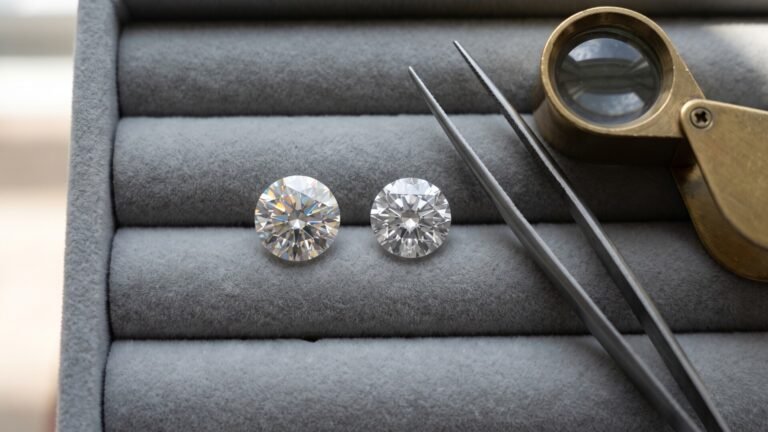
| Diamond | Usually suitable if untreated and securely set | Fractures, loose settings, fracture filling | Ultrasonic after inspection |
| Ruby | Often suitable if untreated and stable | Glass filling, surface-reaching fractures | Hand clean unless treatment is documented |
| Sapphire | Often suitable if untreated and stable | Fractures, coatings, filled cavities | Ultrasonic only after disclosure review |
| Amethyst and citrine | Often suitable if stable and untreated | Fractures, heat or dye treatment | Gentle cycle or hand cleaning |
| Garnet | Often suitable, but variety matters | Fractures and inclusions | Inspect first |
| Emerald | Usually avoid | Oil, resin, fissures, inclusions | Lukewarm water and mild soap |
| Opal | Avoid | Crazing, water and heat sensitivity | Gentle hand cleaning |
| Pearl | Avoid | Soft nacre and organic structure | Damp soft cloth |
| Turquoise | Avoid | Porosity, dye, wax and stabilization | Dry or barely damp cloth |
| Tanzanite and moonstone | Generally avoid | Cleavage and fracture risk | Hand cleaning |
| Costume or assembled jewelry | Avoid unless a professional approves | Glues, coatings, composite construction | Manual cleaning |
How an Ultrasonic Cleaner Can Damage a Gemstone
The mechanism is called cavitation, and it is worth understanding because once you do, the safety rules stop feeling arbitrary. The machine’s transducer vibrates the cleaning liquid at high frequency. That vibration creates millions of microscopic bubbles, which form and then collapse violently against every surface in the tank. The collapsing bubbles lift oils, skin cells, and polish residue out of crevices a brush cannot reach.
That is the feature. It is also the risk. The same implosion that scrubs the underside of a diamond can force its way into a fracture, widen a fissure that was already there, or vibrate a prong loose over repeated cycles.
Notice that I separated two kinds of damage. Damage to the gemstone is one problem. Damage to the jewelry is another, and it is more common. Prongs loosen. Pavé stones shift in their seats. Solder seams fail. Adhesive-set stones come free entirely. A stone can be perfectly durable and still end up on the floor of the tank because the setting was never checked.
Inclusions matter here in a way most buyers do not expect. An inclusion is any internal feature of a stone – a crystal, a feather, a cloud, a fracture. Most inclusions are harmless and even beautiful. But a fracture that reaches the surface, or a cavity filled with liquid, gives cavitation a place to work. A stone with a surface-reaching fracture is not a stone I would put in a machine.
Treatments are the other half of the equation. Fracture-filled diamonds, glass-filled rubies, oiled or resin-filled emeralds, coated stones, dyed porous gems, and assembled stones should stay out of an ultrasonic cleaner unless a professional has confirmed otherwise. Many of these treatments are legitimate and industry-standard. None of them are designed to survive high-frequency agitation.
Gemstones Commonly Suitable for Ultrasonic Cleaning
Read "commonly suitable" as exactly that – common, not guaranteed. Every stone in this section still needs to be stable, untreated or treatment-compatible, free of serious fractures, and securely mounted before it goes in the tank.
Diamond, ruby, and sapphire
These three are the stones most often associated with ultrasonic cleaning, and the association is reasonable. They are hard, they are frequently set in jewelry designed for daily wear, and they tolerate most mild cleaning solutions.
The exceptions are what matter. A fracture-filled diamond – one where a laser-drilled or natural fracture has been filled with a glass-like substance to improve clarity – can be damaged by ultrasonic cleaning, and the filler can be disturbed. A heavily included diamond with a feather near the girdle is a different risk profile from a clean one. Glass-filled rubies are common in the market and should be hand-cleaned only. Cavity-filled rubies and coated or previously damaged sapphires need a different approach entirely.
Do not rely on the gemstone label. Check the purchase paperwork. Ask what the treatment disclosure says. Then have someone look at the setting. Antique, vintage, and heirloom settings deserve inspection even when the stones themselves are bulletproof, because the metalwork is often the fragile part.
Quartz, garnet, aquamarine, and tourmaline
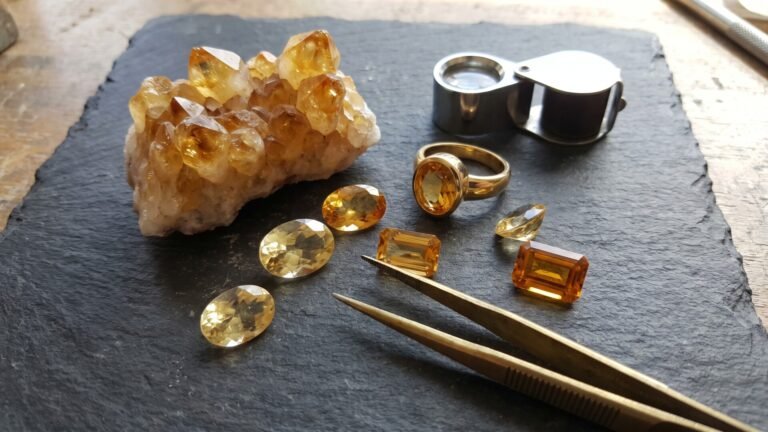
Amethyst, citrine, smoky quartz, rose quartz, garnet, aquamarine, and many tourmalines are condition-dependent rather than universally approved. A clean faceted stone in a modern setting is usually fine on a gentle cycle. A cracked crystal, a heavily included specimen, or a glued design is not.
Inclusions, fractures, dye, heat treatment, coatings, and weak cleavage planes all change the recommendation. So does the difference between a stone that has been worn daily for a decade and one that has sat in a drawer. If you want a focused reference for one of the most common stones in this group, cleaning amethyst without damaging the polish walks through the treatment-aware method. Garnet owners will find more in caring for garnet jewelry, and aquamarine is covered properly in how to care for aquamarine stones.
My editorial position on this whole group is simple. If the treatment history is unknown, hand washing is the lower-risk choice, and it removes ordinary oils and dust just as well. The ultrasonic machine saves you time, not grime.
The counterintuitive case: hardness is not enough
Topaz, zircon, and some beryl varieties are the best illustration of why the Mohs scale does not settle this question. Hardness, on the Mohs scale, measures resistance to scratching – nothing else. It says nothing about resistance to vibration, impact, heat, or solvents.
Topaz is an 8 on the scale and has perfect cleavage, meaning it splits along a plane of structural weakness if struck or stressed the wrong way. Zircon is hard but brittle and often carries internal strain from its formation. A stone can resist a scratch and still fail under a vibration it was never designed to absorb.
If you want the full explanation of what those numbers do and do not mean, the gemstone hardness scale explained is worth reading before you trust a hardness figure as a cleaning verdict.
Gemstones and Jewelry That Should Usually Stay Out of an Ultrasonic Cleaner
This is the section that saves people money, so I will be direct about it.
Emerald, opal, pearl, turquoise, and other porous or treated materials
Emerald is the great "do not assume" stone. Its fissures are commonly treated with oil or resin to improve clarity, and ultrasonic action can disturb those fillers or worsen visible damage. An emerald that looked fine can come out of the tank looking oil-stained and dull, and that is the good outcome. For a deeper look at the stone and its treatment realities, see emerald meaning, properties, and value.
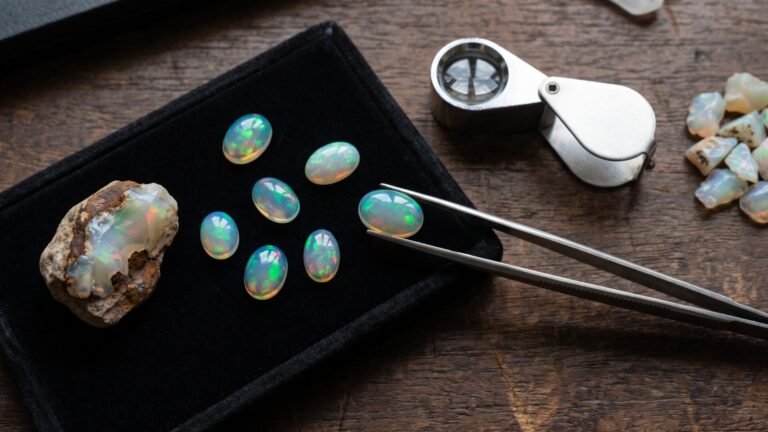
Opal, pearl, turquoise, coral, lapis lazuli, malachite, and amber are generally poor ultrasonic candidates. The reasons vary – softness, porosity, organic structure, dehydration risk, coatings, stabilization treatments – but the conclusion is the same. Opal in particular is vulnerable to crazing, the network of fine cracks that develops when a stone loses moisture or experiences rapid temperature change. If you own one, the safest way to clean an opal ring with crazing risk is the reference you want.
Moonstone and tanzanite belong on the avoid list too, despite looking durable in ordinary wear. Both have cleavage or fracture sensitivity that makes vibration a bad idea.
And "natural" does not mean safe. A natural gemstone can still contain fractures, cavities, or delicate internal structures. Naturalness is a provenance question, not a durability question.
Jewelry construction that makes ultrasonic cleaning risky
The stone is only half the story. Flag glued, tension-set, channel-set, pavé, hollow, antique, and heavily worn jewelry for professional inspection before cleaning. A loose prong or weakened setting turns an apparently safe cycle into a lost-stone problem, and pavé is where I have seen the most casualties.
Watches, jewelry containing enamel, pieces with pearls or mixed gemstones, delicate filigree, and anything with a prior solder repair all deserve the same caution. Before any machine touches a piece, check for rattling stones, bent prongs, visible chips, open seams, loose backs, or discoloration. If a stone moves when you touch it gently, it needs a jeweler, not a cleaning.
What Most Buyers Get Wrong About "Ultrasonic-Safe"
The most common mistake is treating a jeweler’s statement that a stone is "safe" as a property of the species. It is not. Safety changes with treatment, fracture level, internal condition, mounting, and age. A salesperson who says "sapphires are fine in an ultrasonic" is giving you a general statement about a stone they have not examined.
Retailer descriptions make this worse. "Natural ruby" tells you nothing about whether the stone is glass-filled. "Real emerald" tells you nothing about oiling or resin treatment. "Premium quality" and "enhanced brilliance" are marketing phrases, not disclosures, and they are specifically designed to sound like information without being information.
There is also a real difference between professional ultrasonic equipment and the inexpensive home machines most people buy. A professional unit gives the operator control over temperature, solution strength, cycle length, and how the piece is held. A home machine gives you a button and a basket, which raises the importance of conservative use rather than lowering it.
Here is the decision framework I would use, in order:
- Identify every material in the piece – center stone, accent stones, pearls, enamel, inlays, coatings, composite parts.
- Confirm treatments from paperwork or a professional, not from a listing.
- Inspect the setting for looseness, chips, and wear.
- Choose the mildest method that will actually work.
- Stop immediately if anything moves, rattles, or looks different.
That sequence takes about two minutes and prevents most of the damage I have seen.
How to Decide Whether Your Own Jewelry Is Suitable
Check the gemstone and treatment disclosure
Identify every material in the piece, including the ones you did not think about – accent stones, pearls, enamel, inlays, coatings, and composite materials. A ring with a durable center stone and a glued pearl halo is a pearl-care problem, not a diamond-care problem.
Treatment disclosure from a reputable seller is the document that matters here. For valuable or uncertain colored stones, an independent laboratory report or a qualified gemologist’s opinion is worth the cost. Be aware that an appraisal establishes value for insurance purposes; it does not necessarily include a complete treatment analysis. Those are different documents with different purposes, and buyers routinely confuse them.
Inspect the setting before cleaning
A practical checklist before anything goes in a tank:
- Gently tap or shake the piece, only as appropriate, and listen for a rattle.
- Inspect prongs under magnification if you have a loupe.
- Look for chips and cracks in the stones.
- Check whether stones sit evenly in their seats.
- Look at the metal for open seams, thin spots, or discoloration.
A loose stone should be repaired before cleaning, not cleaned in the hope that the problem reveals itself. And photograph an important piece before professional cleaning, so changes to the setting or a missing accent stone are easier to identify afterward. An heirloom or sentimental piece should be treated as irreplaceable even when its resale value is modest, because that is what it is.
Choose the least aggressive method that works
There is a hierarchy here, and most jewelry never needs to go past the first two steps.
- Dry microfiber cloth for dust and fingerprints.
- Lukewarm water with a drop of mild soap for ordinary grime.
- A very soft brush for accessible settings and the undersides of stones.
- Professional cleaning for uncertain or valuable pieces.
- Ultrasonic cleaning only when material and setting are both confirmed suitable.
More powerful cleaning is not automatically better. It increases risk without adding benefit for lightly soiled jewelry. If you are also wondering how everyday moisture exposure compares with deliberate cleaning, can you shower with gemstone jewelry covers that stone by stone.
Follow the machine manufacturer’s instructions, and avoid unapproved solvents, bleach, chlorine, abrasive powders, and sudden temperature changes. Stop using the machine if the liquid clouds with debris, a stone moves, the piece makes a new rattling sound, or a surface appears altered. Those are not minor observations; they are the machine telling you something.
How to Use an Ultrasonic Cleaner More Safely
Confirm the machine is designed for jewelry. Use the prescribed solution at the correct dilution. Do not improvise with household detergent or a stronger chemical because the piece looks dirty – that is how coatings get stripped and fillers get attacked.
Put the jewelry in the basket, never directly on the tank floor, and do not let pieces collide with one another. Short, conservative cycles with inspection between them beat one long cycle every time. I am deliberately not giving you a universal time and temperature, because those depend on the machine, the solution, and the stone, and a number that is safe for one combination can be wrong for another.
After cleaning, rinse with clean water compatible with the material, inspect the setting, pat dry with a lint-free cloth, and let the piece dry completely before storage. Moisture trapped in a setting is its own problem.
When a professional jeweler is the better choice
Take emeralds, pearls, opals, turquoise, antique jewelry, valuable colored stones, unknown treatments, loose settings, and mixed-material designs to a professional. This is not a sales pitch for the trade; it is that a competent jeweler can do things a home machine cannot. They can identify treatments, test mounting security, clean selectively around fragile areas, and repair settings before cleaning rather than after.
Ask for an inspection and a treatment-specific cleaning recommendation. Do not ask only whether the store "offers ultrasonic cleaning," because that question has a yes answer for almost everything and tells you nothing.
The heirloom point is the one I would leave a customer with. Preserving the original setting and treatment often matters more than achieving maximum immediate sparkle. A slightly less brilliant emerald that still has its oil and its prongs is worth more in thirty years than a dazzling one that lost both.
Manual Cleaning Alternatives for Risky Gemstones
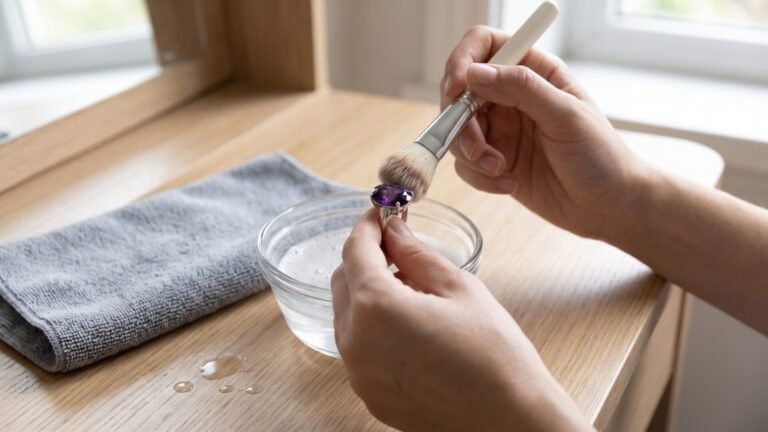
The basic hand method works for most jewelry and costs almost nothing. Lukewarm water, a small amount of mild soap, a soft brush only where appropriate, gentle rinsing, and thorough drying. That is the whole procedure.
Material-specific cautions matter more than the method. Wipe pearls with a soft damp cloth and let them dry flat. Avoid soaking porous or treated stones. Keep fragile stones away from heat, steam, and abrupt temperature changes.
Sink safety is not a joke. Use a bowl, or plug the drain, and keep a soft towel under your work area. Tiny pieces get lost over open drains more often than anyone admits, and a lost earring back is a small tragedy that a plug prevents.
Store soft or porous materials separately so they do not scratch against harder stones, and have frequently worn jewelry inspected regularly. A soft jewelry brush and a mild cleaning solution are the two purchases that cover most of this section. [Affiliate: Compare jewelry cleaning kits] – look for a soft brush and a solution labeled for the specific materials you own, and skip anything abrasive.
Which Cleaning Choice Still Makes Sense in Three Years?
The long-term math is not close. A home ultrasonic cleaner saves time on suitable wedding bands and durable diamond jewelry, and for a household with several confirmed-safe pieces, that convenience is real. But one damaged heirloom or one lost accent stone erases years of saved minutes in a single afternoon, and the repair often costs more than the machine did.
The best candidates for a home ultrasonic cleaner are households with several confirmed-safe, modern, securely mounted pieces and a genuine willingness to verify treatments before cleaning. The poor candidates are anyone whose collection is mainly pearls, opals, emeralds, turquoise, antique jewelry, glued pieces, or jewelry with unknown history. If that is you, the machine will sit in a cabinet and the soft brush will do the work.
Frequently Asked Questions About Gemstones Safe For Ultrasonic Cleaning
Are diamonds safe to clean in an ultrasonic cleaner?
Many untreated diamonds in secure settings are commonly suitable. Fracture-filled diamonds, heavily included diamonds, loose settings, and antique mounts require caution or professional inspection first. The stone being a diamond is not the whole answer.
Can you put an emerald in an ultrasonic cleaner?
No, not as a rule. Emeralds are generally best kept out because oils, resins, fissures, and inclusions can make vibration damaging or alter the treatment. Lukewarm water and mild soap, applied briefly, is the safer path.
Is sapphire safe for ultrasonic cleaning?
Untreated, stable sapphires are often suitable. Fractured, cavity-filled, coated, or loosely mounted sapphires should be cleaned by hand or professionally. Check the treatment disclosure before assuming.
Why is an opal not safe in an ultrasonic cleaner?
Opal is sensitive to internal crazing, heat, and rapid changes, and its structure is weak relative to the forces involved. Gentle hand cleaning is the right method. Vibration offers it nothing and risks a great deal.
Can ultrasonic cleaning loosen gemstone settings?
Yes. Vibration can expose or worsen an existing problem with prongs, pavé, channel settings, solder, or adhesive, even when the gemstone itself is durable. The setting is frequently the weak point, not the stone.
Is a professional jewelry cleaning safer than using a home ultrasonic cleaner?
For valuable, fragile, antique, or uncertain jewelry, yes. A professional can identify treatments, inspect the setting, and choose a suitable method. That combination of knowledge and inspection is what a home machine cannot provide.
What is the safest way to clean gemstone jewelry when I do not know the treatment?
Avoid ultrasonic and steam cleaning. Use a conservative hand-cleaning method only if the material is known to tolerate moisture, and consult a jeweler or gemologist for anything valuable. When in doubt, the cloth wins.
The split decision
If you own a collection of modern, securely set, untreated or documented stones – a diamond band, a sapphire pendant, a few quartz and garnet pieces you bought new with paperwork – an ultrasonic cleaner is a reasonable purchase and will serve you for years. Buy one with a basket and conservative cycle options, and use it only on pieces you have verified.
If your jewelry is emeralds, opals, pearls, turquoise, antique pieces, glued settings, or anything whose treatment history you cannot confirm, do not buy the machine. Buy a soft brush, a mild solution, and a lint-free cloth instead, and put the savings toward a professional inspection.
The piece you are cleaning today will likely be worn by someone who has not been born yet. Clean it in whatever way keeps the stone and the setting intact for that person, and you will have made the right call regardless of which method you chose.