Which Birthstones Should Never Be Exposed to Water?
Picture the opal ring in a drawer in 2051. The adhesive layer of the doublet has yellowed and lifted, and the fine web of crazing that started in a shower in 2026 has opened into visible cracks. Nobody did anything dramatic to it. Somebody wore it in the shower for a few years, cleaned it in warm soapy water when it looked dull, and left it on a sunny windowsill to dry.
Most of the damage I have seen done to birthstone jewelry was not done by a single accident. It was done by a habit. A splash is rarely the problem. A thousand showers is a different story. So when people ask me which birthstones cannot get wet, the honest answer is that a handful of them should be treated as remove-before-water, and the rest need a realistic conversation about what repeated exposure does.
The Short Answer: Which Birthstones Need the Most Water Protection?
Pearls, opals, and turquoise carry the highest risk. Emerald, moonstone, and tanzanite sit in the middle: not forbidden from incidental contact, but not carefree either. Everything else ranges from fairly tolerant to genuinely robust, with the usual caveats about treatments and settings.
The distinction that matters is between "cannot get wet" and "should not be repeatedly soaked." A quick splash while washing your hands usually leaves no trace on a sound stone. Showers, baths, swimming pools, hot tubs, steam rooms, and long soaking sessions are cumulative. They work on the stone, the treatment, the setting, and the string or adhesive holding it all together.
So the practical rule I give people is this: if the piece is water-sensitive, take it off before you shower, swim, bathe, clean the house, exercise, or spray anything on your skin. Put it on last when you get dressed and take it off first when you get home. That habit protects more jewelry than any cleaning product ever will.
Water quality matters too, and almost nobody mentions it. Chlorine is an oxidizer. Salt water leaves deposits that abrade and dull. Soap scum builds up in the crevices around prongs. Hard water leaves mineral film. Rapid temperature change – cold pool to hot shower – is its own stress. For a broader stone-by-stone comparison of what survives an actual shower, which gemstones tolerate showering is worth reading alongside this.
Birthstones That Should Not Be Soaked or Worn in Water
A simple safe-or-unsafe list would be easier to write and less useful to you. Risk depends on the stone, the treatment, the construction, and the setting, and those four things interact. Use this as a starting framework, then verify the specifics of your own piece.
| Birthstone or material | Water risk | Main concern | Everyday care rule |
|---|---|---|---|
| Pearl | High | Porous nacre, luster loss, weakened coatings, thread damage | Keep dry except for careful wiping |
| Opal | High to moderate | Crazing, adhesive or layered construction, color-play damage in vulnerable types | Avoid soaking, heat, steam, and sudden temperature changes |
| Turquoise | High | Porosity, staining, discoloration, treatment damage | Keep away from water, oils, chemicals, and cosmetics |
| Moonstone | Moderate | Cleavage, scratches, fractures, and setting vulnerability | Avoid prolonged soaking and temperature shocks |
| Emerald | Moderate | Fractures and clarity-enhancement fillers | Use minimal water only if the treatment is known; avoid ultrasonic and steam cleaning |
| Tanzanite | Moderate | Heat sensitivity, cleavage, and thermal shock | Avoid hot water, steam, and abrupt temperature changes |
| Amethyst, citrine, garnet, peridot, aquamarine | Low to moderate | Treatments, inclusions, setting, and repeated chemical exposure | Brief contact is usually less concerning, but remove before bathing and swimming |
| Diamond and sapphire | Lower | Setting damage, coatings, chlorine, and accumulated grime | Water is generally less problematic, but routine jewelry care still matters |
Read the last two rows carefully, because they are where people get complacent. A diamond is hard, but the prongs holding it are not invincible. Chlorine attacks some alloys. Repeated soaking loosens dirt around a setting, and a loose stone is a lost stone. "Water-safe" does not mean "safe in every cleaning method" either. A stone can tolerate a quick rinse and still be a terrible candidate for an ultrasonic or steam cleaner.
Construction and treatment change the instructions more than the gemstone name does. Solid opal, an opal doublet, and an opal triplet are three different objects. Natural turquoise, stabilized turquoise, and reconstituted turquoise behave differently. A cultured pearl and an imitation pearl with a coated bead are not the same risk profile. When you do not know the treatment, that is a reason to choose the conservative method, not a reason to run an experiment on a piece you care about.
Why Water Damages Some Birthstones
Porosity and absorption
Porosity is the presence of microscopic spaces in a material that let liquids, oils, and chemicals enter it. A porous stone does not just get wet on the surface. It takes the water in, and whatever is dissolved in that water comes with it.
Turquoise is the clearest example. Oils from your skin, sunscreen, perfume, hair products, and dyed fabric can all be absorbed, and the color can shift permanently. Pearls are porous in a different way: their nacre is built in thin layers, and repeated exposure to soap, chlorine, and cosmetics dulls the surface and can weaken the coating over an imitation core.
This is why water exposure is really a chemical-exposure problem wearing a raincoat. Clean room-temperature water is the least of it. Soap, shampoo, chlorine, salt, lotion, and perfume are the things that do the lasting work.
Internal fractures, cleavage, and thermal shock
Cleavage is a gemstone’s tendency to split along specific internal planes where the atomic structure is weakest. It is not the same thing as hardness. A stone can resist scratching beautifully and still split from a sharp knock or a sudden temperature change.
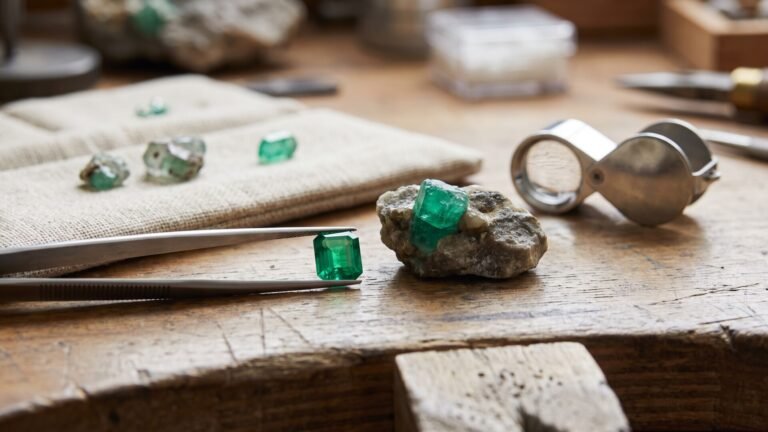
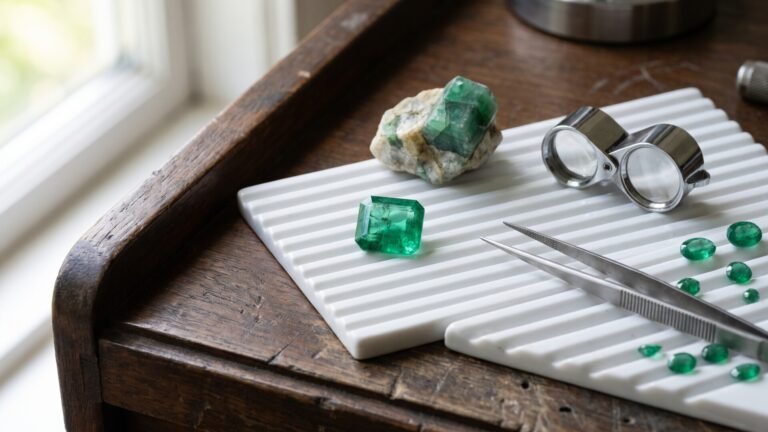
Emerald almost always has internal fractures, and most emeralds on the market have been clarity-enhanced by filling those fractures with a substance that improves how the stone looks. Hot water, steam, and ultrasonic vibration can affect that filler. Tanzanite is heat-sensitive and has one direction of cleavage, so a rapid shift from cold to hot – or a knock against a counter – is a real concern. Moonstone has cleavage too, and its setting often leaves the stone more exposed than a bezel would.
Thermal shock is what happens when a material expands or contracts unevenly because one part heats faster than another. It can turn an existing weakness into a crack. This is why a hot shower, a steam cleaner, or a radiator is a bad combination with a sensitive stone.
Layers, fillers, coatings, and treatments
An opal doublet is a thin slice of precious opal glued to a backing. A triplet adds a clear cap on top. Both are legitimate, affordable ways to own opal color, and both introduce an adhesive layer that water and heat can attack. A filled emerald depends on its filler. A coated stone depends on its coating. A dyed turquoise depends on its dye staying put.
Treatment disclosure is the center of this. Ask the seller, in writing if the piece is expensive, whether the stone has been dyed, stabilized, fracture-filled, coated, assembled, or otherwise enhanced. A reputable seller answers without flinching.
And "natural" does not mean durable, untreated, or water-safe. It means the material formed in the ground rather than in a lab. That is all it means.
A Stone-by-Stone Guide to Birthstone Water Exposure
Pearl, June’s traditional birthstone
Pearls are organic gems. They are built from nacre, the same layered material a mollusk uses to line its shell, and they have a surface rather than a crystal structure. Repeated exposure to water, soap, chlorine, perspiration, and cosmetics reduces luster, and luster is most of what you are paying for.
The misconception I hear constantly is that a pearl came out of the water, so water must be fine. The inside of a living mollusk is not a shower. It is not detergent, chlorine, or heat either.
Put pearls on last and take them off first. Wipe them with a soft cloth after wearing. If they need more, use a soft cloth barely dampened with clean water, then let them dry flat – never hang a strand, because the silk stretches. If you want the focused version of the shower question, wearing a pearl bracelet in the shower covers it properly, and pearl meaning, properties and value explains what you are actually protecting.
Opal, October’s traditional birthstone
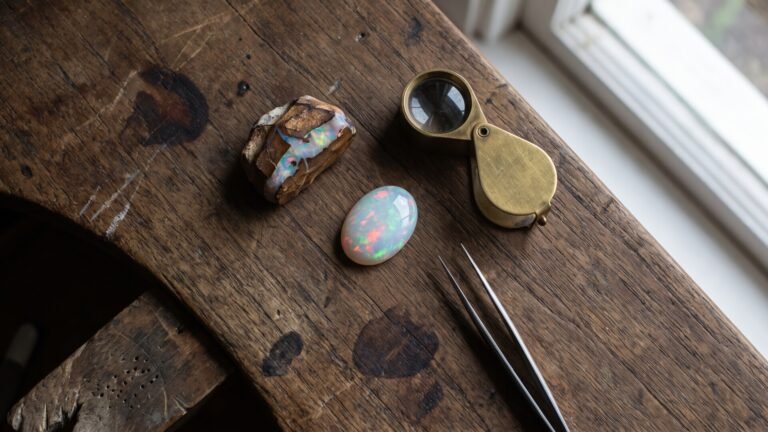
Opal care depends entirely on type. Solid opal is one piece of material. A doublet or triplet is assembled, and water that reaches the adhesive layer can cloud it or cause lifting. This is where most opal damage I have seen begins.
Crazing is a network of fine cracks that can develop across opal as it repeatedly takes on and gives up moisture, or as it is heated and cooled. Not every opal will craze. But prevention is cheap and repair is usually impossible, so treat every opal as if it might.
Keep opal out of showers, baths, pools, steam, ultrasonic cleaners, and long soaks. For routine cleaning, a soft dry cloth is the default. the safest way to clean an opal ring with crazing risk walks through the cautious method, and Ethiopian versus Australian opal explains why durability varies by origin and type. For background on the stone itself, see opal meaning, properties and value.
Turquoise and other porous blue-green birthstones
Turquoise is porous, and that single fact drives everything about its care. Oils, cosmetics, dyed liquids, chlorine, and cleaning products can all alter its appearance, and the change is often permanent. Not every piece absorbs at the same rate, but none of them benefit from soaking.
Stabilization – treating turquoise with a resin to reduce porosity – is extremely common and makes the material more usable in jewelry. Dyeing is also common. Untreated, stabilized, and reconstituted turquoise behave differently, which is exactly why written disclosure matters. A seller who cannot tell you what has been done to the stone is telling you something.
Keep turquoise dry. Wipe it after wear. Store it away from humidity, cosmetics, and harder jewelry that could scratch it. turquoise meaning, properties and value covers the stone in more depth.
Moonstone, emerald, and tanzanite: not forbidden, but not carefree
These three tolerate limited incidental contact in some circumstances. None of them should become shower jewelry.
Emerald is the one to be strictest with, because fractures and clarity enhancement are so common. Do not put an emerald in an ultrasonic or steam cleaner unless a qualified jeweler has confirmed it is appropriate for that specific stone. For more on the stone, see emerald meaning, properties and value.
Tanzanite and moonstone are primarily about thermal shock, cleavage, and impact rather than cool water itself. Avoid hot water, steam, and abrupt temperature changes. tanzanite meaning, properties and value and moonstone meaning, properties and value cover the specifics.
What Most Owners Get Wrong About "Water-Safe" Birthstones
The most persistent error is treating the Mohs scale as a durability rating. It is not. Mohs hardness measures scratch resistance only – a stone’s ability to resist being scratched by another material. It says nothing about toughness, porosity, cleavage, treatment stability, or chemical resistance. what the Mohs hardness numbers really mean unpacks the scale properly, and it is worth ten minutes before you buy anything.
The second error is confusing a splash with a soak. A single exposure usually causes no visible harm. Months of daily showers gradually affect polish, treatments, settings, and adhesives. The damage is cumulative and invisible until it is not.
The third is ignoring the setting. Water loosens dirt around prongs, and loosened dirt hides movement. It corrodes some metals. It can make a weakened mounting fail later, when the piece is on a hand in a parking lot rather than over a sink.
The fourth is trusting marketing language. "Water-resistant," "ocean-inspired," "natural," and "healing crystal" are not care instructions. They are not treatment disclosures either. A crystal shop label does not tell you whether the turquoise has been stabilized, and "ocean-inspired" tells you nothing about whether the pearl has a coated imitation core.
The Safest Way to Clean Water-Sensitive Birthstone Jewelry
Start by inspecting the piece. Look for loose stones, worn prongs, lifted layers, new cracks, or a strand that has gone slack. If you find any of those, stop and take it to a jeweler.
For routine cleaning, use a clean, soft cloth. That is the whole method for pearls, turquoise, and any opal whose construction you are unsure of. A barely damp cloth is acceptable for many stones when you know what you are dealing with, and a dry cloth is the right answer when you do not. Skip household detergents, and skip anything with a scent or a cream base.
Never experiment. That means no ultrasonic cleaner for an unknown stone, no steam cleaner for sensitive or treated gems, no boiling water, no bleach, no ammonia-based cleaners, and no abrasive toothpaste or polishing compound. which gemstones are safe in an ultrasonic cleaner explains what can and cannot go in the tank, and damage from perfume, lotion and hairspray covers the chemical side that most people never think about.
What to Do If a Birthstone Gets Wet
Remove the jewelry. Blot it gently with a soft cloth – blot, do not rub. If a known-safe stone has soap residue on it, a brief rinse is fine; if it is a pearl, turquoise, or an assembled opal, do not add more water to solve a water problem.
Let it air-dry fully, away from direct heat. Do not use a hair dryer, a radiator, direct sunlight, an oven, rice, or aggressive polishing. Sudden drying can do more harm than the original splash.
Then look for warning signs: cloudiness, peeling or lifting layers, new cracks, lost luster, discoloration, a loose stone, damaged prongs, or a pearl strand that has gone slack. Any of those justifies a professional inspection. So does value or sentiment – treated emeralds, assembled opals, antique pieces, and inherited pearls are all worth a jeweler’s eye before you clean them yourself, especially if you are not certain what the stone is.
Choosing a Birthstone for Everyday Wear
Match the stone to the life it will actually live, not the life you imagine for it.
- Frequent swimmer, shower wearer, or hands-on worker: favor durable, well-set stones, and remove jewelry before water exposure regardless of the stone. A bezel setting protects more than a prong setting does.
- Occasional-wear or heirloom buyer: pearls, opals, turquoise, and moonstone are all reasonable choices if the wearer will follow strict care habits. These are pieces for dinners and occasions, not for gardening.
- Low-maintenance gift buyer: choose for everyday durability, a protective setting, and clear treatment disclosure rather than color or symbolism alone.
The safest purchase is not always the hardest gemstone. A well-made setting, honest disclosure, and a realistic care routine often matter more than a single durability number. Before you buy, check the retailer’s care instructions, return policy, and treatment disclosure, and ask whether an independent laboratory report is appropriate for a valuable stone.
If you are still mapping out the wider landscape of stones, the complete guide to gemstones is the place to start. And if August is the month in question, whether peridot is safe in the shower or overnight answers that specific question.
The final verdict by buyer type is simple. Pearls, opals, and turquoise are remove-before-water jewelry. Emerald, moonstone, and tanzanite need careful handling and a jeweler’s advice before any cleaning. Harder, less porous stones tolerate incidental contact better, but none of them belong in a pool, a shower, or a bucket of household cleaner.
Frequently Asked Questions About Birthstones That Cannot Get Wet
Which birthstones cannot get wet at all?
Pearls, turquoise, and many opals should be treated as highly water-sensitive, especially with soaking, chlorine, soap, steam, or sudden temperature changes. “Cannot get wet” is a practical warning to avoid deliberate exposure, not a claim that one splash will always cause permanent damage.
Can you shower with a birthstone ring?
It is best not to shower with any birthstone ring. Water is only part of the risk. Soap, shampoo, heat, residue, impact, and loosened dirt can damage the stone or the setting over time.
Is opal ruined if it gets wet?
A brief splash does not automatically ruin an opal, but repeated soaking, heat, steam, and temperature changes raise the risk of crazing or damage to assembled layers. Dry it gently and avoid deliberate exposure afterward.
Can pearls go in water?
Pearls should not be submerged in pools, baths, or soapy water. Nacre can lose luster, and strands can suffer from weakened silk. Wipe them gently after wear and keep them away from cosmetics and chemicals.
Is turquoise waterproof?
No. Turquoise is porous, so it can absorb or react with oils, dyes, chemicals, and moisture. Treated turquoise may need different care from untreated material, which is why disclosure matters.
Can I clean a water-sensitive birthstone with a damp cloth?
Often a soft cloth is safer than soaking, but the right method depends on the stone, treatment, construction, and setting. When those details are unknown, use a dry cloth and ask a qualified jeweler before applying moisture.
What should I do if my birthstone jewelry was left in the shower?
Remove it, blot it gently, and let it dry naturally away from heat. Do not use a hair dryer or abrasive cleaner. Inspect for cracks, lifted layers, discoloration, loose stones, or damaged settings, and get a professional inspection if any sign appears.
Conclusion
The birthstones that need the strictest water avoidance are pearls, opals, and turquoise. Emerald, moonstone, and tanzanite deserve cautious handling because of treatments, cleavage, fractures, or thermal sensitivity. Everything else tolerates incidental contact better, though none of it belongs in a pool.
The caveat is that all of this assumes you know what you own. An untreated natural turquoise and a stabilized one do not need identical care. A solid opal and a triplet are different objects. A pearl strand and a coated imitation are different risks. If the seller cannot tell you the treatment, the construction, and the care instructions in plain language, that is your answer about whether to buy – regardless of how the stone looks under the counter lights.
A conservative routine protects more than today’s appearance. It protects the sentimental and financial value the piece will carry for whoever wears it next. Buy for disclosed treatments, realistic care habits, setting quality, and intended use rather than symbolism alone, and the ring in the drawer in 2051 will still be worth opening.