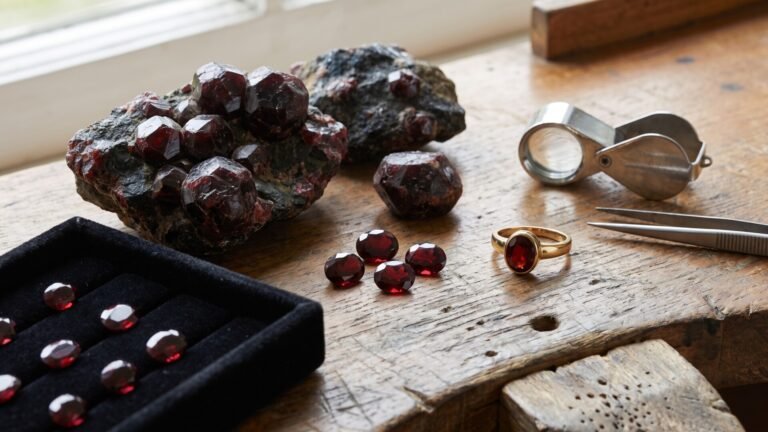
Rhodolite vs Mozambique Garnet: Which Red Gem Is Better?
Most buyers asking about rhodolite versus Mozambique garnet are really asking one question: which red garnet gives me the most beauty and the least regret for the money? The honest tradeoff in a sentence: rhodolite is usually the more refined choice for purplish raspberry color and everyday elegance, while Mozambique garnet is often the stronger choice for a vivid warm red at a more accessible price. Neither name guarantees quality. Color saturation, clarity, cut, treatment disclosure, durability, and origin documentation matter more than the label on the tag. Someone hunting a distinctive heirloom stone will often do better with fine rhodolite. Someone wanting a ruby-like red without ruby pricing will often do better with a strong Mozambique garnet. The name is the beginning of the decision, not the decision.
What Rhodolite and Mozambique Garnet Actually Are
The comparison is not perfectly symmetrical, and that trips up a lot of buyers. Rhodolite describes a color and composition range within the garnet family. Mozambique garnet generally describes garnet mined in Mozambique, most often red pyrope-almandine material. One name is about what the stone is. The other is about where it comes from.
Garnet is a mineral group, not a single gemstone. The full guide to garnet’s meaning, properties, and value walks through the broader family and the buying vocabulary, but the short version is this: garnets share a crystal structure and vary widely in chemistry, which is why you can get green tsavorite and red rhodolite under the same roof. Rhodolite is commonly a pyrope-almandine garnet – a natural blend of two garnet species – with pink, purple, raspberry, or purplish-red tones. The name comes from the Greek for rose-like, and it has been in the trade long enough to function as a recognized variety rather than a marketing invention.
Mozambique garnet is different. It is an origin-based trade description, not one universal gemological species or an exact color grade. Stones sold under the name can run from vivid red to reddish-purple to deep wine. Mozambique has produced a great deal of fine red garnet, and the name became shorthand for good red material. That is useful information. It is not a certificate, and it is not a grade.
Both stones get compared to ruby and red spinel, and the resemblance is real. A fine red garnet can look startlingly close to ruby in a photograph. It differs in mineral identity, optical behavior, market positioning, and typical price. Ruby is corundum, hardness 9. Garnet is a silicate group, hardness around 7 to 7.5. If you are weighing the two directly, the guide to telling garnet and ruby apart is worth reading before you shop.
Rhodolite vs Mozambique Garnet: Side-by-Side Comparison
| Factor | Rhodolite Garnet | Mozambique Garnet | Why It Matters |
|---|---|---|---|
| Gemstone identity | Usually pyrope-almandine garnet | Commonly red pyrope-almandine material from Mozambique | The names describe different aspects of the stone |
| Typical color | Raspberry, plum-red, purplish-red | Warm red, crimson, wine-red, sometimes reddish-purple | Color preference drives much of the buying decision |
| Color character | Cooler and more distinctive | Warmer and often closer to classic red | Helps determine whether the stone reads as red, pink, or purple |
| Durability | Mohs 7-7.5, generally suitable for jewelry | Usually around Mohs 7-7.5, depending on material | Appropriate setting matters for daily wear |
| Typical pricing | Moderate, with fine saturated stones commanding premiums | Broad range; strong red and clean stones can rise sharply | Origin and color quality must be evaluated together |
| Best for | Buyers wanting unusual color and elegant individuality | Buyers wanting vivid red and strong visual value | Resolves the “which should I choose?” question |
The table is a starting point, not a substitute for inspecting the actual gemstone. A fine Mozambique garnet can be more desirable than an average rhodolite. A vivid rhodolite can outperform a dull or overly dark Mozambique stone in both beauty and price. The hierarchy that matters is not rhodolite over Mozambique or the reverse. It is fine over mediocre, in either variety.
Color, Clarity, and Cut: Where the Real Difference Appears
Broad labels hide the practical visual differences. Two stones with the same name can look like different gemstones entirely.
How rhodolite looks in jewelry
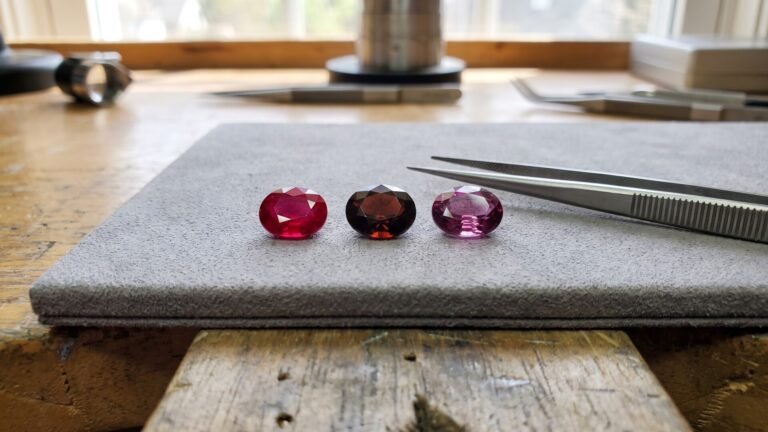
The preferred rhodolite range is lively raspberry, cranberry, grape-red, or purplish-red. Brownish or overly gray material is the weaker end. A slight purple component is what makes rhodolite distinctive, but too much purple can cause the stone to lose the red identity some buyers wanted in the first place. That is a matter of taste, not a defect, but you should know which side of it you are on before you buy.
Tone and saturation matter enormously. Dark material can look rich in a jewelry photograph and turn nearly black indoors or in a closed setting. I have watched people buy a deep, moody rhodolite online and be disappointed when it arrived, because the photo was lit to flatter and the stone had no life in ordinary room light.
Cut changes the picture too. Oval, cushion, pear, and round cuts display rhodolite differently. Faceting quality often affects brightness more than the name on the label. A well-cut rhodolite glows. A poorly cut one sits there.
How Mozambique garnet looks in jewelry
The strongest examples are vivid red, crimson, or red with a slight wine component. Weaker stones may appear brownish, overly dark, or purplish. "Mozambique" does not automatically mean ruby-like red. The actual stone has to be judged under multiple lighting conditions, and the seller’s photos are not one of them.
Bright, lively red material with good transparency commands a substantial premium over common dark red garnet. A well-cut Mozambique garnet can look more expensive than a poorly cut rhodolite, even though rhodolite has the more fashionable name. That is the whole lesson of this section in one line: cut and brightness beat labels.
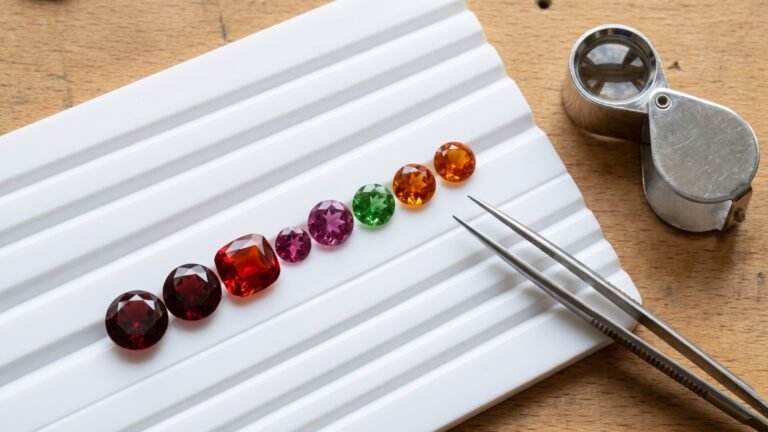
For broader context on where both stones sit within the family, the complete guide to garnet color types maps the full range from red through green and orange.
What clarity means for both stones
Eye-clean means no obvious inclusions visible without magnification. Garnets are not expected to meet diamond clarity standards, and you should not pay for that expectation. What matters more are distracting inclusions, windowing (a see-through dead zone in the middle of the stone caused by shallow cutting), severe extinction (dark patches where light does not return to the eye), surface-reaching fractures, and cloudy areas. Prioritize brightness and visual life over chasing an unrealistically flawless stone. A slightly included garnet with fire is a better purchase than a clean one that looks like a piece of red glass.
Durability and Everyday Wear: Which Stone Is Safer?
Both stones sit around 7 to 7.5 on the Mohs hardness scale, which makes them suitable for rings, earrings, pendants, and bracelets with sensible care. Neither is a fragile stone. Neither is indestructible.
Here is the distinction that matters and that most listings skip. Mohs hardness measures resistance to scratching, not resistance to breaking. A garnet can still chip if it takes a sharp impact, especially at a pointed corner or where the stone extends above the setting. A pear shape with a delicate tip, set high in tall prongs, is a chip waiting for a doorknob.
For rings, choose protective settings: bezels that wrap the girdle, halos that shield vulnerable edges, and secure prongs around corners. Be extra cautious with large exposed stones and with rings worn for daily work – nursing, trades, gym, gardening. For a ring worn every day, setting quality, stone depth, exposure, and the wearer’s habits may matter more than choosing rhodolite over Mozambique garnet. The variety is not the variable. The mounting is.
Once the piece is home, the complete guide to caring for garnet jewelry covers cleaning, storage, ultrasonic considerations, and how to prevent the repairs that come from neglect.
Value, Rarity, and Price: Which Red Garnet Is the Better Buy?
Garnet pricing is driven primarily by the individual stone, not by a simple rhodolite-versus-Mozambique hierarchy. There is no fixed exchange rate between the two names.
What determines price
Price follows color, saturation, brightness, clarity, cut precision, carat weight, origin documentation, and whether treatment has been disclosed. A larger stone is not automatically a better value if it is too dark, poorly cut, visibly included, or unattractive in ordinary indoor light. Size sells. Beauty is what you live with.
Retail price and market value are different things. A high jewelry markup, a branded setting, or a dramatic origin story may not translate into resale demand. Commercial red garnets are relatively affordable. Fine saturated rhodolite and exceptional Mozambique red garnet can reach several hundred dollars per carat or more, depending on quality, size, and seller. Treat any specific figure as approximate, because the spread within each category is enormous.
Which stone tends to hold value better?
Neither variety should be purchased primarily as an investment. Colored-gemstone resale is selective and usually weaker than retail pricing suggests. Exceptional color, larger size, documented natural status, and respected laboratory identification matter more than choosing a geographic label.
Rarity and liquidity are not the same thing. Liquidity means how easily you can sell. A rare-looking stone may be difficult to resell if buyers do not recognize or actively seek that variety. Fine, visually distinctive rhodolite appeals to collectors and design-focused buyers. Strong red Mozambique garnet has broader appeal among buyers seeking an affordable ruby alternative. Broader appeal usually means easier resale, even if the stone is less unusual. If you are also weighing ruby against these stones, the comparison of garnet and ruby covers the identity and price gap properly.
| Buying scenario | Better starting point | Reason |
|---|---|---|
| Most distinctive color | Fine rhodolite | Purplish raspberry tones stand apart from standard red gems |
| Strong classic red | Fine Mozambique garnet | Often offers warm red color without ruby pricing |
| Lowest entry price | Commercial-grade garnet from a reputable seller | Quality and cut matter more than the variety name |
| Collector appeal | Exceptional color in either variety | Scarcity must be visible and documented |
| Resale considerations | Larger, vivid, well-cut, documented stone | Quality and buyer demand outweigh origin alone |
What Most Buyers Get Wrong About Rhodolite and Mozambique Garnet
This is where the money gets saved.
Treating "Mozambique" as a quality grade. Origin can be useful information, but it cannot replace inspection of color, clarity, cut, and disclosure. A stone labeled Mozambique can be dark, brownish, and dull. The label did its job; the stone did not.
Assuming every rhodolite is purple-red and every Mozambique garnet is pure red. The colors overlap, and individual stones vary widely. Buy the stone in front of you, not the category it belongs to.
Comparing carat prices without comparing cut and appearance. A shallow or poorly proportioned stone may carry more apparent size but show a distracting window or weak brilliance. You are paying for the look, so compare the look.
Believing a certificate guarantees rarity or investment quality. A laboratory report can identify the material and disclose treatments. It does not guarantee future appreciation or justify an inflated seller valuation. A certificate tells you what the stone is. It does not tell you what it is worth to you.
A practical inspection checklist before you commit:
- View the stone face-up and at an angle.
- Check it under daylight and warm indoor lighting.
- Look for dead zones and windowing.
- Confirm the dimensions in millimeters, not just carats.
- Ask about treatment in writing.
- Compare the return policy before purchase.
If a seller will not put treatment disclosure in writing or will not accept a return, that is your answer.
Which Gemstone Makes More Sense in Three Years?
This is the question that separates a good purchase from a regretted one. Fashion moves. A stone you love in month one should still please you in year three.
Choose rhodolite if the priority is individuality
Best for a buyer who wants raspberry, plum, or purplish-red color rather than a conventional red. Its distinctive color can remain appealing after current fashion cycles move on, especially in a well-made pendant, cocktail ring, or three-stone design. The risk is real: buyers who initially wanted a ruby-like red may later find the purple component less satisfying than expected. Be honest with yourself about which red you actually want.
Choose Mozambique garnet if the priority is red impact
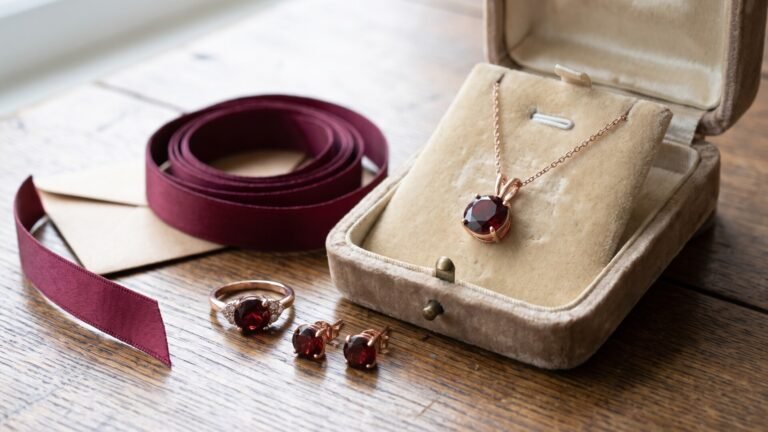
Best for someone who wants a warm, vivid red stone with visual resemblance to ruby but without entering ruby pricing. A strong red coordinates easily with yellow gold, rose gold, and classic jewelry styles, which is why it sells so well as a gift. The risk: darker stones can lose brightness in low light, and the origin label may be doing more marketing work than gemological work. If you are shopping for an engagement ring, the guide to garnet engagement rings translates this choice into setting and design decisions that will hold up.
Choose neither if the buyer needs maximum daily-wear toughness
Buyers seeking a very hard stone for a constantly worn ring may prefer sapphire or ruby. That is not a knock on garnet, which can be perfectly practical in a protective setting. It is about lifestyle, occupation, setting, and willingness to remove jewelry for impact-heavy activities. A well-documented stone with a secure, repairable setting is more likely to survive as an heirloom than a larger but exposed stone bought solely for dramatic appearance. The grandchild who inherits it will care more about whether it is intact than whether it was the biggest stone in the case.
Treatment, Certification, and Seller Protection
Many garnets are sold untreated, but buyers should still request a written disclosure rather than assume "natural" means untreated. Treatment disclosure is a clear statement of any enhancement applied to color, clarity, stability, or appearance. "Natural" describes origin, not condition. Those are different words and sellers sometimes blur them.
Recommend a gemological report for expensive, unusually large, strongly marketed, or origin-dependent stones. The report should identify the gemstone, state whether it is natural or laboratory-grown where relevant, and disclose detectable treatments. For a modest purchase, strong seller disclosures and a fair return policy may be more practical than a full lab report, but for higher-stakes purchases, certification is worth the cost.
Watch for unsupported claims: "investment grade," "museum quality," "rare Mozambique ruby garnet," "guaranteed appreciation." These phrases require evidence and should never replace independent identification. When a seller leads with a story instead of a specification, ask for the specification.
Buy from sellers with transparent return windows, full measurements, treatment information, clear photographs or videos, and an invoice that describes the stone accurately. [Affiliate: Browse documented natural garnet collections] where those details are visible before you buy. If the listing does not show dimensions, treatment status, and a return policy, move on.
Final Verdict: Rhodolite or Mozambique Garnet?
Best overall for distinctive beauty: fine rhodolite with vivid raspberry or purplish-red color, strong brightness, and a well-executed cut.
Best for classic red appearance: a high-quality Mozambique garnet that stays lively rather than overly dark or brown.
Best value strategy: buy the better individual stone, not the more persuasive origin story. A bright, clean, well-cut example at a fair price beats a rare-sounding stone with weak color or poor transparency every time.
Best heirloom approach: select a documented natural stone, use a protective setting, retain the report and purchase records, and choose a design that can be repaired or reset by a future owner. If the symbolism matters to you, the history and meaning of garnet gives the tradition its due.
Frequently Asked Questions About Rhodolite Vs Mozambique Garnet
Is rhodolite more valuable than Mozambique garnet?
Not automatically. Fine color, brightness, clarity, cut, size, treatment status, and documentation determine value. A superior Mozambique garnet can be worth more than an average rhodolite.
Is Mozambique garnet a ruby substitute?
It can provide a similar warm red appearance at a lower typical price, but it is not ruby. The stones differ in mineral identity, hardness, market demand, and usually in optical appearance.
Is rhodolite garnet good for an engagement ring?
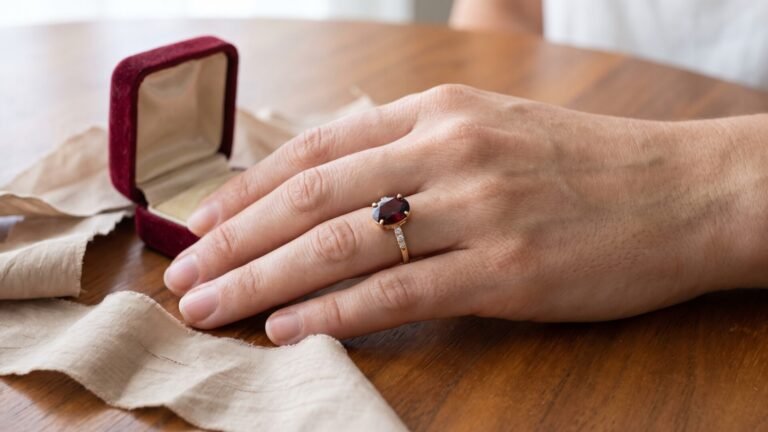
Yes, if the ring has a protective setting and the wearer accepts that garnet is more vulnerable to scratching and impact than ruby or sapphire. A bezel or well-designed halo can reduce exposure.
How can I tell whether a red garnet is rhodolite?
Color alone is not conclusive. Rhodolite is commonly associated with purplish-red, raspberry, and wine-red tones, but a qualified gemologist or laboratory report is the reliable way to identify the material.
Does Mozambique origin make a garnet rare?
Origin can affect interest and supply, but the word Mozambique is not a guarantee of rarity. The actual color, quality, availability, and documentation of the individual stone matter more.
Should I get a certificate for a garnet?
A report is sensible for an expensive, unusually large, heavily marketed, or origin-sensitive stone. For a modest commercial purchase, strong seller disclosures and a fair return policy may be more practical, but certification remains valuable for higher-stakes purchases.
Can rhodolite and Mozambique garnet be worn every day?
They can be worn regularly with care, but neither should be treated as indestructible. Remove the jewelry for impact-heavy work, inspect the setting periodically, and avoid exposing the stone to harsh cleaning methods without professional guidance.
Which red garnet is better for a gift?
It depends on the recipient. Someone who loves unusual color will appreciate fine rhodolite. Someone who wants classic red will usually prefer a bright Mozambique garnet. When in doubt, choose the brighter, better-cut stone.
The stone that survives thirty years is rarely the one with the best story at the counter. It is the one with honest disclosure, a protective setting, and a color that still looks alive in the kitchen light.