How to Protect Gemstone Jewelry From Heat and Temperature Changes
I once sold a woman a beautiful opal ring for her fortieth birthday. Six weeks later she came back with it in a zip bag, and the stone looked like it had been dropped in a fire. She had not dropped it in a fire. She had worn it into a sauna, then stepped into a cold shower, because nobody had told her not to. I had not told her not to. That failure was mine, and I have been telling people the version of this I should have told her ever since.
Here is the correction to the belief most buyers carry: heat does not damage every gemstone the same way, and the dramatic single exposure is rarely what does it. The damage usually comes from a combination – heat, rapid cooling, internal inclusions, a treatment, and a fragile setting all working together. Your ring can look perfectly fine after a hot shower, a hair dryer, a fireplace, or a hot tub and still develop fractures, color shifts, loose stones, or damaged treatments that only surface later. The rule is not "keep it cold." The rule is avoid intense heat and sudden temperature changes, especially with included, treated, porous, or heat-sensitive stones. Ordinary body warmth is not the problem. Uncontrolled heat and thermal shock are.
Why heat and sudden temperature changes damage gemstone jewelry
Thermal shock is the stress a material suffers when it heats or cools unevenly. The outside of a gemstone can expand faster than the inside, or contract while the core is still warm, and that mismatch has to go somewhere. It goes into fractures. In a stone with existing fissures or liquid inclusions, thermal shock can widen what was already there or open something new.
Not all heat is the same threat. Gradual warmth – a stone sitting in a room, or against your skin – is almost always harmless. Extreme heat, direct flame, and rapid transitions are the real dangers. Moving a hot ring from a sauna into ice-cold water is the classic thermal shock scenario, and it is exactly where a lot of jewelry gets wrecked.
"Heat resistant" is a phrase I would like to see retired. It does not mean invulnerable. It means the stone survived a particular test under particular conditions, not that it will survive your afternoon.
Stones with internal fractures, liquid inclusions, cavities, cleavage (a tendency to split along flat planes), or significant treatments are generally more vulnerable than clean, untreated material. The treatment part matters most, and it is the part sellers skip.
Heat also damages things that are not the gemstone. It weakens the adhesives used in some settings and pearl stringing, discolors or loosens metalwork, damages plating, dries out organic gems like pearl and coral, and can worsen microscopic cracks you never knew were there.
The main forms of gemstone jewelry heat damage
| Heat exposure | Possible damage | Risk level | Safer approach |
|---|---|---|---|
| Hot shower or bath | Thermal stress, treatment damage, loosened settings | Moderate | Remove jewelry before bathing |
| Sauna, steam room, or hot tub | Heat, humidity, chemicals, setting and treatment stress | High | Leave jewelry outside |
| Hair dryer or styling tool | Localized overheating and sudden temperature change | Moderate to high | Put jewelry on after styling |
| Fireplace, oven, or direct flame | Severe localized heat and fracture risk | High | Remove jewelry before cooking or tending fire |
| Hot car or windowsill | Gradual heat, fading, dehydration, treatment stress | Moderate | Store in a cool, shaded place |
| Freezer or ice water after heat | Rapid contraction and thermal shock | High | Let jewelry return to room temperature naturally |
Which gemstones are most vulnerable to heat damage?
Vulnerability is not a property of a species alone. It depends on the specific stone, its treatment, its inclusions, its cut, and its setting. Two emeralds of the same size can have very different heat tolerance. Organizing by risk is more useful than memorizing an alphabetical list, so that is what follows. For a broader foundation on how these stones differ in the first place, the [gemstones guide to nature’s sparkle](Gemstones: Your Ultimate Guide to Nature’s Sparkle) covers the full range.
Heat-sensitive and inclusion-sensitive gemstones
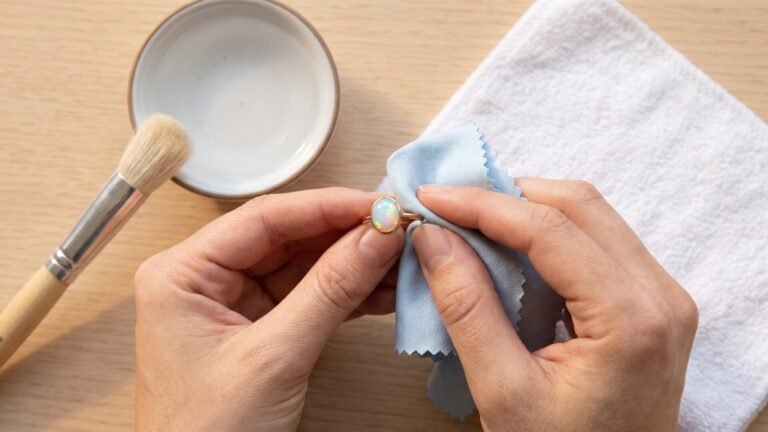
Opal is the one I would put at the top of the list. Rapid temperature changes may contribute to crazing, a network of fine surface fractures that can spread through the stone. Avoid fireplaces, ovens, saunas, hot water, and abrupt cooling. If you own an opal, the [opal properties and value guide](Opal: Meaning, Properties, Uses & Value) gives more context on why certain opals are more fragile than others, and the guide to the [safest way to clean an opal ring with crazing risk](Safest Way to Clean an Opal Birthstone Ring With Crazing Risk) is worth reading before you touch it with anything wet.
Pearl is organic, built from layers of nacre (the iridescent coating a mollusk deposits around an irritant). Harsh heat and low humidity can dry that surface, dull it, crack it, or cause layers to separate. Heat exposure can also affect the adhesives used to set pearls in jewelry. The [pearl properties and value guide](Pearl: Meaning, Properties, Uses & Value) explains the structure behind the fragility.
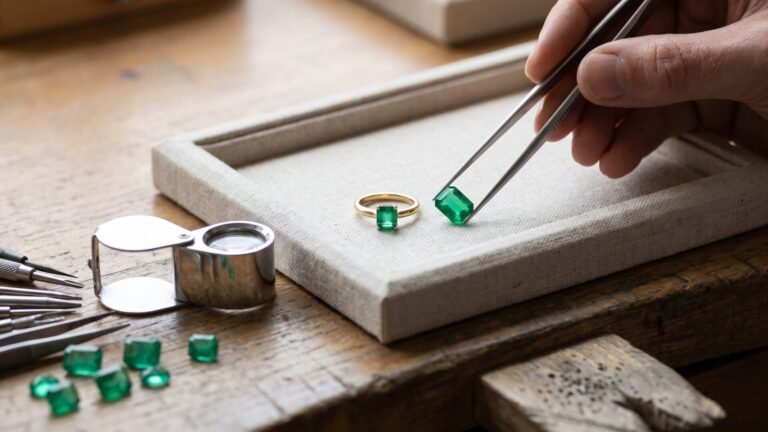
Emerald usually contains fissures, and many emeralds are treated with oil or resin to fill them. Heat can affect those fillers and make existing weaknesses more consequential. I am not saying every emerald will crack from normal warmth – it will not. I am saying an emerald is not the stone to wear into a sauna. The [emerald properties and value guide](Emerald: Meaning, Properties, Uses & Value) covers treatment in more detail.
Tanzanite is comparatively vulnerable to sudden temperature changes. It should not be exposed to high heat, torch work during repair, or abrupt cooling. Keep it out of the sauna and away from any jeweler who wants to apply a flame near it without a heat shield. See the [tanzanite properties and value guide](Tanzanite: Meaning, Properties, Uses & Value) for the full picture.
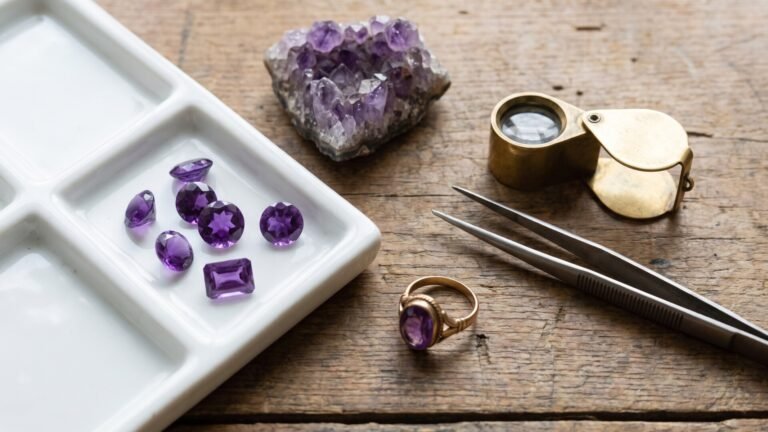
Amethyst and citrine can shift color under prolonged intense light or heat, especially treated or heat-altered material. This is a slower process than thermal shock, but it is real. The guide to [whether amethyst fades in sunlight and how to protect its color](Does Amethyst Fade in Sunlight? How to Protect Its Color) covers the light side of the same problem.
Turquoise and other porous or treated gems can worsen under heat – dehydration, discoloration, and instability in wax, resin, dye, or oil treatments. The [turquoise properties and value guide](Turquoise: Meaning, Properties, Uses & Value) explains why stabilized turquoise behaves differently from natural.
More heat-tolerant does not mean heat-proof
Diamond, sapphire, and ruby generally tolerate ordinary jewelry use better than opal, pearl, or tanzanite. That is a real advantage and it is why they dominate engagement jewelry. It is not immunity. Sudden thermal shock, pre-existing fractures, inclusions, and treated stones still create risk, and the metal around the stone has its own limits.
Part of the confusion is that "durable" gets used as if it were one thing. It is at least three. Hardness is resistance to scratching. Toughness is resistance to breaking or chipping. Stability is resistance to heat, light, chemicals, and treatment changes. A high hardness number tells you almost nothing about the other two. The [gemstone hardness scale explained](Gemstone Hardness Scale Explained: What the Numbers Really Mean) is the piece to read if you have been treating a Mohs score as a complete care rating.
Everyday situations that cause gemstone jewelry heat damage
Most heat damage I have seen did not happen in a laboratory. It happened in a bathroom, a kitchen, or a car.
Showers, baths, hot tubs, and saunas. Hot water, steam, chlorine and other chemicals, and the rapid cooling afterward make these poor environments for gemstone jewelry. A sauna is the worst of them because it combines high heat with the cold plunge or shower that often follows. If you want the stone-by-stone version of this, the guide to [showering with gemstone jewelry](Can You Shower With Gemstone Jewelry? A Stone-by-Stone Guide) covers which stones tolerate water and which do not.
Hair styling and beauty routines. Remove jewelry before using hair dryers, curling irons, straighteners, heat lamps, or heated facial tools. A concentrated stream of hot air creates a much more severe local temperature change than room heat, and it is often aimed at a stone that was cool a moment before. Put the jewelry on last.
Cooking, fireplaces, candles, and grills. Ambient warmth from a stove is one thing. Direct radiant heat or flame is another entirely. Remove rings and bracelets before cooking near an open flame, tending a fire, or working a grill. I have seen a sapphire survive a kitchen mishap and the setting around it fail completely.
Cars, windowsills, beaches, and radiators. Prolonged heat and sunlight work slowly. They can affect color stability, dry organic materials, and degrade treatments and adhesives over months and years rather than minutes. Do not store jewelry on a sunny windowsill or leave it in a hot car. The guide to [whether gemstones lose their color over time](Can Gemstones Lose Their Color Over Time? A Guide to Color Stability) goes deeper on what fades and why.
A practical routine for preventing heat damage
I have watched enough people try to remember a dozen separate rules and fail. Three steps are easier to keep. Call it Remove, Cool, Check.
Remove before high-risk activities
Take gemstone jewelry off before saunas, steam rooms, hot tubs, hot baths, cooking near high heat, fireplace work, soldering, gardening in intense sun, and hair styling. That list covers nearly every real-world heat exposure I have seen cause damage.
The habit only works if removal is easy. Keep a small jewelry dish somewhere away from sinks, ovens, and direct sunlight, so taking a ring off is a reflex rather than a decision made while holding a hot pan.
Rings deserve particular attention. Metal can stay hot against the finger long after you would expect, stones get struck during household tasks, and settings loosen without anyone noticing until the stone is gone. A ring is also the piece people most often forget to remove.
Cool jewelry gradually
If a piece gets hot, place it on a soft, dry cloth at room temperature and let it cool naturally. That is the whole instruction.
Never put hot jewelry in ice water, a freezer, or directly under cold running water. The rapid contraction is exactly the thermal shock you are trying to avoid, and it can do damage a visual inspection will not reveal for days.
Do not test a hot stone by touching it to a cold surface either. It is the same mistake with extra steps.
Check after unusual exposure
After strong heat, inspect prongs, bezels, glue lines, pearl strands, and any visible fractures. Look for new cloudiness, a widened fissure, a dull or altered surface, a color change, movement in the setting, or a stone that rattles when you shake the piece gently.
If anything looks wrong, stop wearing it and take it to a qualified jeweler or gemologist. A loose stone is cheap to tighten now and expensive to replace later.
What most buyers get wrong about heat-safe gemstone jewelry
The first mistake is treating the Mohs hardness rating as a heat-safety score. It is a scratching score. A stone can scratch nothing and still crack from thermal shock. If you take one thing from this section, take that.
The second is reading marketing language as a technical claim. "Natural," "untreated," "AAA," "investment grade," and "heat resistant" are not interchangeable, and none of them is a safety rating. A natural stone can be heavily included and fragile. A treated stone is not automatically poor quality – some treatments are stable and standard. What matters is knowing which treatment you have.
The third is trusting vague durability language like "everyday wear" or "built to last." Those phrases mean whatever the seller wants them to mean. Ask the seller to identify the gemstone, state the treatment status, and name any care restrictions. A seller who cannot answer those three questions is telling you something useful about themselves.
Professional treatment disclosure is the piece that actually protects you. A GIA report or reputable seller documentation may identify treatments that affect care, which is precisely the information you need. But be clear about what a report covers: an appraisal or authenticity report is not automatically a complete heat-safety assessment. It tells you what the stone is. It does not tell you everything about how it will behave in a sauna.
What to do if gemstone jewelry has already been exposed to heat
Stay calm and work in order. Remove the piece from the heat source. Let it return to room temperature naturally, on a soft cloth, with no ice and no cold water. Dry it gently with a soft lint-free cloth. Then leave it alone – no cleaning, no polishing, no "just checking" – until it has been inspected.
Watch for these warning signs:
- Crazing, or a new network of fine surface fractures
- New cracks or a widened existing fissure
- Internal cloudiness that was not there before
- A color shift
- A loose or rattling stone
- Separated nacre on a pearl, or a dull, chalky surface
- Damaged enamel or softened adhesive
- A change in surface luster
High-value, antique, heavily included, fracture-filled, or visibly damaged pieces should go to a jeweler, gemologist, or treatment specialist. Do not test them with household methods, and do not try to tighten or reset a stone yourself.
Two cleaning methods to avoid entirely after heat exposure: ultrasonic cleaners and steam cleaners. Both can worsen existing damage, and neither is a diagnostic tool. The guide to [which gemstones are safe to clean with an ultrasonic cleaner](Which Gemstones Are Safe to Clean With an Ultrasonic Cleaner?) explains which stones can tolerate it under normal circumstances – and heat exposure is not normal circumstances. Once the piece has cooled and passed inspection, the guide to [cleaning gemstone jewelry at home without professional equipment](How to Clean Gemstone Jewelry at Home Without Professional Equipment) gives you a safe routine.
Which care strategy still makes sense in three years?
Care advice is only useful if it survives contact with a real life. So think about the wearer, not the ideal owner.
For daily-wear jewelry, choose the stone and setting around the actual routine. Someone who uses hot tools every morning, cooks over an open flame, or visits a sauna weekly should favor a piece that comes off easily and should avoid fragile heat-sensitive gems for unattended daily wear. A bezel setting protects a stone better than tall prongs, and a ring that slips off without a struggle is a ring that actually gets removed.
For heirloom jewelry, the priorities are documentation, inspection, and conservative storage. Keep a written record of the stone’s identity, treatment status, and condition, and have the piece inspected periodically. Prevention is always cheaper than repairing a rare or sentimental stone – and a stone with family history cannot be replaced at any price.
For valuable gemstone jewelry, ask for treatment disclosure in writing, buy from a seller with a clear return policy, and get an independent report when the value or rarity justifies the cost. That paperwork is what a future owner – possibly someone not yet born – will rely on when they inherit the piece and need to know how to care for it.
| Buyer type | Priority | Stone guidance | Setting guidance |
|---|---|---|---|
| Daily wearer with heat exposure | Easy removal, durability | Favor sapphire, ruby, diamond over opal, pearl, tanzanite | Low-profile bezel over tall prongs |
| Heirloom keeper | Documentation and inspection | Any stone, with treatment records | Secure, repairable construction |
| Occasional wearer | Protection in storage | Heat-sensitive stones are fine if stored well | Soft pouch, cool dark place |
| High-value buyer | Independent verification | Insist on treatment disclosure | Professional inspection schedule |
The final verdict is simple. The safest universal habit is removing gemstone jewelry before intense heat or rapid temperature changes. Sapphire, ruby, and diamond offer more practical daily durability than the fragile alternatives, and if you want a piece you can genuinely stop worrying about, those are the stones to look at. But no gemstone should be treated as safe around direct flame, extreme heat, or thermal shock – not even a diamond. The most valuable protection you can buy is not the hardest stone. It is matching the stone, the treatment, the setting, and your care routine to the life you actually live.
Frequently Asked Questions About Gemstone Jewelry Heat Damage
Can hot water damage gemstone jewelry?
Yes. A brief exposure to warm water may not visibly harm every gemstone, but hot water and rapid temperature changes can stress vulnerable stones, treatments, settings, and adhesives. Remove jewelry before hot showers, baths, and hot tubs.
Can a hair dryer crack a gemstone?
A hair dryer is unlikely to damage every gemstone, but concentrated hot air creates localized heating, especially when aimed at a stone that was cool a moment before. Keep jewelry off while drying or styling hair, particularly with opal, emerald, pearl, tanzanite, or any included or treated gem.
Are diamonds safe from heat damage?
Diamonds tolerate ordinary jewelry conditions well, but they are not immune. Sudden temperature changes, existing fractures, inclusions, intense direct heat, and damage to the surrounding metal or setting can still cause problems.
Can heat make a gemstone lose its color?
It can, depending on the gemstone, the treatment, the duration of exposure, and whether intense light is also involved. Amethyst, some citrine, turquoise, and treated stones deserve particular caution. A color change should be assessed by a qualified professional, not corrected at home.
Is it safe to wear gemstone jewelry in a sauna?
No. Saunas combine high temperatures, rapid cooling afterward, moisture, and sometimes chemicals, which creates unnecessary risk for gemstones, treatments, adhesives, and settings. Leave the jewelry outside.
What should I do if my gemstone jewelry gets too hot?
Remove it from the heat and let it cool naturally at room temperature on a soft cloth. Do not use ice or cold water. Inspect it only after it has cooled, and seek professional advice if you see cracks, cloudiness, color changes, or a loose stone.
Does a high Mohs rating mean a gemstone is heat-safe?
No. Mohs hardness measures resistance to scratching, not resistance to thermal shock, fracture, treatment damage, or color change. Heat safety depends on toughness, inclusions, treatment, and setting as well.
Can I wear gemstone jewelry while cooking?
It depends on the stone and the cooking. Ambient kitchen warmth is usually fine, but open flames, hot ovens, and grills produce direct radiant heat that can damage vulnerable stones and settings. Remove rings and bracelets before working near high heat.
How can I tell if heat has damaged my gemstone?
Look for crazing, new cracks, internal cloudiness, color shifts, loose stones, separated pearl nacre, damaged enamel, softened adhesive, or a change in luster. If you see any of these, stop wearing the piece and have it inspected by a qualified jeweler or gemologist.